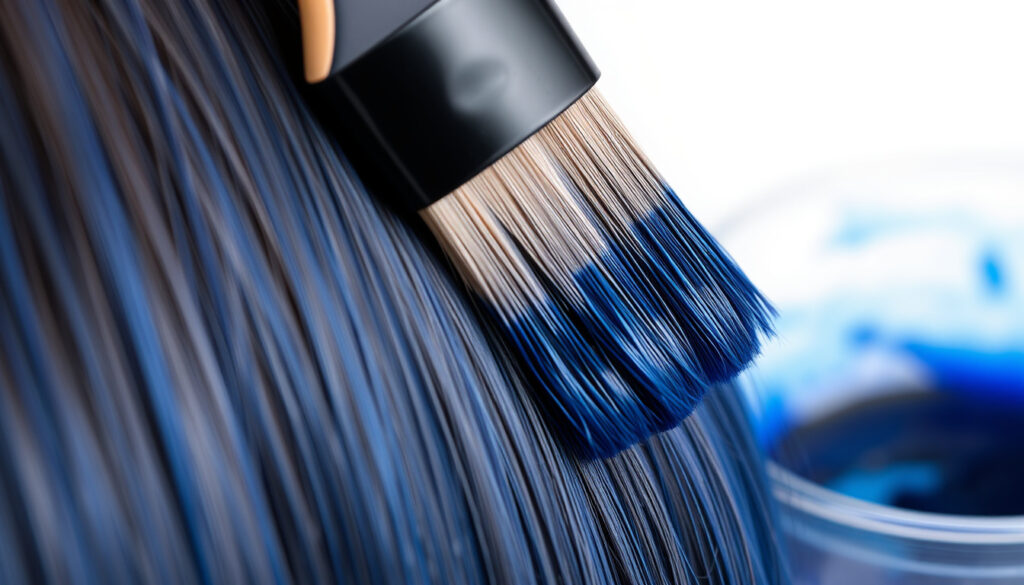
Blue Black Hair Dye: Color Guide and Best Products
Anyone who’s ever picked up a box of blue black hair dye knows the disappointment when it turns out looking just like plain black. The blue only shows in direct sunlight — if you’re lucky. This guide breaks down why that happens, which products actually deliver visible blue tones, and how to maintain that subtle shimmer without a salon visit.
Duration: Up to 8 weeks (L’Oréal Paris Preference Vivids) ·
Shine: Up to 3 times shinier (L’Oréal Paris) ·
Recommended base color: Dark hair (Notino)
Quick snapshot
- Blue-black dye can appear black on dark hair without bleaching (L’Oréal Paris)
- Permanent options last 6–8 weeks (L’Oréal Paris)
- Whether blue tones show on all hair types without pre-lightening (Reddit community)
- Exact fade color varies by brand and hair porosity (Beautylish forum)
- Permanent blue-black lasts up to 8 weeks (L’Oréal Paris)
- Semi-permanent lasts 2–4 weeks (Target product categories)
- Expect fading to greenish-blue or teal tones (user reports on social media)
- Color-safe shampoo and cold water extend life (Moehair guide)
Five key facts about blue black hair dye, with the most actionable data first:
| Attribute | Value |
|---|---|
| Color name | Blue Black (often 1.102 in professional lines) |
| Duration | Up to 8 weeks (permanent) |
| Developer volume | 20 vol for standard application (L’Oréal Paris instructions) |
| Typical fade | Greenish-blue or teal (user experiences on Reddit) |
| Best on | Dark, unbleached hair (Garnier suitability guidance) |
What color is blue black in hair?
Defining blue-black
On a color wheel, blue-black sits between true black and navy. It’s not a solid blue — it’s a black base with enough blue pigment to catch light. Garnier describes its own shade as having a “reflective blue tone.” In practical terms, that means indoors it looks black, but in sunlight or bright artificial light, a blue shimmer emerges — provided the dye is applied to hair that isn’t already very dark.
How it appears on dark hair vs. light hair
On naturally dark brown or black hair, blue-black dye often appears simply black because the underlying melanin overwhelms the blue pigment. L’Oréal Paris acknowledges this, advising that the blue will be subtle on dark hair unless you pre-lighten. On bleached or light brown hair, the blue registers much more visibly — sometimes appearing almost electric.
The trade-off: Dark hair gets the “blue black” name without the visible blue. To actually see the blue, you either pre-lighten or accept a very subtle sheen that only appears in direct light.
What is the best blue black hair dye?
Permanent blue black hair dye options
“L’Oréal Paris suggests its Féria Multi-Faceted Shimmering Permanent Hair Color in Starry Night as a DIY alternative for a blue-black look.”
— L’Oréal Paris (brand article)
Permanent dyes use oxidation to deposit color that lasts until new growth appears. L’Oréal Paris Superior Preference in Blue Black is a leading choice, offering up to 8 weeks of wear. Target’s category page also lists Garnier Ultra Color and Revlon ColorSilk as popular permanent options. Sally Beauty highlights these as professional-grade choices for home use.
Semi-permanent blue black hair dye options
Semi-permanent formulas coat the hair shaft without ammonia or peroxide. Arctic Fox offers salon-quality blue-black shades in its blue collection, which last 2–4 weeks and are gentler on hair. Moehair’s guide notes that semi-permanent is ideal for trying the color before committing to permanent dye. Target lists both permanent and demi-permanent blue black dyes.
Why this matters: Your choice between permanent and semi-permanent depends on whether you want low commitment (semi) or long-lasting color (permanent). Permanent dyes require developer; semi-permanent do not. Neither will lift existing color — they only darken or deposit over lighter hair.
For maximum blue visibility on dark hair, permanent dye with 20 volume developer is the most reliable route. For a trial run, semi-permanent like Arctic Fox gives you the color without the commitment.
Is blue black hair dye better than black?
Three types of black hair dye, one pattern: the blue tone adds a cool dimension that plain black lacks, but at the cost of more visible fading.
| Aspect | True black | Blue black |
|---|---|---|
| Appearance in sunlight | Solid, flat | Subtle blue shimmer (TikTok user Bobbi Aston) |
| Fade color | Brownish or warm | Greenish-blue or teal (Beautylish forum) |
| Maintenance | Less frequent touch-ups | Requires color-safe shampoo and cold water (Moehair) |
Color appearance differences
True black has no undertone — it absorbs all light. Blue-black, by contrast, reflects blue wavelengths when light hits it at the right angle. L’Oréal Paris explains that cooler skin tones tend to suit blue-black better, while warm undertones may find it harsh. A Reddit user recommends Schwarzkopf Black Sapphire for a rich blue-black result.
Maintenance and fading differences
Blue-black requires more upkeep because the blue pigment washes out faster than black. Multiple users on Gothic.net community report that Schwarzkopf Brilliance blue-black kept hair looking amazing but faded after about 6 weeks. Target’s product page suggests using color-depositing shampoos to prolong the blue tone.
The catch: Blue-black is “better” only if you want a dynamic, cool-toned look and are willing to manage fade. For low-maintenance coverage, true black wins.
What does blue black hair dye fade to?
Common fade colors
Because blue is a small pigment molecule, it escapes the hair shaft faster than black or red. Reddit users report fading to greenish, teal, or even minty tones before the black eventually turns brown. A Beautylish forum user said Revlon ColorSilk Natural Blue Black 12 “lasted forever” but did fade slightly green over time.
How to slow fading
Moehair’s guide recommends three tactics: use sulfate-free shampoo, rinse with cold water, and apply a blue color-depositing conditioner once a week. Garnier’s Blue Black shade is available in both permanent and semi-permanent formulas, and Garnier suggests that natural light brown or black hair yields the longest-lasting results.
What this means: If you dislike green tones, you’ll need to refresh your blue-black every 4–6 weeks or accept a shift toward teal. Color care isn’t optional — it’s the difference between a crisp blue-black and a muddy green-black.
Who can pull off blue black hair?
Skin tone considerations
L’Oréal Paris notes that cooler skin tones suit a more distinctly blue shade like Superior Preference Blue Black. Warm undertones (golden, peach, olive) may find that blue-black makes their skin look sallow. The contrast works best when your natural base is dark and your undertones are neutral to cool.
Hair type considerations
Garnier says Blue Black is best for anyone with natural light brown or black hair — meaning it works without bleaching. On very damaged or porous hair, the color may absorb unevenly and fade faster. A Gothic.net community member praised Schwarzkopf Brilliance blue-black for making their hair “look amazing” but noted that it required healthy hair to hold the color.
The pattern: Blue-black flatters cool, neutral skin tones and dark, healthy hair. Warmer skin tones can still wear it if they choose a shade with a bit more navy than black and use a toner to keep the blue from looking muddy.
What developer do I use for blue black hair dye?
Developer volume for permanent dye
For permanent blue-black dye, 20 volume developer is the standard. L’Oréal Paris instructions specify 20 vol for darkening or gray coverage. Using 30 volume can lift a shade or two, which may help blue pigment show better on very dark hair, but it increases damage. Sally Beauty advises never exceeding 30 vol for home use.
Developer for gray coverage
Garnier’s Blue Black is formulated to cover gray on natural dark hair with 20 vol. For resistant gray, some stylists recommend 30 vol, but the trade-off is more potential damage. Moehair’s guide recommends doing a strand test first to see how the color develops.
To get visible blue on dark hair, you want higher volume (30 vol) to lift the cuticle more. But higher volume damages hair. The better solution? Pre-lighten selectively or choose a deep blue semi-permanent that sits on top of the hair instead of penetrating it.
- Choose your dye formula (permanent or semi-permanent).
- If permanent, mix with 20 volume developer (30 volume only if you want slight lift and accept higher damage).
- Apply to dry, unwashed hair (for permanent) or clean, towel-dried hair (for semi-permanent).
- Process according to package instructions — typically 30–40 minutes for permanent.
- Rinse with cool water until it runs clear. Do not shampoo.
- Condition and style. Wait 48 hours before washing to allow color to set.
The implication: Developer choice directly affects how much blue you’ll see. Stick with 20 vol for standard results; only go to 30 vol if you understand the damage risk and have healthy hair to start with.
What we know for sure vs. what’s still guesswork
Confirmed facts
- Blue-black can appear black on dark hair without bleaching (L’Oréal Paris)
- Permanent dyes last 6–8 weeks (L’Oréal Paris)
- 20 volume developer is standard for darkening (L’Oréal Paris)
What’s unclear
- Whether blue shows on all hair types without pre-lightening (Reddit anecdotal)
- Exact fade color varies significantly by brand and hair porosity (Beautylish)
What users say about blue black hair dye
“The problem with blue-black hair dyes… they come out darker so you lose the blue.”
— Reddit user, r/HairDye (source)
“High-intensity, shimmering colour” and “up to 3 times shinier.”
— L’Oréal Paris product description (source)
“Revlon ColorSilk Natural Blue Black 12 never faded and lasted forever.”
— Beautylish forum user (source)
These three perspectives — a frustrated DIYer, a brand promise, and a satisfied customer — capture the range of experiences. The red flag is that the only unreservedly positive review is for a specific brand on a hair that likely started dark and healthy.
For anyone shopping from a major retailer like Boots or Superdrug in the UK, or Ulta in the US, the choice comes down to visibility vs. damage. Permanent blue-black dyes deliver longevity but require developer and can fade to green. Semi-permanent formulas are safer but shorter-lived. For the typical person with dark hair who wants a subtle blue shimmer, the best bet is L’Oréal Superior Preference Blue Black applied with 20 volume developer — and a bottle of blue color-depositing shampoo to maintain the tone. For those who want a dramatic blue with black base, pre-lightening to a dark blonde first is the only reliable method.
If you’re trying blue black hair dye for the first time, you’ll want to know the best methods for removing hair dye stains from your skin.
Frequently asked questions
Can I use blue black hair dye on bleached hair?
Yes, but the result will be very dark blue-black rather than true black. On bleached hair, the blue will appear much more vivid. Use a lower volume developer (10–20 vol) to avoid over-processing. L’Oréal Paris advises doing a strand test first.
How do I maintain blue black hair color without fading?
Use shampoo and conditioner free of sulfates and parabens. Rinse hair with cold water. Apply a blue color-depositing conditioner once a week. Moehair’s guide recommends these steps to keep the blue from turning green.
Does blue black hair dye damage my hair?
Permanent blue-black dye contains ammonia and peroxide, which can weaken hair if used frequently. Semi-permanent formulas are less damaging. Garnier notes that its Blue Black shade is gentle enough for natural hair when used as directed.
What is the difference between blue black and jet black?
Jet black has no undertone; it is a pure black. Blue-black contains blue pigment that reflects blue light, giving it a subtle cool shimmer. L’Oréal Paris describes blue-black as a “cool, multidimensional shade.”
Is blue black hair dye permanent or semi-permanent?
Both types exist. Permanent blue-black dye (e.g., L’Oréal Superior Preference, Garnier Ultra Color) lasts 6–8 weeks and requires developer. Semi-permanent (e.g., Arctic Fox) lasts 2–4 weeks and is applied without developer. Target’s category page lists both formulations.
Can I mix blue black dye with other colors?
Yes. Mixing blue-black with a pure blue can create a more vibrant blue tone. Mixing with a neutral black will mute the blue. Always test on a small strand first. Arctic Fox offers shades that can be mixed to create custom blue-blacks.
How often should I refresh blue black hair dye?
For permanent dye, refresh every 6–8 weeks as roots grow. For semi-permanent, refresh every 2–4 weeks. Color-depositing shampoo can extend the time between full dye applications. Moehair suggests stretching to 10 days with good care routines.
More related posts
 Professional Carpet Cleaning Auckland: Costs & Top Methods
 KiwiSaver Contribution Minimum Increase: 2026 Rates Explained
 Cheape t Van Hire Auckland: Compare Price from $15/day (2025)
 New World Mt Roskill: Hours, Phone, Online Shopping & More
 Land for Sale Taupo: Prices Per Hectare & Farm Guide
 Nike P-6000 Review: Sizing, Comfort, and Style Breakdown
 1 NZD to INR: Convert New Zealand Dollar to Indian Rupee
 How to Clean Cast Iron with Salt: A Step-by-Step Guide