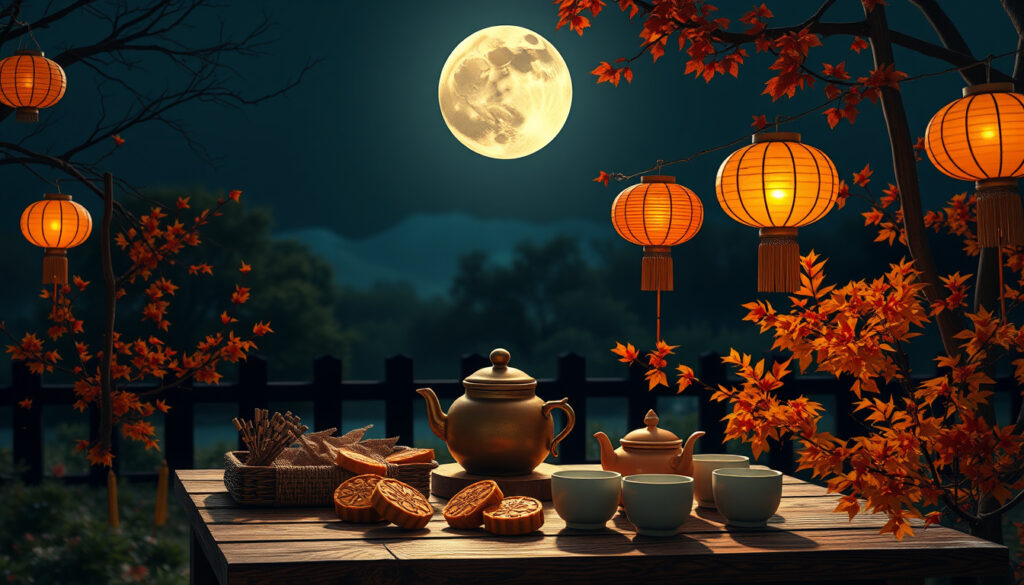
Mid-Autumn Festival 2025: Date, Traditions & Mooncake Guide
There’s a reason the Mid-Autumn Festival is one of the most cherished celebrations in East Asia. Each year, families reunite under the full moon to share mooncakes and light lanterns — a tradition that spans over 3,000 years. In 2025, the festival falls on October 6, marking the 15th day of the 8th lunar month. Whether you’re planning a family gathering or simply curious about the customs, here’s everything you need to know.
2025 Date: October 6 (ChinaTravel (tier 2 travel guide)) · Festival Significance: Second most important Chinese festival after Lunar New Year (CNN Travel (established news outlet)) · Countries Celebrating: At least 8 countries in East and Southeast Asia (Wikipedia (encyclopedia))
Quick snapshot
- October 6, 2025 (ChinaTravel)
- 15th day of 8th lunar month (Wikipedia)
- Full moon night (ChinaTravel)
- Family reunions (CNN Travel)
- Lantern parades (Cathay Pacific (Hong Kong airline))
- Moon gazing (ChinaTravel)
- Eating mooncakes (ChinaTravel) (CNN Travel)
- Lotus seed paste with egg yolk (Tempo English (Indonesian news))
- Regional varieties: snow skin, ice cream (Pelago (travel platform))
- Gift-giving etiquette (CNN Travel) (Tempo English (Indonesian news))
- How to serve and eat (ChinaTravel) (Tempo English (Indonesian news))
- China, Hong Kong, Taiwan (CNN Travel)
- Vietnam (Children’s Festival) (CNN Travel)
- Japan (Tsukimi) (Wikipedia)
- Korea (Chuseok – similar but distinct) (Wikipedia)
Six key facts, one pattern: the festival’s roots run deep and its reach is wide.
| Fact | Detail |
|---|---|
| Full Moon Date 2025 | October 6 (ChinaTravel) |
| Also Known As | Moon Festival, Mooncake Festival, Harvest Moon Festival (Wikipedia) |
| Origin | Zhou Dynasty (over 3,000 years ago) (Wikipedia) |
| Official Holiday In | China, Taiwan, Vietnam, Hong Kong, Macau, Singapore (Wikipedia) |
| Public Holiday Status | Yes, in mainland China (1 day), Taiwan (1 day), etc. (ChinaTravel) |
| Symbolism | Completeness and reunion (Tempo English) |
When to eat moon cake in 2025?
If you’re aiming for the most meaningful moment, eat your mooncake on the evening of October 6, 2025 — after the family dinner, under the full moon. The tradition is rooted in the belief that the round shape of the mooncake mirrors the full moon, symbolizing unity and completeness (ChinaTravel).
What is the exact date of Mid-Autumn Festival 2025?
The festival lands on October 6, 2025, which is the 15th day of the 8th month of the Chinese lunar calendar (Wikipedia). This date is consistent across mainland China, Taiwan, Hong Kong, and other observing countries.
Why is moon cake traditionally eaten during this festival?
- Mooncakes are a must-eat food because their round shape represents family reunion and the full moon (ChinaTravel).
- They are typically shared after dinner while moon gazing, often paired with Chinese tea to balance the sweetness (ChinaTravel).
Mooncakes are dense and sweet; pairing with unsweetened oolong tea balances the richness and prevents sugar overload. A small wedge goes a long way — one typical mooncake can contain 800–1,000 calories.
The implication: timing matters — mooncakes are meant to be shared under the full moon, not just eaten as a snack.
Why is it called the Mid-Autumn Festival?
The name comes from its position in the lunar calendar — the 15th day of the 8th month lands exactly halfway through autumn (Wikipedia). But the festival goes by many other names: the Moon Festival, Mooncake Festival, and Harvest Moon Festival.
What is the legend behind the festival?
The most popular origin story is the legend of Chang’e and Hou Yi. According to the tale, Hou Yi shot down nine suns to save the earth, and was rewarded with an elixir of immortality. His wife Chang’e drank it to prevent it from falling into wrong hands, floated to the moon, and has been worshipped as the moon goddess ever since (Wikipedia).
What other names does it have?
- Moon Festival
- Mooncake Festival
- Harvest Moon Festival (Wikipedia)
The pattern: the name tells the story — the festival is literally the midpoint of autumn, but the legends give it emotional weight.
Which countries celebrate the Mid-Autumn Festival?
The festival is observed across East and Southeast Asia, each region adding its own cultural twist. The core shared elements — family reunions, mooncakes, lanterns — appear in various forms from Vietnam to Japan.
How is it celebrated in Vietnam?
In Vietnam, the festival is known as Tết Trung Thu and is often called the Children’s Festival. Lion dances, lantern parades, and star-shaped lanterns dominate the streets, and children carry handmade paper lanterns while singing traditional songs (CNN Travel).
How does Japan celebrate Tsukimi?
Japan’s Tsukimi (moon viewing) is a separate but related tradition held in September or October. People gather to admire the full moon, offer seasonal foods like tsukimi dango (rice dumplings) and satoimo (taro), and decorate with pampas grass (Wikipedia).
What about Korea’s Chuseok?
Korea’s Chuseok is a harvest festival that shares the theme of family reunion but often falls on different dates. Families gather to prepare songpyeon (rice cakes) and visit ancestral graves (Wikipedia).
Why this matters: the Mid-Autumn Festival is not a single event but a family of harvest celebrations across East Asia, each with its own flavor.
What do Chinese people do on the Mid-Autumn Festival?
Across Chinese communities, the festival is anchored by three core activities: a family dinner, moon gazing, and sharing mooncakes. Lantern parades and fire dragon dances are highlights in Hong Kong and southern China.
How to Celebrate Mid-Autumn Festival in Hong Kong?
- Tai Hang Fire Dragon Dance: A 67-meter-long dragon made of straw and incense, paraded through the streets of Tai Hang over three nights (Cathay Pacific).
- Victoria Park Lantern Carnival: Thousands of lanterns light up the park, with performances, games, and food stalls (Cathay Pacific).
- Families also gather for outdoor barbecues — a modern twist in Hong Kong (CNN Travel).
What colors to wear for Mid-Autumn Festival?
Traditional colors are bright red and gold, symbolizing good fortune and prosperity. In Taiwan, children often wear pomelo rinds as playful hats, a practice tied to the fruit’s protective symbolism (Pelago). Modern attire is common, but red and gold remain festive choices.
In Taiwan, the festival has become a major barbecue occasion — parks and riversides fill with families grilling over charcoal. This modern custom is not found in mainland China, but it’s a beloved part of Taiwanese celebrations (Pelago).
The pattern: while traditions vary, the core — family, lanterns, mooncakes — remains constant across Chinese communities.
How to properly eat a mooncake?
Mooncakes are dense pastries best enjoyed in small portions. The traditional method is to slice them into thin wedges, similar to a pie, and serve with tea.
What is the best way to serve mooncake?
- Use a sharp knife to cut the mooncake into 4–8 wedges, depending on size (ChinaTravel).
- Serve with unsweetened Chinese tea (e.g., oolong, jasmine, or pu-erh) to cleanse the palate and cut through the sweetness (ChinaTravel).
- Eat the wedge in one or two bites — don’t nibble; mooncakes are meant to be shared and consumed as a communal treat.
What are the different mooncake varieties?
- Traditional: Lotus seed paste with salted egg yolk (the classic) (Tempo English).
- Snow skin: A non-baked, glutinous rice skin with lighter fillings like fruit or red bean (Pelago).
- Ice cream mooncakes: Modern variations that replace traditional fillings with ice cream, popular among younger consumers (Pelago).
- Regional fillings: Matcha, milk tea, and even durian versions appear in Taiwan and Singapore (Pelago).
The catch: mooncakes are deceptively calorie-dense — one typical mooncake can contain 800–1,000 calories, so slicing into small wedges is as much about health as etiquette.
What does it mean if someone gives you a mooncake?
Giving a mooncake is a powerful gesture of goodwill. It conveys wishes for reunion, harmony, and prosperity — and it’s a common practice both in personal relationships and corporate gifting.
Is it appropriate to give mooncake as a gift?
Yes — it is one of the most common gifts during the festival period. Companies often present mooncakes to clients and employees, and families exchange them as tokens of affection (CNN Travel). The value of the gift is not in the price, but in the sentiment.
What do the different fillings symbolize?
- Salted egg yolk: Represents the full moon and completeness (Tempo English).
- Lotus seed paste: Symbolizes purity and harmony.
- Red bean: Associated with happiness and good fortune.
- Pomelo (often served alongside mooncakes): Means “blessing” and is used for protection.
The implication: receiving a mooncake is a gesture of goodwill and reunion — it’s a gift that carries the weight of tradition.
Timeline signal
The Mid-Autumn Festival moves each year with the lunar calendar. Here’s how the dates have shifted recently and what to expect through 2027.
| Year | Date |
|---|---|
| 2023 | September 29 |
| 2024 | September 17 |
| 2025 | October 6 |
| 2026 | September 25 |
| 2027 | September 15 |
Dates follow the lunar calendar pattern (Wikipedia).
The pattern: the festival can fall anywhere from early September to early October — a three-week window that keeps planners on their toes.
Confirmed facts
- The 2025 Mid-Autumn Festival date is October 6 (ChinaTravel).
- Mooncakes are the essential festival food (ChinaTravel).
- Family reunion is the central tradition (CNN Travel).
What’s unclear
- Exact public holiday policies may vary by region within China.
- Mooncake production quantities for 2025 are not yet reported.
- Event schedules for 2025 may change closer to the date.
Quotes from the experts
“The Mid-Autumn Festival is a time for family reunions, moon gazing, and eating mooncakes — a tradition that has been celebrated for over 3,000 years.”
— CNN Travel (established news outlet)
“The Tai Hang Fire Dragon Dance, a 67-meter-long dragon made of straw and incense, is one of the most spectacular Hong Kong Mid-Autumn attractions.”
For anyone planning to celebrate the Mid-Autumn Festival in 2025, the lesson is clear: respect the mooncake etiquette, learn a few phrases in Chinese, and join a local lantern parade — or the full moon will pass you by. The festival is not just a date on the calendar; it’s a living tradition that connects millions across Asia and beyond.
Related reading
- Easter Show Auckland 2025 — Another major seasonal event guide.
- What’s On in Wellington: Events Today & This Weekend — For events and activities.
wongschinesebarry.com, hk-cityguide.com, youtube.com, robbreport.com.my, downtownalameda.com, herworld.com
Frequently asked questions
What is the Mid-Autumn Festival?
The Mid-Autumn Festival is a harvest festival celebrated by Chinese and Vietnamese communities on the 15th day of the 8th lunar month. It centers on family reunions, moon gazing, and eating mooncakes.
Is Mid-Autumn Festival a public holiday?
Yes, it is a public holiday in mainland China (1 day), Taiwan, Hong Kong, Macau, Vietnam, and Singapore (ChinaTravel).
Can I celebrate the Mid-Autumn Festival if I’m not Chinese?
Absolutely. Many non-Chinese people participate in lantern festivals, enjoy mooncakes, and attend community events. The festival’s themes of gratitude and reunion are universal.
What is the difference between Mid-Autumn Festival and Chuseok?
Chuseok is Korea’s harvest festival and shares the element of family reunion, but it follows the Korean lunar calendar and involves different foods like songpyeon. The dates often differ from the Chinese Mid-Autumn Festival (Wikipedia).
Are there modern adaptations of the festival (e.g., digital mooncakes)?
Yes, some brands now offer digital mooncakes (NFTs) and virtual lantern festivals, especially in tech-forward cities like Singapore and Hong Kong. However, traditional mooncakes remain the norm.
What are some popular mooncake brands in 2025?
Top brands include Tai Pan, Kee Wah, Maxim’s (Hong Kong), Garden (Singapore), and Chateraise (Japan). Modern brands like Häagen-Dazs and Godiva also produce ice cream mooncakes.
How do I say ‘Happy Mid-Autumn Festival’ in Chinese?
You can say “Zhōngqiū kuàilè” ( ) in Mandarin, or “Jūng-chāu faai-lohk” in Cantonese.
More related posts
 How to Make Money Online NZ – 10 Proven Ways for Kiwis
 NZ Dollar to Euro Rate, History & Forecast 2026
 Lewis Street Blenheim Homes: Prices & Listings
 Movie Theater Showtimes in Wellington for Today and Tomorrow
 Cool Math Games Unblocked: Play Free at School or Home
 What Is a Zine? Definition, Purpose, Examples, and More
 Trump News Today on Fox: Key Polls and Iran Developments
 Best Hand Creams for Dry Skin: 2026 Dermatologist Picks