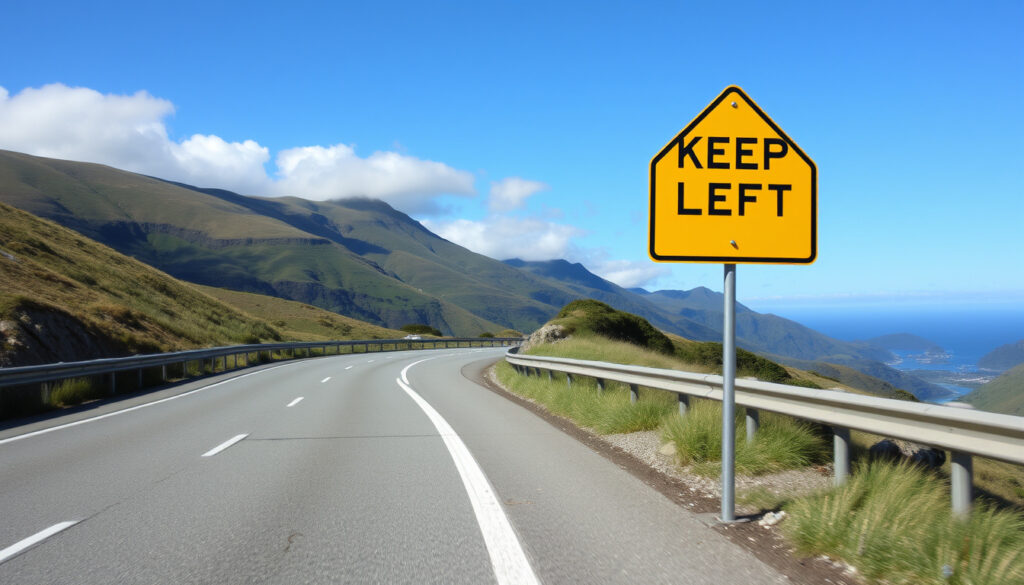
NZ Road Rule Keep Left – Guide for Safe Driving
New Zealand Road Rule: Keep Left Unless Overtaking
New Zealand requires all drivers to keep left except when actively overtaking another vehicle. This fundamental road positioning rule applies across the country’s entire network of laned and unlaned roads, with specific requirements designed to reduce the risk of head-on collisions. Understanding and following this rule is mandatory for everyone using New Zealand’s roads, from residents to visitors.
The requirement to keep left is codified in official transport legislation and enforced by police throughout the country. Violations carry financial penalties and demerit points, making compliance essential for all road users.
Do You Drive on the Left in New Zealand?
Yes, New Zealand requires all vehicles to drive on the left-hand side of the road. This applies universally whether you are navigating a multi-laned motorway, a rural highway, or an unlaned country road. The rule extends beyond traditional roadways to include beaches, car parks, riverbeds, and shoulders—anywhere that qualifies as a road under New Zealand law.
For visitors accustomed to right-hand driving countries such as the United States or continental Europe, this represents a significant adjustment. Rental vehicles in New Zealand are manufactured with left-hand drive configurations to accommodate the driving position, though the vehicle still travels on the left side of the road.
On a two-lane highway, stay in the left lane. Only move to the right lane when passing slower traffic ahead. Return to the left lane once you have safely completed the overtake.
Keep Left Rule Quick Facts
Key Takeaways
- The keep left rule is mandatory for all road users across New Zealand
- Overtaking on the right is the only permitted exception
- Violations can result in fines and demerit points
- The rule applies to both laned and unlaned roads
- Safety experts recommend treating the right lane as a passing lane only
Road Rule Snapshot
| Aspect | Detail |
|---|---|
| Rule | Keep as far left as practicable unless overtaking |
| Enforced By | NZ Police / NZ Transport Agency |
| Primary Legal Basis | Land Transport (Road User) Rule 2004 |
| Related Rules | Overtaking, roundabouts, lane positioning |
| Penalty | $150 fine plus 20 demerit points |
| Applies To | All vehicles, motorcycles, cyclists |
What is the Keep Left Rule in New Zealand?
The keep left rule is a fundamental positioning requirement that forms part of the NZTA Road Code. The rule mandates that vehicles must drive on the left-hand side of the road and remain in the left-hand lane on roads with multiple lanes in each direction.
On laned roads—those marked by white lines or road studs—drivers must stay in the left-hand lane at all times except when undertaking specific maneuvers. The lane closest to the center line is reserved exclusively for passing or overtaking slower vehicles, preparing for right turns, or avoiding hazards.
On unlaned roads, which lack any lane markings, the requirement becomes keeping as close as possible to the left side of the road. This positioning is particularly critical around curves and bends where visibility of oncoming traffic may be reduced. The NZTA Road Code specifies this positioning helps avoid collisions with oncoming vehicles, cyclists, pedestrians, horses, and other obstacles.
The NZTA Road Code states that keeping left prevents head-on crashes, which often cause death or serious injury. The rule applies to all drivers regardless of experience level or familiarity with local roads.
Understanding Lane Positioning
Lane positioning under the keep left rule varies depending on road type. Multi-laned roads with two or more lanes per direction require drivers to treat the left lane as their default position. The right lane exists solely for temporary maneuvers and must be vacated once those maneuvers are complete.
Single-lane roads require drivers to position their vehicles as far left as is safe and practicable. This means avoiding the center of the road and remaining close to the left edge while maintaining sufficient space from parked vehicles, roadside obstacles, and pedestrians.
What Are the Exceptions to the Keep Left Rule?
The keep left rule contains specific exceptions that permit drivers to use the right-hand lane under defined circumstances. These exceptions are narrow and designed to balance traffic efficiency with safety requirements.
When You May Use the Right Lane
Drivers may move into the right lane—the lane closest to the center line—only in the following situations:
- Overtaking or passing a slower-moving vehicle ahead
- Preparing to turn right at an intersection or exit
- Changing lanes briefly to give space to cyclists or pedestrians
- Avoiding roadwork zones or other temporary hazards
- Allowing emergency vehicles to pass
After completing any of these maneuvers, drivers must return to the left lane as soon as it is safe to do so. The Automobile Association emphasizes that treating the right lane as a passing lane only promotes efficient traffic flow and reduces risks associated with blind-spot passing on the left.
Overtaking Rules in New Zealand
Overtaking in New Zealand must always be done on the right side of the vehicle being passed. This differs from some countries where left-side passing is permitted. The rule requiring right-side overtaking aligns with the keep left principle and ensures both vehicles maintain consistent positioning throughout the maneuver.
Before initiating an overtake, drivers must ensure the maneuver can be completed safely, checking for oncoming traffic, road conditions, and sufficient clear distance ahead. Once the overtake is complete, returning to the left lane must occur promptly to avoid obstructing faster-moving traffic behind.
Passing on the left—sometimes called undertaking—is considered dangerous and is generally prohibited. The AA notes that left-side passing creates blind-spot risks that increase collision probability.
Cyclists and Pedestrians Under the Keep Left Rule
The keep left rule extends beyond motor vehicles to include cyclists, who are considered road users with the same positioning obligations. Cyclists must ride on the left side of the road and should position themselves to remain visible to other traffic.
For motor vehicle drivers, the rule requires providing adequate space when passing cyclists, particularly on curves, unlaned roads, or when using the right lane for overtaking maneuvers. The motorcycle-specific guidance suggests positioning behind a vehicle’s right-hand wheels can help riders maintain visibility of cyclists ahead while staying appropriately left.
Pedestrians walking on roads should use the right-facing shoulder where available, but drivers must remain aware of pedestrian presence, particularly in areas without dedicated footpaths.
Penalties and Enforcement of the Keep Left Rule
Failing to keep left carries concrete consequences under New Zealand traffic law. Drivers who violate the rule face a $150 fine and 20 demerit points, according to the NZTA and Police enforcement guidelines.
Police enforce the keep left rule selectively, prioritizing high-risk behaviors such as speeding or driver impairment over what some term “right-lane hogging.” However, the rule remains in effect regardless of enforcement priorities, and violations can still result in fines if observed and reported.
Non-compliance creates several safety risks beyond potential fines. Drivers who obstruct the left lane can force others into risky overtaking maneuvers, create frustration that leads to speeding, or delay emergency vehicles requiring access through traffic.
NZTA Compliance Efforts
The NZ Transport Agency has undertaken social media campaigns to promote keep left awareness, generating over 9 million views over two years. These efforts aim to improve voluntary compliance through education rather than increased enforcement.
Currently, no penalty review or increase is planned for keep left violations, though continued non-compliance could prompt future policy changes.
Why Does New Zealand Drive on the Left?
New Zealand’s left-hand traffic pattern traces directly to British colonial influence. As a British colony from the 1840s onward, New Zealand adopted the driving conventions of the United Kingdom, which included traveling on the left side of the road.
Unlike some countries that debated or changed their driving side during the twentieth century—such as Sweden’s transition to left-hand drive in 1967—New Zealand never recorded significant debate about switching to right-hand traffic. The practice remained continuous from colonial establishment through to modern legislation.
Historical Development
Early traffic regulations in the 1920s began formalizing road positioning requirements that had previously operated as customary practice. These colonial-era guidelines eventually evolved into comprehensive transport legislation.
The Land Transport (Road User) Rule 2004 represents the modern codification of keep left requirements, replacing earlier regulations under colonial and post-1900 transport acts. This legislation formalized the specifics of lane positioning, overtaking procedures, and enforcement mechanisms that exist today.
New Zealand’s left-hand driving aligns with other former British territories including Australia, the United Kingdom, Japan, and many Southeast Asian nations. This shared convention facilitates relatively straightforward transitions for drivers traveling between these countries.
History of the NZ Keep Left Rule
- 1840s onward: British colonial settlement establishes left-hand driving as standard practice
- 1920s: Early formal traffic regulations codify positioning requirements
- 1998: Land Transport Act introduces modern road code framework
- 2004: Land Transport (Road User) Rule formalizes current keep left specifics
- Present: Annual updates via NZTA maintain current guidance
Rule Clarity: What Is Established Versus What Remains Unclear
| Established Information | Nuances and Uncertainties |
|---|---|
| Absolute requirement: Drive left except when overtaking | Judgment-based assessment of “practicable” positioning on unlaned roads |
| Rule applies nationwide to all vehicles and cyclists | Temporary exceptions during roadworks may have specific conditions |
| Overtaking permitted only on the right | Specific cyclist passing distances not quantified in public guidance |
| $150 fine and 20 demerit points for violations | Police discretion on enforcement priorities not formally documented |
Context and Analysis
The keep left rule serves primarily as a head-on collision prevention measure. By requiring consistent left-side positioning, the rule ensures opposing traffic flows in separated streams, eliminating the most dangerous crash scenario on two-way roads.
For international visitors, adapting to left-hand driving requires conscious attention during the initial adjustment period. Rental vehicles in New Zealand feature left-hand drive configurations—meaning the steering wheel sits on the left side of the car—while the vehicle travels on the left side of the road. This positioning provides forward visibility matching the traffic flow direction.
Right-lane hogging on multi-lane highways represents a noted issue in New Zealand, where some drivers treat the right lane as a permanent travel lane rather than a temporary passing zone. This behavior contradicts the keep left unless overtaking principle and can create dangerous situations by forcing other drivers to pass on the left. Recent enforcement actions, including motorcycle safety enforcement operations, highlight ongoing efforts to improve road compliance across all vehicle types.
Official Sources and Quotes
“Keep left of the centreline unless you are overtaking another vehicle, or there is a sign or road marking telling you to do otherwise.”
— NZTA Road Code, General Road Code, Key Driving Skills
“Vehicles must keep left unless overtaking another vehicle.”
— Land Transport (Road User) Rule 2004
Summary
New Zealand’s keep left rule requires all drivers to position their vehicles on the left side of the road and remain in the left-hand lane on multi-laned roads except when actively overtaking. The rule applies universally across the country to motor vehicles, heavy vehicles, and cyclists, with specific provisions for unlaned roads, curves, and shared road spaces. Violations can result in $150 fines and 20 demerit points, though police enforce selectively. The requirement traces its origins to British colonial influence and remains codified in the Land Transport (Road User) Rule 2004. For more information on related topics, see our coverage of motorcycle safety enforcement.
Frequently Asked Questions
What are the penalties for not keeping left in NZ?
Drivers who fail to keep left face a $150 fine plus 20 demerit points. Police enforce the rule selectively, prioritizing more serious traffic offenses, but violations can still result in fines if observed.
Does the keep left rule apply to cyclists in New Zealand?
Yes, cyclists are considered road users and must keep left just like motor vehicle drivers. They should position themselves on the left side of the road and must overtake other vehicles on the right.
Can you pass on the left in New Zealand?
Passing on the left is generally prohibited and considered dangerous due to blind-spot risks. Overtaking must occur on the right side of the vehicle being passed.
What should I do if someone is blocking the left lane?
Drivers should not resort to dangerous maneuvers. If safe, drivers may briefly use the right lane to pass, but persistent lane blocking should be reported to authorities rather than addressed through risky driving behavior.
Does the keep left rule apply in car parks?
The definition of “road” under New Zealand law extends to areas including car parks, beaches, riverbeds, and shoulders. The keep left rule applies in these areas when driving rather than parking.
Is New Zealand a left-hand drive country?
New Zealand drives on the left side of the road, but vehicles have left-hand drive configurations (steering wheel on the left). This is the same arrangement used in the United Kingdom and Australia.
Why does keeping left prevent crashes?
Consistent left-side positioning separates opposing traffic flows into distinct streams, eliminating head-on collision risks—the most dangerous crash type. The rule ensures predictability and allows drivers to anticipate oncoming traffic positioning.
More related posts
 Westfield Newmarket Shopping Mall Impact: Cost & Local Effects
 75 Days From Today: Date, Months, Weeks, and 75 Hard
 Car Insurance New Zealand: Compare Best Quotes & Costs
 Pacers vs Charlotte Hornets Match Player Stats: Full Breakdown
 Reading Cinemas The Palms: Tickets, Times & Policies
 Westpac Warns Subscription Trap – Spot and Avoid Pitfalls
 Trump News Today on Fox: Key Polls and Iran Developments
 Arsenal vs Chelsea Timeline: Head-to-Head Record & History