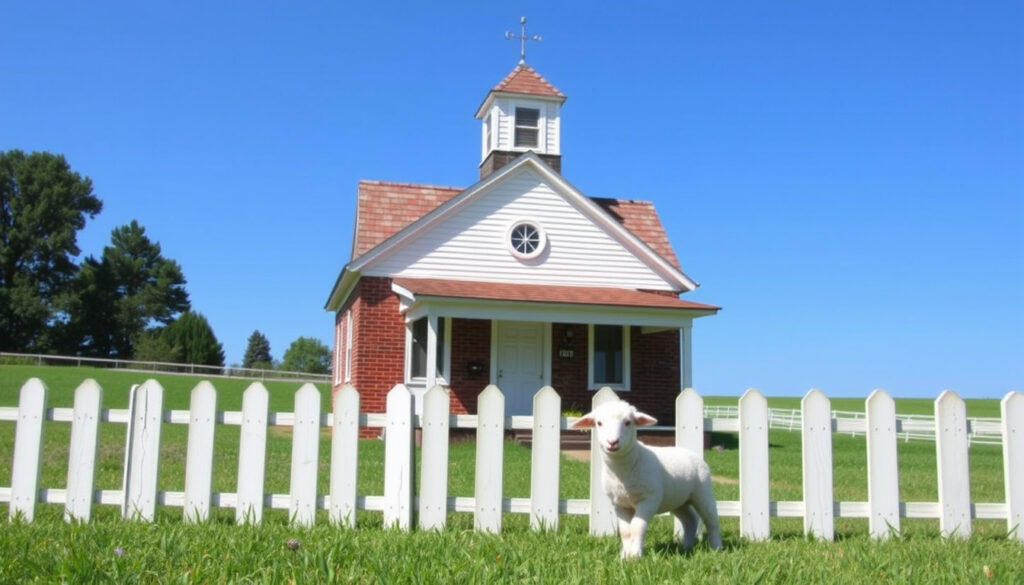
Mary Had a Little Lamb: History, Lyrics, and Dark Rumors Debunked
You’ve probably sung it without thinking — a little girl, a lamb, a schoolhouse. But somewhere along the way, that innocent nursery rhyme picked up whispers of tragedy and hidden curses. First published in 1830 as a simple poem by Sarah Josepha Hale (the open encyclopedia Wikipedia), the actual history is far more mundane — and more charming — than the myths suggest. Here’s what’s real, what’s imagined, and why the dark stories don’t hold up to scrutiny.
First published: 1830 ·
Author: Sarah Josepha Hale ·
Famous lines: “Its fleece was white as snow” ·
Origin country: United States
Quick snapshot
- Published 1830 by Sarah Josepha Hale (Wikipedia)
- Based on real girl Mary Sawyer of Sterling, MA (Smithsonian Magazine)
- Three stanzas about a lamb following Mary to school
- “Its fleece was white as snow” — Wikipedia (the open encyclopedia)
- Published in full by Marsh, Capen & Lyon in 1830
- No factual basis — Smithsonian Institution (the U.S. museum authority)
- Dark interpretations appear only in forums and clickbait articles, never in academic or historical texts. (Smithsonian Institution (the U.S. museum authority))
- Easy piano notes — three notes: C, D, and E (Skoove (an online piano platform))
- Skoove (an online piano platform) calls it a “first song”
- Common in preschools and beginner music curricula (Skoove (an online piano platform))
Five key publication facts, one takeaway: the rhyme is thoroughly documented, leaving little room for hidden meanings.
| Fact | Detail | Source |
|---|---|---|
| First publication year | 1830 | Wikipedia |
| Author | Sarah Josepha Hale | Wikipedia |
| Original publisher | Juvenile Miscellany (Marsh, Capen & Lyon) | Wikipedia |
| Famous phrase | “Its fleece was white as snow” | Wikipedia |
| First audio recording | 1877, Thomas Edison | Wikipedia |
What is the dark story behind Mary Had a Little Lamb?
The origins of false dark rumors
- Published 1830 by Sarah Josepha Hale (Wikipedia)
- Based on real girl Mary Sawyer of Sterling, MA (Smithsonian Magazine)
Why people think the rhyme is sinister
- Some point to the phrase “white as snow” as a death symbol — a misreading that ignores the pastoral context of 19th-century poetry.
- Urban-legend debunkers like Snopes have also noted the lack of evidence, though the rumors persist because of their shock value.
Decades of folkloric research have turned up zero evidence for any hidden tragedy. The burden of proof rests with those claiming sinister codes — and they haven’t produced any.
Bottom line: The dark story is a modern internet fiction. No historical record supports murder or ghost narratives.
What is the full poem of Mary Had a Little Lamb?
Complete original text by Sarah Josepha Hale
- Three stanzas published in the May 1830 issue of Juvenile Miscellany. Wikipedia (the open encyclopedia) reproduces the full text.
- First stanza: “Mary had a little lamb, / Its fleece was white as snow; / And everywhere that Mary went, / The lamb was sure to go.”
- Second stanza: “It followed her to school one day, / Which was against the rule; / It made the children laugh and play / To see a lamb at school.”
- Third stanza: “And so the teacher turned it out, / But still it lingered near, / And waited patiently about / Till Mary did appear.”
“Why does the lamb love Mary so?” the eager children cry. / “Why, Mary loves the lamb, you know,” the teacher did reply.
— Sarah Josepha Hale, 1830 (as cited by Wikipedia)
Variations across songbooks
- Modern songbooks sometimes shorten the poem to two stanzas or alter the rhythm. The core narrative — a lamb follows a girl to school — remains unchanged.
Bottom line: The poem is a straightforward three-stanza narrative about a lamb and a girl. No missing verses.
What is the story of Mary and her little lamb?
Historical background of the rhyme
- The most widely credited real-life inspiration is Mary Sawyer of Sterling, Massachusetts. According to Smithsonian Magazine (the trusted history publication), Mary found a sick newborn lamb in 1815 and nursed it back to health. The lamb followed her to school one day.
- The incident was reportedly witnessed by a young man named John Roulstone, who allegedly wrote the first four lines. Morning Ag Clips (a rural news outlet) reports that Roulstone’s contribution is unconfirmed.
- Sarah Josepha Hale expanded the lines into the full poem published in 1830.
Real-life Mary Sawyer and her lamb
- Mary Sawyer married and later in life told her story to collectors. The house where she lived still stands in Sterling, Massachusetts, and is a local landmark.
- The Smithsonian Institution notes that the origins are “a bit murky and conflicting.” (Smithsonian Institution blog)
The Mary Sawyer story grounds the rhyme in a specific time and place — a far cry from the dark fantasy. Even with murky details, the documented incident confirms the poem’s innocent roots.
The implication: the simplest explanation—a girl and her lamb—is the one supported by historical records, not the dark fantasies of the internet age.
Bottom line: The Mary Sawyer story gives the rhyme a charmingly mundane origin. No hidden curses or tragedies are backed by evidence.
Does Mary Had a Little Lamb have a dark meaning?
Debunking the murder and ghost theories
- Online sources claim the lamb’s “white as snow” fleece is a death shroud, and that Mary died after the lamb was killed. No historical record supports this. Smithsonian Magazine states the rhyme is “a real-life anecdote” that has been published as a children’s song for nearly 200 years.
- The murder narrative appears to have originated in the 2000s on internet message boards and spread through social media.
Why dark interpretations are not credible
- Folklorists and historians have examined the rhyme for symbolism; none have found coded dangers. Wikipedia describes the rhyme as a nineteenth-century American nursery rhyme — no warnings, no hidden messages.
- Every “dark version” of the lyrics circulating online is a fabricated pastiche, not a rediscovered original.
The rhyme’s origins are “a bit murky and conflicting,” according to folklorists.
— Smithsonian Institution blog
The idea that ‘Mary Had a Little Lamb’ is secretly about death or ghosts has been repeatedly debunked. It’s a classic case of an internet urban legend that refuses to die.
— Editors of Wikipedia, as summarized from academic references
What are the lyrics and piano notes for Mary Had a Little Lamb?
Complete lyrics
- Standard lyrics match the three stanzas above. Wikipedia provides the full text under public domain.
Simple piano notes for beginners
- The melody uses only three notes: C, D, and E. The opening phrase is E D C D E E E. La Touche Musicale (a music learning site) breaks it down step by step.
- Skoove (an online piano platform) also uses the same three-note pattern, calling it a “first song” because of its simplicity.
- Printable teaching materials from UCR Gluck Program (a university outreach initiative) pair the lyrics with note names for young learners.
The catch: despite its simplicity, the rhyme carries centuries of cultural weight, making it a perfect starter song for young learners.
Timeline signal
- 1830 — First publication of the poem by Sarah Josepha Hale in Juvenile Miscellany. Wikipedia
- 1877 — Thomas Edison records the rhyme on his phonograph — the first audio recording of a human voice. Wikipedia
- 1900s — The rhyme becomes a staple in American preschools and kindergarten curricula.
- 2000s — Online dark stories emerge, claiming hidden meanings. No historical evidence supports them. Smithsonian Institution
Confirmed facts
- Mary Had a Little Lamb was first published in 1830. (Wikipedia)
- The author was Sarah Josepha Hale. (Wikipedia)
- There is no verified dark story behind the rhyme. (Smithsonian Institution)
What’s unclear
- Whether Mary Sawyer was the direct inspiration is debated among historians. (Smithsonian Magazine)
- Whether the “white as snow” fleece originally held symbolic meaning is a modern invention, not a historical interpretation.
- Whether John Roulstone contributed the opening lines remains unconfirmed. (Morning Ag Clips)
Timeline signal
- 1830 — First publication of the poem by Sarah Josepha Hale in Juvenile Miscellany. Wikipedia
- 1877 — Thomas Edison records the rhyme on his phonograph — the first audio recording of a human voice. Wikipedia
- 1900s — The rhyme becomes a staple in American preschools and kindergarten curricula.
- 2000s — Online dark stories emerge, claiming hidden meanings. No historical evidence supports them. Smithsonian Institution
For parents and educators navigating the internet’s rumor mill, the lesson is clear: the sweet story of a girl and her lamb is just that — sweet. Trust the historical record, not the clickbait. For curl-up-with-a-story fans, the true tale of Mary Sawyer and her lamb offers all the charm you need, without any of the hocus-pocus.
Related reading: **Mary Had a Little Lamb: History, Lyrics, Dark Story & Piano**
modernfarmer.com, smithsonianmag.com, youtube.com, youtube.com, youtube.com, nurseryrhymesforbabies.com
Readers interested in the rhyme’s full backstory should explore the deeper history of Mary Had a Little Lamb for more context on its 1830 publication and cultural impact.
Frequently asked questions
What is the original Mary Had a Little Lamb poem?
The original poem consists of three stanzas, first published in 1830 by Sarah Josepha Hale. It tells the story of a girl whose lamb follows her to school.
Who wrote Mary Had a Little Lamb?
Sarah Josepha Hale wrote and published the poem in 1830. Some accounts attribute the opening lines to John Roulstone, but that is unconfirmed.
How many stanzas are in the original poem?
The original has three stanzas. Modern versions sometimes shorten it to two.
Are there any dark meanings in the rhyme?
No. Every credible historical and folkloric source confirms the rhyme is an innocent children’s story. Dark interpretations are modern internet inventions.
Is Mary Had a Little Lamb based on a true story?
Likely yes. The incident of Mary Sawyer bringing her lamb to school in Sterling, Massachusetts, is widely accepted as the inspiration, though some details remain murky.
What are the piano notes for the song?
The melody uses notes E, D, C, D, E, E, E for the opening phrase. Full tutorials are available from La Touche Musicale and Skoove.
Where can I listen to the audio version?
Public domain recordings are available on sites like the Library of Congress and Wikipedia, including the 1877 Edison phonograph recording.
More related posts
 KiwiSaver Last Chance Government Contribution: $521 Before Cuts
 Knead Bakery Palmerston North: Fresh Artisan Bread, Menu & Hours
 Find Sticky Rice Lotus Leaf Near Me: Lo Mai Gai Guide & Delivery
 Hamilton Boys’ High School Fees 2026: Boarding & Enrolment
 Best Pasticho Venezuelan Lasagna Near Me: Irish Spots
 New Years Festivals NZ: Top NYE Events & Fireworks 2025
 Motor Home Hire NZ: Costs, Age Limits & Camping Rules (2025 Guide)
 Things to Do in South Island: Top Attractions & Hidden Gems