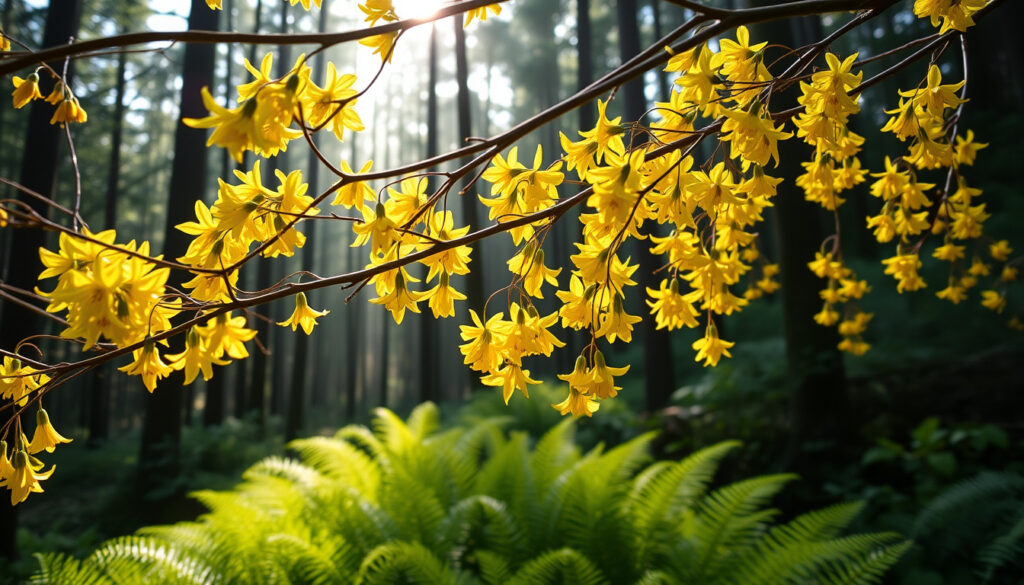
New Zealand National Flower: Kōwhai Facts and Symbolism
New Zealand has no official national flower, yet the kōwhai stands as the country’s de facto floral emblem through sheer cultural weight. The bright yellow blooms appear on coins, stamps, and street signs across the country—and they’ve guided Māori seasonal planting for generations.
Scientific name: Sophora tetraptera ·
Flower color: Bright yellow ·
Bloom season: Spring ·
Official status: Unofficial ·
Māori name: Kōwhai
Quick snapshot
- Kōwhai is widely regarded as New Zealand’s national flower (Russian Flora Blog)
- Kōwhai translates to “yellow” in Te Reo Māori (Russian Flora Blog)
- Eight species of kōwhai exist in New Zealand, all in the genus Sophora (Russian Flora Blog)
- No official government designation exists
- Precise origin of its cultural prominence is not fully documented
- Kōwhai continues to appear on official and cultural memorabilia
- Growers can plant North Island Kōwhai in suitable climates
The table below consolidates the core botanical and cultural attributes of New Zealand’s most recognized native flower.
| Attribute | Details |
|---|---|
| Common name | Kōwhai |
| Scientific name | Sophora tetraptera |
| Status | Unofficial national flower |
| Bloom color | Bright yellow |
| Habitat | Throughout New Zealand |
| Number of species | 8 |
| Bloom season | September–December (spring) |
| Maximum height | Up to 25 meters (some species) |
What flower represents NZ?
New Zealand officially has no national flower designated by law. Despite this absence, the kōwhai holds an unofficial status that few native plants can match.
Kōwhai overview
Kōwhai (Sophora tetraptera) produces spectacular bright yellow, trumpet-shaped blooms that appear in pendulous clusters of 5–7 on bare branches before leaves emerge. The name itself tells you what you’re looking at: in Te Reo Māori, “kōwhai” means yellow. The flowers reach up to 6 centimeters long and display a distinctive golden sulphur yellow color that lights up hillsides during spring.
Eight distinct species of kōwhai grow across New Zealand, from coastal areas to mountain forest margins. Sophora tetraptera (North Island Kōwhai) is the fastest to flower when grown from seed—typically 3–5 years, compared to decades for some other species.
Cultural role
The kōwhai appears on coins, postage stamps, and street names throughout the country, according to the Russian Flora Blog. Its blooms grace ceremonial garlands called korowai, draped over leaders and warriors as a symbol of honor. The tui and bellbird—endemic birds—rely on kōwhai nectar during spring, making the tree a keystone species in New Zealand’s ecosystem.
The implication: the kōwhai’s unofficial status reflects public recognition rather than government mandate, a distinction that deepens rather than diminishes its cultural authority.
What is New Zealand’s native flower?
Native status
Kōwhai is a native evergreen tree found throughout New Zealand, from sea level to mountain forests. Two species dominate: Sophora tetraptera (North Island Kōwhai) and Sophora microphylla (South Island Kōwhai), the latter being the most common species growing alongside rivers and streams on both main islands.
Department of Conservation info
The Department of Conservation recognizes kōwhai as an important native plant, though they note that no formal national flower designation exists in New Zealand law. The distinction between formal and informal symbols matters: the kōwhai’s cultural standing comes from centuries of use, not from legislation.
New Zealand has deliberately avoided naming an official national flower through parliament, instead letting cultural practice determine which plants hold meaning. This approach reflects how indigenous knowledge systems—rather than government decree—shaped the country’s relationship with its native flora.
What this means: the gap between legal designation and cultural recognition creates space for organic, community-driven symbolism to flourish.
What is the Māori flower?
Māori name and use
Kōwhai holds a prominent place in Māori culture. The Māori term for springtime, “ko te ao o te kōwhai,” translates literally to “the world of the kōwhai,” reflecting how intimately the blooming cycle connected to the Māori calendar, according to Science Learning Hub (educational resource on indigenous science).
Traditional significance
Māori used kōwhai bark, flowers, leaves, and juice for rongoā—traditional medicine. Bark infused in water created wai kōwhai, applied to treat internal pains, bruises, and broken limbs. Heated bark placed over hot stones made a drink for similar ailments. Poultices made from bark treated wounds and tumours, while wood ash addressed ringworm infections, per Alan Jolliffe Blog.
The tree served practical purposes too: flexible branches constructed houses and snared birds, while flowers produced a yellow dye for clothes and adornments.
The pattern: the kōwhai integrated into nearly every aspect of traditional Māori life—marking time, healing bodies, providing materials, and coloring textiles.
Confirmed facts
- Kōwhai is widely regarded as New Zealand’s national flower per Wikipedia and multiple sources
- Kōwhai means “yellow” in Te Reo Māori
- Eight species exist in New Zealand, all in genus Sophora
- Blooms appear September–December (spring)
- Used in traditional Māori medicine (rongoā)
- Flowering signaled seasonal planting cycles for Māori
What’s unclear
- No official government designation exists
- Precise historical timeline of how kōwhai became culturally dominant not fully documented
The blooming of kōwhai flowers in late winter and early spring was used by Māori as a seasonal indicator to plant kūmara (sweet potato) and to begin harvesting kina (sea urchins).
— Wikipedia (encyclopedia entry on Māori botanical knowledge)
Traditionally Māori used flexible kōwhai branches as a construction material in houses and to snare birds. Kōwhai is an important tree for rongoā (traditional Māori medicine practices).
— Wikipedia (encyclopedia entry on traditional uses)
What does the New Zealand national flower symbolize?
Symbolism and meaning
Kōwhai embodies the Māori concept of renewal, vitality, and growth through its annual blooming cycle. The phrase “ko te ao o te kōwhai” shows how thoroughly the flower integrated into Māori understanding of the natural world—as reported by Science Learning Hub. The maramataka (Māori lunar calendar) is based partly on mātauranga such as the kōwhai blooming cycle.
Modern uses
Today, kōwhai tattoos, jewelry, and artwork appear throughout New Zealand, carrying forward centuries of symbolic meaning into contemporary contexts. The tree’s appearance on official currency and postal systems cements its role as an unofficial ambassador for New Zealand’s natural heritage.
Kōwhai’s unofficial status means it lacks legal protections but gains something else: organic cultural authority. Rather than government mandate, its standing comes from how New Zealanders—Māori and Pākehā alike—have woven the flower into daily life over generations.
What are New Zealand’s other national symbols?
National bird
The kiwi bird holds official status as New Zealand’s national icon, and unlike the kōwhai, this designation carries formal recognition. The kiwi appears on coins, passports, and official insignia, representing New Zealand internationally in ways the flower cannot.
National tree
The kōwhai itself is sometimes called an “unofficial national tree,” sharing symbolic weight with the silver fern—another plant without formal legal status but immense cultural significance. The Auckland Zoo (conservation institution) notes the tree’s importance in traditional medicine and ecology.
These unofficial symbols—kiwi, kōwhai, silver fern—define New Zealand’s identity more powerfully than any parliament could mandate. The absence of formal status doesn’t diminish their meaning; if anything, it deepens their authenticity.
Related reading: Fried Zucchini Flowers Near Me – Top Restaurants and Seasonal Tips · Sri Lanka National Cricket Team – Captain, Coach, Squad, Schedule
Frequently asked questions
Is there an official national flower for New Zealand?
No. New Zealand has no flower officially designated by law. The kōwhai holds unofficial status as the national flower through cultural practice and widespread recognition.
What does kōwhai look like?
Kōwhai produces bright yellow, trumpet-shaped flowers up to 6 centimeters long, appearing in pendulous clusters of 5–7 on bare branches before leaves emerge. The color is often described as golden or sulphur yellow.
Where can I see kōwhai flowers in New Zealand?
Kōwhai grows throughout New Zealand along forest margins, riverbanks, and hillsides. The best viewing season runs September through December (spring). South Island Kōwhai (Sophora microphylla) commonly grows alongside rivers and streams on both main islands.
Why is kōwhai important to Māori culture?
Kōwhai guided Māori seasonal activities: its blooming signaled when to plant kūmara and harvest kina. The tree provided medicine (rongoā), construction materials, ceremonial garlands, and yellow dye. The term for springtime in Māori literally references the kōwhai.
How does kōwhai compare to other national flowers?
Unlike countries with officially designated flowers, New Zealand relies on informal symbols. Kōwhai’s cultural standing comes from indigenous knowledge and centuries of use, rather than government mandate—a distinctly New Zealand approach to national identity.
What is New Zealand’s national animal?
The kiwi bird holds official status as New Zealand’s national icon, appearing on currency, passports, and national insignia. Unlike the kōwhai, the kiwi has formal recognition alongside its cultural significance.
Can I grow kōwhai outside New Zealand?
North Island Kōwhai (Sophora tetraptera) adapts to various climates and is the easiest species to grow from seed, flowering within 3–5 years. It prefers forest margins, lowlands, and areas alongside streams at altitudes from sea level to 450 meters.
For visitors and residents alike, the kōwhai story reveals something essential about New Zealand: its national identity emerged organically from the land and its people, not from legislative decree. That the country’s most beloved flower has no official status makes its cultural weight all the more remarkable.
More related posts
 High Performance Sport NZ: Role, Top Sports, Top Paid Athletes
 Nilavuku En Mel Ennadi Kobam: Meaning, OTT & Review
 Shadow Box Frame NZ: Buy or DIY? Prices, Retailers & Guide
 Apartments for Rent Wellington: 2025 Prices & Neighborhoods
 Taupo to Palmerston North: Drive, Bus, Flight & Best Stops
 Iron Lung Movie NZ: Release, Where to Watch, Rating
 NZD to Thai Baht: Current Exchange Rates, Tips & Forecast
 How to Make Money Online NZ – 10 Proven Ways for Kiwis