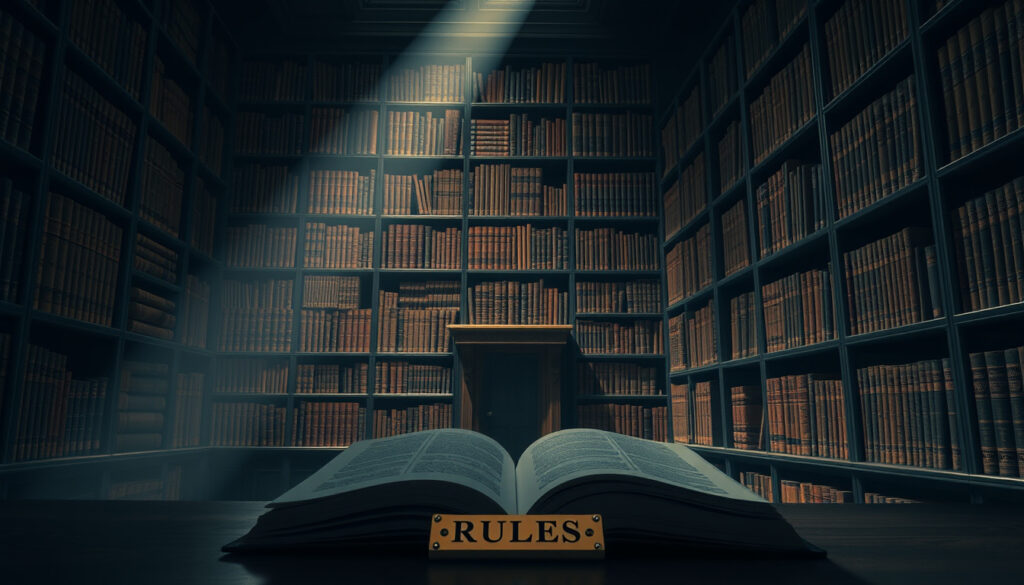
How Many Books Make a Library? Thresholds & Rules
Ask ten people what makes a library, and you’ll get ten different answers. The question of how many books are needed to qualify as a library has sparked debates among book lovers, collectors, and even regulators.
Books in a typical public library: 5,000–10,000 ·
Library of Congress collection: 32 million ·
Common home-library threshold: 1,000 books ·
Average home collection: 150–500 books ·
Most stolen book from libraries: The Bible ·
Nancy Pearl rule of 50: Stop after 50 pages if not enjoying
(Sources: AALL toolkit, UNESCO, Bookscouter)
Quick snapshot
- Typically 5,000–10,000 volumes AALL toolkit
- Requires government or institutional support UNESCO
- Open to community with borrowing privileges AALL toolkit
- Any size; no official minimum Bookscouter
- Commonly cited threshold: 1,000 books Bookscouter
- No legal status unless registered as a nonprofit AALL toolkit
- E-books, audiobooks, and online resources AALL toolkit
- Size measured in titles, not physical volumes AALL toolkit
- Often part of a larger institution AALL toolkit
The table below shows a few key facts about library book counts from different sources — the range is wide, and the pattern is clear: there is no one-size-fits-all number.
| Minimum for public library | Varies by state; often 5,000–10,000 AALL |
| Most common rule | 1,000 books as a threshold Bookscouter |
| Largest library | Library of Congress: 32 million books Library of Congress |
| Most stolen book | The Bible Bookscouter |
How many books are considered a library?
What is the minimum number of books for a library?
- The UNESCO Public Library Service guidelines (tier 1) state that the minimum stock level for the smallest service point should not be less than 2,500 books. They also recommend a new library start with a minimum base stock of 1.0 book per capita.
- An Indian standard for public libraries (IS 15339:2003) says a library should possess at least 1,000 items in its core collection and carry a minimum of 1,500 to 2,000 books.
- An ERIC document (full text ED049800) recommends a minimum of 6,000 books for some library contexts, and for populations up to 5,000, a minimum of 10,000 volumes or three books per capita, whichever is greater.
How many books are in an average public library?
Most public libraries in the U.S. and Europe hold between 5,000 and 10,000 volumes, according to a toolkit from the American Association of Law Libraries (AALL), which notes that there is not a single minimum book count that defines a library. The Library of Congress, by contrast, holds more than 32 million books, making it the largest library in the world.
What constitutes a library legally?
Legal definitions vary by jurisdiction. In the Philippines, for example, public library standards recommend an initial collection of 3,000 volumes for larger libraries and 500 for smaller ones. A separate article on Philippine norms states that rural public libraries may follow a minimum of 6,000 books, while urban libraries in municipal towns should have 10,000 books.
No single number defines a library. UNESCO’s 2,500-book floor is a guideline, not a global law. For a personal collection, the threshold is whatever you decide — but don’t expect tax benefits just because you hit 1,000 volumes.
The implication: the definition of a library is elastic, shaped by context, purpose, and local regulation. The next section explores the popular rules that have emerged from this ambiguity.
What is the rule of 50 books?
What is the Nancy Pearl rule of 50?
Librarian and author Nancy Pearl famously advised readers to give a book 50 pages before deciding to stop. If it hasn’t grabbed you by then, put it down and move on. This guideline, often called the “Rule of 50,” is widely shared among book lovers and is a practical way to manage a large collection.
What is the 3 book rule?
The “3 book rule” suggests reading three books in a genre or by an author before deciding whether you like that style. It’s a heuristic for exploring new reading territory without giving up too early.
What is the rule of 5 in library?
The “rule of 5” refers to S. R. Ranganathan’s Five Laws of Library Science, formulated in 1931. The laws are:
- Books are for use.
- Every reader his/her book.
- Every book its reader.
- Save the time of the reader.
- A library is a growing organism.
These principles remain foundational in library science and inform collection development, including decisions about how many books a library should hold.
What are the 10 rules of a library?
Common courtesy rules in libraries include: silence, ask before borrowing, never write in books, return books on time, etc. These are informal etiquette guidelines, not official legal standards.
Library rules, from the Rule of 50 to Ranganathan’s laws, shape how we interact with book collections. They remind us that a library is not just a number — it’s a system designed for human use.
The trade-off: rules like the 50-page rule help personal libraries stay manageable, but they don’t answer the legal question of what counts as a library. That’s where the 1,000-book myth comes in.
Do you need 1000 books to have a library?
Does owning 1000 books make your home a library and tax exempt?
The idea that 1,000 books qualifies a home library for tax exemption is widespread but largely unfounded. According to an article from Bookscouter, some sources use 500 or 1,000 volumes as informal thresholds, but no legal precedent universally grants tax breaks based on book count. The AALL toolkit confirms that there is not a single minimum book count that defines a library.
How many books are needed for a home library?
For a personal collection, any number can be a library. The UKPH blog notes that “1,000 books makes a library, or that you need at least 5,000 volumes before you can legitimately call your collection by that name” — but this is opinion, not rule. The reality is that a home library is whatever you call it, as long as you can shelve, browse, and enjoy it.
The 1,000-book threshold is a cultural myth, not a legal standard. Tax exemption for a home library requires nonprofit registration, public access, and a stated educational mission — not just a packed bookshelf.
What this means: if you’re building a personal library, don’t stress about hitting a magic number. Focus on quality and curation instead.
What is the most stolen book from the library?
According to multiple sources, the book most frequently stolen from libraries is the Bible. Other frequently stolen titles include Guinness World Records and popular novels. The Library of Congress, with its 32 million books, has not escaped theft — but the Bible’s ubiquity and small size make it a prime target.
This quirky fact underscores a broader truth: libraries are living collections, shaped by user behavior as much as by acquisition policies.
How to register as a library?
How to qualify as a library?
To qualify as a formal library, you typically need:
- A collection of books and resources (size varies by jurisdiction).
- Public access or a defined user community.
- Staff (paid or volunteer).
- A catalog and circulation system.
- Adherence to local regulations.
Are libraries tax-exempt?
Tax-exempt status is not automatic with book count. Libraries can apply for 501(c)(3) nonprofit status if they operate for educational, charitable, or scientific purposes. The IRS does not set a minimum number of books; the key is the organization’s mission and public benefit.
Steps to register a library
- Define your library’s purpose and target audience.
- Acquire space and shelving.
- Build a core collection (at least 1,000–2,500 books is a common starting point, but not required).
- Catalog your collection using a system like Dewey Decimal or Library of Congress.
- Apply for tax-exempt status if you plan to operate as a nonprofit.
- Register with local government if required.
The pattern: formal registration is about process, not book count. Your personal collection can be a “library” in spirit, but only a registered organization gets the legal perks.
Quotes from the experts
50-150 books: The shelf sharer; 150-500: The lay librarian.
— Penguin article on book collections
The Library of Congress has more than 32 million books. Your local school library may have fewer than 5,000.
— Bookscouter
1,000 books makes a library, or that you need at least 5,000 volumes before you can legitimately call your collection by that name.
— UKPH blog
These expert voices show that the definition of a library is as much about perception as about numbers. The common thread: a library is a collection organized for use, not a mere stack of books.
Summary
The question of how many books make a library has no single answer. From UNESCO’s 2,500-book minimum to the anecdotal 1,000-book threshold, the numbers vary by context and purpose. For the casual collector, the real question isn’t “how many?” but “how do I use them?” Whether you’re building a personal library or dreaming of a public one, the rules of library science – especially Ranganathan’s “every book its reader” – matter more than the count. For the aspiring home librarian, the choice is clear: focus on curation and access, not on hitting a magic number. Or, as the What Is a Zine? article reminds us, even a small collection can be a library if it’s curated with passion. And if you’re looking for a children’s classic to start your collection, consider Hairy Maclary from Donaldson’s Dairy – a book that proves great libraries come in small packages.
While there is no universal minimum, many sources cite 1,000 books as a common benchmark, but official definitions vary widely, as explored in this discussion of thresholds for what defines a library.
Frequently asked questions
How many books are needed for a public library?
Most public libraries hold 5,000–10,000 volumes. School libraries often have 1,000–5,000. The Library of Congress has 32 million.
What is the 3 book rule for reading?
The 3 book rule suggests reading three books in a genre or by an author before deciding whether you like that style.
What is the rule of 5 in library science?
The rule of 5 refers to S. R. Ranganathan’s Five Laws of Library Science, which guide library operations and collection development.
What are the 10 rules of library etiquette?
Common etiquette rules include silence, no food, return books on time, and respect for others. These are not official laws.
Are libraries tax-exempt?
Libraries can be tax-exempt if they register as nonprofit organizations with a public mission. Book count alone does not grant exemption.
How to qualify as a library?
Qualification depends on jurisdiction, but generally requires a collection, public access, staff, and a catalog system. No universal minimum book count exists.
What constitutes a library?
A library is an organized collection of resources (books, media, digital) made accessible to a defined community. Size is secondary to purpose and service.
More related posts
 Plane Crash Lake Hawea: Ivan Van de Water Killed, 1 Injured
 Happy New Year Wishes: 100+ Messages and Ideas for 2026
 Do Not Disturb iPhone: What Happens When It’s On
 NZ Herald Death Notices Hamilton: Find Recent Obituaries
 Things to Do in South Island: Top Attractions & Hidden Gems
 Best Online to Learn Spanish: A Data-Driven Guide (2025)
 Social Kitchen New Plymouth: Menu, Prices, Hours & Reviews
 How Many Questions in NZ Learners Test: 35 Qs, Pass with 32