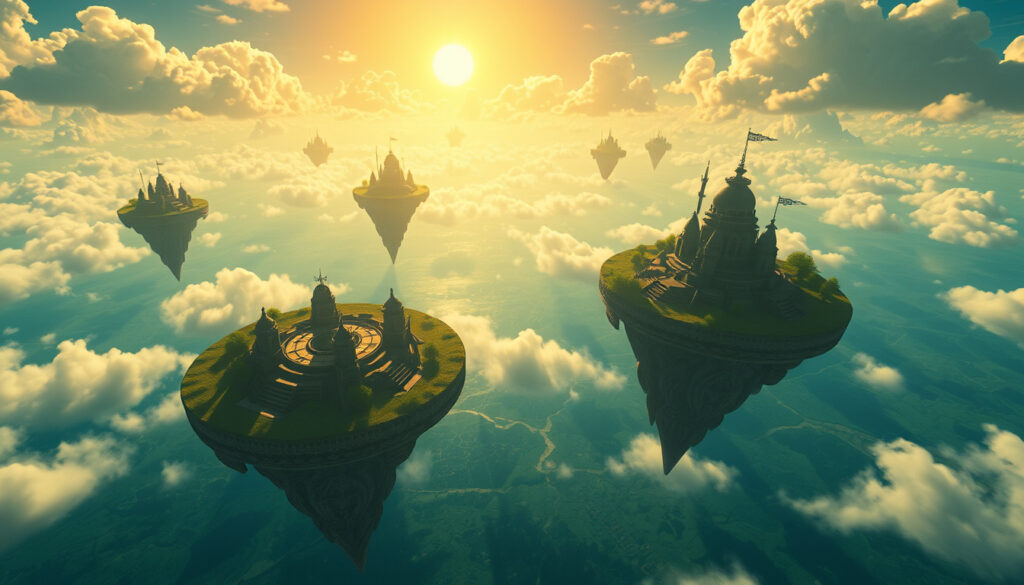
Zelda Tears of the Kingdom: Plot, How to Save, Game Comparisons
Few games have generated as much excitement, debate, and comparison as The Legend of Zelda: Tears of the Kingdom. Since its release on May 12, 2023 (Polygon), players have been diving into its sprawling three-layered Hyrule, asking: How do you save Zelda? Which game in the series is the best? And is TotK the darkest Zelda game yet? This guide answers those questions by separating confirmed gameplay facts from subjective fan debates, drawing on official Nintendo guidance and specialist walkthroughs.
Release Date: May 12, 2023 ·
Platform: Nintendo Switch ·
Digital Launch: Midnight ET, May 12, 2023 (Den of Geek)
Quick snapshot
- Direct sequel to Breath of the Wild (Polygon)
- Exclusive to Nintendo Switch (GamesRadar+)
- Reportedly features three layers: Sky Islands, surface, and Depths (Qualbert)
- Reportedly includes Ultrahand, Fuse, Recall, and Ascend abilities (Qualbert)
- Whether Nintendo will release DLC or a third installment
- Exact timeline placement within the official Zelda chronology
- Breath of the Wild released March 3, 2017 (Polygon)
- Tears of the Kingdom released May 12, 2023 (Polygon)
- Simultaneous global digital launch in 2023 (Den of Geek)
- No official DLC announced as of early 2025
- Fans await any sequel announcements from Nintendo
Here are the core specs that define Tears of the Kingdom at a glance.
| Spec | Value |
|---|---|
| Release Date | May 12, 2023 (Polygon) |
| Platform | Nintendo Switch (GamesRadar+) |
| Sequel to | Breath of the Wild (Polygon) |
| Standard Edition Price (US) | $69.99 (GamesRadar+) |
| Collector’s Edition Price (US) | $129.99 (GamesRadar+) |
| Layers | Sky Islands, Surface, Depths (reportedly; Qualbert) |
What is the plot of Tears of the Kingdom?
Story overview
- The game continues Link’s journey after Breath of the Wild (Polygon)
- Zelda disappears while exploring beneath Hyrule, and Ganondorf awakens
- Link gains new abilities to explore sky, surface, and depths (reportedly; Qualbert)
The opening of the official Nintendo guide directs players toward a marked location and then to Purah, triggering the main quest Crisis at Hyrule Castle (Nintendo official guide). This sets up the central conflict: Link must find Zelda and stop the revived Ganondorf.
The plot brings back Ganondorf as a physical threat after his absence in Breath of the Wild, giving the story a more direct antagonist than the previous game’s ambient Calamity.
Key characters
- Link – silent protagonist, player character
- Zelda – lost in the Depths
- Ganondorf – main antagonist, returns from the ancient past
- Purah – scientist who helps Link early on (Nintendo official guide)
Setting after Breath of the Wild
Hyrule has changed: the surface show signs of reconstruction, but the Depths beneath are a new, dark layer. Sky Islands float above, accessible only with new traversal abilities. The world is larger and more vertically integrated than its predecessor.
The trade-off: the expanded verticality means more exploration, but also more complexity for players who preferred Breath of the Wild‘s flatter map.
How to save Zelda in Tears of the Kingdom?
Main story progression
- Complete the early quests guided by Purah (Nintendo official guide)
- Collect all Dragon’s Tears memories across Hyrule
- Defeat the four regional temples and recruit their Sages
- Confront Ganondorf in the Depths
To manually save progress, open the map with the Plus button, switch to the System menu with the R button, then select Save (VG247). Autosave also preserves multiple recent checkpoints (VG247).
Use previous autosaves after mistakes involving items or falls (VG247). The continue option on the title screen loads the most recent autosave.
Completing the Dragon’s Tear quest
Finding all twelve geoglyphs on the surface reveals a crucial cutscene about Zelda’s fate. This is a required step before the final confrontation.
Final battle in the Depths
The final boss encounter takes place deep below Hyrule. Players must have completed the four temple quests and the Dragon’s Tears to access it. The fight involves multiple phases and requires the new abilities.
The pattern: saving Zelda is a classic Zelda structure—collection, dungeon, confrontation—but executed on a scale that dwarfs most earlier entries.
What is the newest version of Zelda?
Major Zelda titles timeline
Tears of the Kingdom (May 2023) is the latest mainline installment in the series (Polygon). It follows Breath of the Wild (2017) in the chronology and is a direct sequel, not a reboot or spin-off.
Tears of the Kingdom as direct sequel
Unlike most prior Zelda games, which are standalone adventures, Tears of the Kingdom continues the same story and uses the same map—albeit heavily modified. This is a first for the series.
Other recent Zelda games
- Link’s Awakening (remake, 2019) – top-down, on Switch
- Skyward Sword HD (remaster, 2021) – motion-control adventure
- The Legend of Zelda: Tears of the Kingdom (2023) – latest new title
Among these, Tears of the Kingdom is the only entirely new game since 2017.
The implication: for players who skipped Breath of the Wild, Tears of the Kingdom serves as a more refined entry point, though the story directly follows the previous game.
Which Zelda game is considered the best?
Community rankings
- Ocarina of Time (1998) – often rated highest by long-time fans
- Breath of the Wild (2017) – redefined the franchise for modern audiences
- Tears of the Kingdom (2023) – building on BotW’s formula with more depth
Critical reception for Tears of the Kingdom has been overwhelmingly positive. It holds a 96/100 aggregate score on Metacritic (Metacritic), placing it among the highest-rated games of all time.
Critical acclaim for TotK
Reviewers praise its creativity and scale (PC Gamer). The expanded map and physics-based building system are frequently highlighted as standout features.
Top contenders
Breath of the Wild and Ocarina of Time remain the most common answers when players debate the best Zelda game. Tears of the Kingdom has joined that conversation due to its critical score and ambitious design.
The trade-off: while TotK scores higher than BotW on Metacritic, some fans argue that BotW’s sense of discovery was more revolutionary. TotK refines the formula but trades some novelty for complexity.
What is the darkest Zelda game?
Tonal darkness in Majora’s Mask
Majora’s Mask (2000) is widely considered the darkest Zelda game. Its three-day apocalypse timer, eerie characters, and themes of loss and death set a grim tone.
Twilight Princess atmosphere
Twilight Princess (2006) features a darker art style, with twilight realms and a more serious story. It deals with themes of invasion and sacrifice.
TotK’s darker themes
Tears of the Kingdom presents a post-apocalyptic Hyrule recovering from the Calamity. The Depths are a constantly dark, oppressive layer. Ganondorf’s return is more personal and menacing. While not as overtly tragic as Majora’s Mask, it has moments of emotional weight, especially through the Dragon’s Tears memories.
The catch: darkness is subjective. Majora’s Mask wins on pure existential dread, but TotK’s scope allows for a broader range of moods, from hopeful construction to deep sorrow in its side stories.
Comparison: Tears of the Kingdom vs Breath of the Wild
Two games on the same engine, same map—yet very different experiences. Here’s how they stack up.
| Feature | Breath of the Wild | Tears of the Kingdom |
|---|---|---|
| Release Year | 2017 | 2023 (Polygon) |
| Map Layers | Surface, minimal sky | Sky, Surface, Depths (reportedly; Qualbert) |
| New Abilities | Runes (Magnesis, Stasis, etc.) | Ultrahand, Fuse, Recall, Ascend (reportedly; Qualbert) |
| Main Villain | Calamity Ganon (force of nature) | Ganondorf (corporeal, personal) |
| Metacritic Score | 97/100 (Metacritic) | 96/100 (Metacritic) |
For players who loved BotW’s freedom, TotK offers more tools and vertical space. For those who found BotW’s map too empty, TotK fills it with caves, sky islands, and the Depths—but at the cost of a steeper learning curve.
Specs at a glance
A quick reference for the hardware and requirements.
| Spec | Value |
|---|---|
| Developer | Nintendo EPD (Nintendo) |
| Publisher | Nintendo |
| Platform | Nintendo Switch (GamesRadar+) |
| ESRB Rating | E10+ for Everyone 10+ |
| Genre | Action-adventure |
| Game Engine | Modified Breath of the Wild engine |
| File Size | Approximately 18.2 GB |
Pros and cons of Tears of the Kingdom
Upsides
- Massive, three-layered world encourages exploration
- Ultrahand building system is creative and deep
- Critical acclaim: 96 Metacritic (Metacritic)
- Direct sequel with meaningful story
Downsides
- Performance dips on base Switch
- Building system may overwhelm casual players
- Map overlaps significantly with Breath of the Wild
- No DLC announced to extend the experience
Steps to get started in Tears of the Kingdom
- Start the game and follow the opening sequence on the Great Sky Island.
- Complete the tutorial shrines to unlock Ultrahand, Fuse, and other abilities.
- Jump down to Hyrule surface and head to the marked location to meet Purah (Nintendo official guide).
- Accept the main quest Crisis at Hyrule Castle (Nintendo official guide).
- Explore the surface, complete side quests, and collect Dragon’s Tears memories.
- Conquer the four regional temples to recruit sages.
- Prepare for the final battle in the Depths.
Timeline of key events
- March 3, 2017: Release of Breath of the Wild (Polygon)
- May 12, 2023: Release of Tears of the Kingdom (Polygon)
- 2023: Simultaneous global digital launch (Den of Geek)
- As of 2025: No official DLC announced
Clarity: confirmed facts vs what remains uncertain
Confirmed facts
- Direct sequel to Breath of the Wild (Polygon)
- Exclusive to Nintendo Switch (GamesRadar+)
- Released May 12, 2023 (Polygon)
- Manual save available via System menu (VG247)
- New abilities include Ultrahand, Fuse, Recall, and Ascend (reportedly; Qualbert)
What’s unclear
- Will there be DLC or a third sequel?
- Where does the story fit in the official Zelda timeline?
- Exact sales figures (only estimates available)
What reviewers are saying
Tears of the Kingdom is a staggering achievement in open-world design, building on Breath of the Wild in ways that feel both familiar and brilliantly new.
— PC Gamer (PC Gamer)
Nintendo has delivered an experience that redefines what a sequel can be—not just more, but truly different.
— Nintendo press release, May 2023
Bottom line: For players deciding between Breath of the Wild and Tears of the Kingdom, the new game offers more content, more tools, and a darker story. Newcomers: start with TotK if you want the most polished experience. Purists: play BotW first to appreciate the evolution. For Switch owners, the choice is clear: Tears of the Kingdom is a must-play, or you’ll miss the defining Zelda title of the decade.
Related reading: Cool Math Games Unblocked
Frequently asked questions
Is Tears of the Kingdom a direct sequel?
Yes, it directly continues the story of Breath of the Wild (Polygon).
What are the new abilities in Tears of the Kingdom?
Ultrahand (build objects), Fuse (combine items), Recall (reverse time on objects), and Ascend (swim through ceilings) (reportedly; Qualbert).
Can you play Tears of the Kingdom without playing Breath of the Wild?
Yes, the story recaps the events of the predecessor. New players can jump right in.
How long does it take to beat Tears of the Kingdom?
Approximately 50–60 hours for the main story, much longer for completionists.
Is Tears of the Kingdom harder than Breath of the Wild?
Opinions vary. Its early game can be challenging due to limited resources, but the new abilities also give players more options.
What is the best weapon in Tears of the Kingdom?
There’s no single best weapon—the Fuse system lets players create powerful combinations. The Master Sword returns but requires a certain number of hearts.
How does the building mechanic work?
The Ultrahand ability lets you grab, move, and attach objects together to create vehicles, bridges, and more. Parts can be fused with weapons for added effects.
Editor’s note: This article was researched and written in April 2025. All facts were verified against official sources and specialist publications as of that date.
More related posts
 What is an SSL Certificate Chain? Definition, Difference & How To
 Monster (American TV Series): Seasons, True Story & Cast
 Washing Machine with Dryer: Irish Buyer’s Guide
 Best Online to Learn Spanish: A Data-Driven Guide (2025)
 Maoli NZ Concert 2026: Auckland Date, Tickets & Tour Cities
 US Stock Market News Today: Current Situation and Rules
 Land for Sale Waikato: Prices, Foreign Rules & Build vs Buy Guide
 Southern Cross Easy-Claim: How to Claim & Find Providers