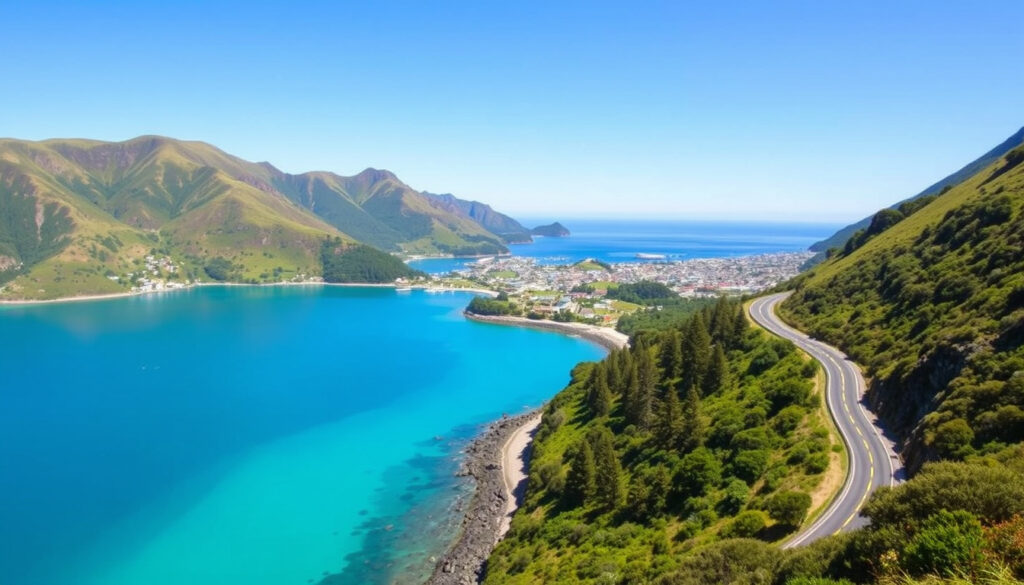
What to Do in Akaroa: Free Activities, Family & Scenic Drives
There’s something about Akaroa that doesn’t quite feel like the rest of New Zealand — and that’s exactly why people keep returning. Tucked into the rim of an ancient volcanic crater on Banks Peninsula, this compact harbour settlement blends French colonial charm with wildlife encounters that few other destinations can match. Whether you’re planning a day trip from Christchurch or a weekend escape, this guide covers the best free activities, family-friendly stops, winter options, and scenic drives to help you make the most of every hour.
Distance from Christchurch: 75 km (approx. 1.5-hour drive) ·
Settlement founded: 1840 (by French whalers) ·
Permanent population: approximately 570 (2023) ·
Harbour type: Akaroa Harbour, volcanic crater ·
Main attraction: Hector’s dolphin cruises
Quick snapshot
- Only French colonial settlement in New Zealand (New Zealand Tourism (official destination site))
- Hector’s dolphin cruises operate daily from Akaroa Harbour (Black Cat Cruises (local operator))
- Shamarra Alpaca Farm is open year-round (Shamarra Alpaca Farm (official site))
- Exact number of French settlers who remained after 1840 is not precisely documented
- Whether wild Hector’s dolphin pods are resident year-round vs. seasonal
- Official visitor numbers per year (only estimates available)
- c. 1000–1200 CE: Māori settlement by Ngāi Tahu iwi
- 1840: French settlers arrive aboard the Comte de Paris
- 2024: Akaroa continues as a top South Island day-trip destination
- Increased eco-tourism regulation around Hector’s dolphin encounters likely
- Growing interest in winter and shoulder-season visits from Christchurch
Five facts that define Akaroa’s character — from founding date to marine protection.
| Attribute | Detail |
|---|---|
| Founded | 1840 by French whalers under Captain Jean Langlois |
| Location | Banks Peninsula, 75 km southeast of Christchurch |
| Population | 574 (2023 census) |
| Key industry | Tourism (cruises, alpaca farm, wine) |
| Marine reserve | Akaroa Marine Reserve established 1998, protects Hector’s dolphin habitat |
Is Akaroa NZ worth visiting?
For anyone weighing up a South Island itinerary, the short answer: yes, but with one condition. Akaroa works best when you treat it as a full-day micro-destination rather than a quick pit stop. The drive from Christchurch alone — roughly 80–90 km and 1.5 to 2 hours without stops (ChristchurchNZ (official tourism body)) — sets a high bar for scenery. Once you’re there, the combination of French colonial architecture, harbour cruises, and coastal walking tracks makes it a rare package by New Zealand standards.
Scenic harbour setting vs. other South Island towns
- Akaroa sits inside a volcanic crater — a geography most coastal towns don’t share (New Zealand Tourism (official destination site))
- The harbour is a marine reserve, meaning water quality and wildlife protection are legally enforced (Department of Conservation (NZ government agency))
- Towns like Kaikoura offer whale watching, but Akaroa’s sheltered harbour makes dolphin cruises viable in more weather conditions (Black Cat Cruises (local operator))
Unique French history as a drawcard
New Zealand has exactly one French settlement, and Akaroa is it. French street names, the 1840s Ōnuku Church, and the Akaroa Museum (free entry, donations welcome) create a cultural overlay you won’t find elsewhere on the South Island (Akaroa Museum (local heritage institution)).
If your South Island schedule is tight (under 4 days), Akaroa may feel like a detour. But for anyone with even a full day to spare from Christchurch, the density of quality experiences per hour of travel is among the best on the peninsula.
What is special about Akaroa?
Three things set Akaroa apart from every other coastal destination on the South Island: the only French colonial heritage in the country, a marine reserve where Hector’s dolphins swim just metres from shore, and an art-and-animal scene that punches well above the town’s 570-person population (Stats NZ (national census data)).
French and Māori heritage coexistence
- Akaroa was settled by French whalers in 1840 under the French flag, and the area also belongs to the Ngāi Tahu iwi who had inhabited the region for centuries before European arrival (Ngāi Tahu (official iwi authority))
- Street names like Rue Balguerie and Rue Lavaud sit alongside the 1861 Ōnuku Church, a Māori mission church that reflects both cultures (Akaroa Museum (local heritage institution))
- St Patrick’s Church on Rue Balguerie is a Catholic stone church built in 1863, another marker of the French Catholic influence (New Zealand Tourism (official destination site))
Hector’s dolphin encounters
Black Cat Cruises operates 2-hour harbour tours that report 98% dolphin-sighting success year-round (Black Cat Cruises (local operator)). Hector’s dolphins are the world’s smallest marine dolphin and are found only in New Zealand waters. The Akaroa Marine Reserve, established in 1998, protects their habitat within the harbour (Department of Conservation (NZ government agency)).
Giants House sculpture garden and Shamarra Alpaca Farm
- The Giants House (81 Rue Balguerie) is a mosaic sculpture garden created by artist Josie Martin — entry fee applies, but it’s one of Akaroa’s most photographed sites (The Giants House (official site))
- Shamarra Alpaca Farm (open year-round, 15 minutes from Akaroa township) offers feeding sessions and fleece demonstrations (Shamarra Alpaca Farm (official site))
For families travelling with kids in winter, the combination of indoor-friendly museum and sculpture garden plus outdoor alpaca feeding (weather permitting) means Akaroa works even when the weather turns.
What to see between Christchurch and Akaroa?
The drive to Akaroa is half the experience. Most guides describe the route as about 89 km and roughly 1 hour 30 minutes without stops (Britz Campervans (NZ campervan rental company)), but the real value is in what you can add along the way.
Hilltop Tavern viewpoint
- Hilltop Tavern sits at the crest of Banks Peninsula, offering panoramic views over Lyttelton Harbour on one side and Akaroa Harbour on the other
- A popular photo stop — the view is free and requires no entry fee (Britz Campervans (NZ campervan rental company))
- Open daily for coffee, food, and drinks — a convenient refuelling point
Le Bons Bay and Okains Bay detours
Both bays are about 15-minute detours from the main road. Le Bons Bay offers a secluded beach, while Okains Bay has a Māori and colonial museum (See the South Island (NZ travel guide)). These side trips add 15–30 minutes each to your total journey, so plan accordingly if you’re on a tight schedule.
Scenic Summit Road drive
Summit Road is a sealed scenic road that winds around the crater rim above Akaroa Harbour for about 26 km and takes about 40 minutes to drive (TripIdeas NZ (NZ travel ideas site)). It’s signposted on State Highway 75 just after Hilltop and offers views that the direct route misses entirely.
Summit Road is a narrow, winding road with limited passing lanes. Winter frost and occasional snow at higher elevations (400–500 m) can make it slippery. Day-trippers with no experience on NZ rural roads should stick to the main State Highway 75 route in winter.
Is Akaroa French or Māori?
Both — and the answer reveals one of New Zealand’s lesser-known colonial stories.
History of French whaling settlement in 1838–1840
- The French whaling ship Cachalot arrived in 1838 under Captain Jean Langlois, who purchased land from local Māori (NZ History (NZ government history site, Ministry for Culture & Heritage))
- French settlers arrived aboard the Comte de Paris in August 1840, intending to establish a French colony
- However, British sovereignty had already been asserted over Akaroa in February 1840 through the Treaty of Waitangi — the French settlers arrived to find the Union Jack flying (NZ History (NZ government history site, Ministry for Culture & Heritage))
Ōnuku Māori reserve and Ngāi Tahu connection
The Ōnuku Church (built 1861) stands on a Māori reserve that has been occupied by Ngāi Tahu for centuries before European arrival (Ngāi Tahu (official iwi authority)). The church, with its simple wooden construction and Māori architectural elements, is one of the few remaining examples of 19th-century Māori mission architecture.
The implication: Akaroa’s identity is genuinely bicultural, not a marketing story. The French street names sit alongside Māori place names and a living Ngāi Tahu presence. For visitors interested in New Zealand’s colonial history, Akaroa offers a layered narrative that most other towns don’t have.
What to do in Akaroa for free?
Akaroa’s free offerings are surprisingly strong for a town so small. The key is to plan around walking, water views, and low-cost attractions.
Walk the Akaroa Lighthouse trail
- A family-friendly walk from Akaroa Wharf to the Akaroa Lighthouse is about 1.5 km and takes 20–30 minutes (Ezi Car Rental (NZ car rental company))
- The lighthouse itself is a replica (the original was decommissioned in 1980 and sits on the opposite side of the harbour), but the walk offers harbour views and is suitable for children
- No entry fee — the track is public and maintained by the council
Explore Akaroa Museum (donation-based)
The Akaroa Museum on Rue Lavaud is free to enter (donations welcome) and covers both French colonial history and the earlier Māori settlement (Akaroa Museum (local heritage institution)). It’s small — you’ll likely spend 20–30 minutes — but for the price, it’s one of the best-value cultural stops in Canterbury.
Picnic at the Akaroa Waterfront Reserve
- The Waterfront Reserve at the end of Rue Lavaud has picnic tables, a children’s playground, and direct beach access (Backyard Travel Family (family travel blog))
- A 2 km loop walking path circles the harbour from the wharf to the lighthouse track and back
- Free parking is available on Beach Road and Rue Jolie (time-limited, check signs)
Upsides
- Free walking trails and lighthouse track are genuinely scenic, not just token paths
- Akaroa Museum offers cultural depth at zero cost
- Waterfront Reserve playground keeps children occupied without spending
- Free harbour views from multiple points in the township
- Street parking is generally easy to find outside summer peak (January–February)
Downsides
- No free dolphin viewing — all cruises cost $50–$79 per adult
- Akaroa Lighthouse trail can be muddy in winter after rain
- Free parking spots fill quickly on summer weekends and public holidays
- Some walking paths have steep sections (Childrens Bay Walkway has steps)
- Limited free indoor options for rainy winter days
Related reading: Christchurch to Akaroa scenic drive · Akaroa family scenic drive guide
roadtripreviews.com.au, myguidechristchurch.com, plantrip.io, akaroanaturecruise.co.nz
Frequently asked questions
Is Akaroa worth visiting in winter?
Yes. While some cruise operators reduce frequencies, Black Cat Cruises and Akaroa Nature Cruise both run winter services. The alpaca farm is open year-round, and the free walking trails are accessible provided you check road conditions. Winter also means fewer crowds and cheaper accommodation in the area.
Can I see dolphins in Akaroa without a cruise?
It’s possible but unlikely. Hector’s dolphins do enter the harbour, but sightings from shore are rare and unreliable. The marine reserve protects them, but the best viewing is from a boat. Black Cat Cruises reports 98% sighting rates.
What is the best time of day to drive from Christchurch to Akaroa?
Early morning (depart Christchurch by 8:00–9:00 am) gives you the best light for photography and avoids afternoon winds on the Summit Road section. In winter, aim to arrive by 10:00 am to maximise daylight hours.
Are there any free parking spots in Akaroa?
Yes. Street parking on Beach Road, Rue Jolie, and parts of Rue Balguerie is free (time limits apply — typically 2–4 hours). The main council car park on Rue Lavaud has paid parking in summer but may be free in winter — check signage.
How long do you need in Akaroa?
A minimum of 4–5 hours for a day trip covering a dolphin cruise (2 hours), a walk to the lighthouse (30 minutes), and a meal. An overnight stay allows for additional walks, a visit to Shamarra Alpaca Farm, and a slower pace.
What should I pack for a day trip to Akaroa?
Layers (coastal weather changes quickly), sunscreen, a rain jacket, comfortable walking shoes, a water bottle, and a camera. In winter, add a warm jacket and beanie — harbour winds can be chilly.
Is Akaroa safe for solo travellers?
Yes. Akaroa is a low-crime town with well-marked walking paths and a visible local population. The main safety consideration is the winding Summit Road in wet or icy conditions — drive to the conditions.
Can you swim at Akaroa beach?
Yes, at the main beach near the Waterfront Reserve. The water is sheltered and generally calm, though summer is the most comfortable season. There are no lifeguards, so swim at your own discretion.
Related reading
- Christchurch to Akaroa scenic drive (Rental Cars 247 – NZ rental guide)
- Akaroa family scenic drive guide (Ezi Car Rental – NZ rental company)
Editor’s note: This guide was researched and written based on the most current available data as of mid-2025. Seasonal schedules and pricing may change; always check directly with operators before visiting.
More related posts
 West Indies vs New Zealand – 13-Run Victory Secures Super 8s
 Lewis Street Fish and Chips Christchurch: Menu, Reviews, Hours
 Air NZ Arrivals Dunedin Today – Live Status & Flight Tracker
 Phil & Teds Travel Cot Recall & Safety Guide 2025
 Steak and Cheese Pie Recipe NZ: Classic Kiwi Bakery Style
 Convert Image to PDF: Free Online Converter & Steps
 How to Choose a Paint Color: Step-by-Step Guide for 2025-2026
 1 Hour Payday Loans No Credit Check NZ: A Real Guide