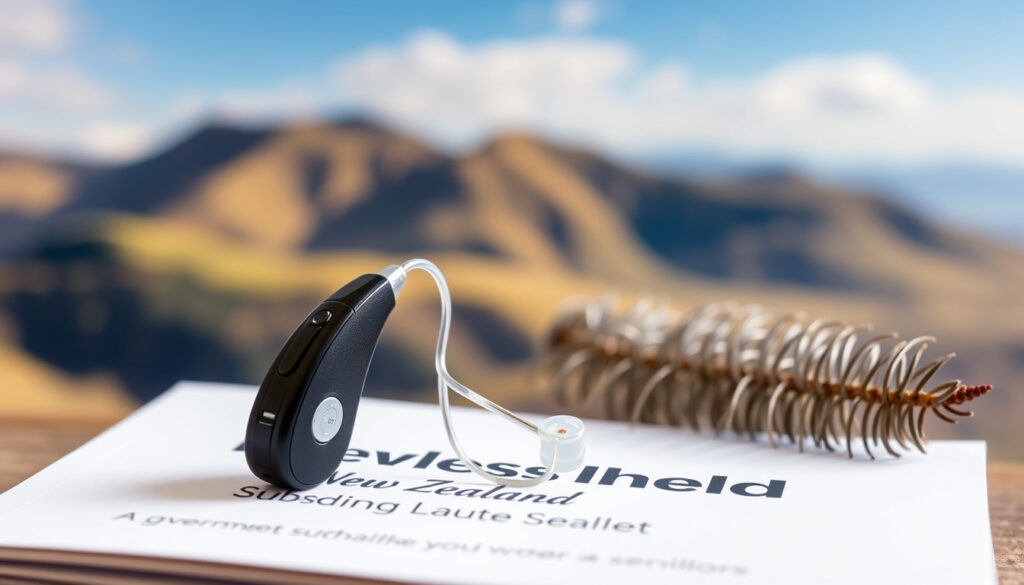
Free Hearing Aids for Seniors in NZ: Eligibility & Subsidies
If you’re a New Zealand senior wondering whether you can get a hearing aid without emptying your savings, you’re not alone. The funding landscape is layered, but between government subsidies, charitable grants, and eligibility rules, affordable options exist.
Vincentian Foundation grant limit per hearing aid: $600 ·
Foundation for seniors grant limit: $300 ·
Government subsidy age eligibility: 16 years and over ·
SuperGold Card age threshold: 65 years and over
Quick snapshot
- For residents 16+ (Whaikaha guide to hearing aids)
- Increased subsidy for SuperGold Card holders 65+ (Beehive press release)
- Apply via Ministry of Health (Disability Support Services) (Whaikaha guide to hearing aids)
- Vincentian Foundation: up to $600 (Triton Hearing) (Hearing Life NZ)
- Foundation for seniors: up to $300 (Hearing Life NZ)
- Income-based eligibility (Hearing Life NZ)
- Rechargeable for convenience (Audiology New Zealand)
- Directional microphones improve speech in noise (Hearing Loss NZ)
- Model options for Meniere’s disease
- 60 60 rule for safe listening (Healthy Hearing)
- High-frequency loss common after 70 (National Institutes of Health)
- Tinnitus management (Healthy Hearing)
What age can you get a free hearing aid?
Eligibility for free or subsidised hearing aids in New Zealand depends on age, residency, and specific programme criteria. The good news: seniors have multiple pathways to access support.
New Zealand’s Hearing Aid Subsidy Scheme is available to anyone aged 16 years and over with permanent hearing loss who is a New Zealand resident, according to Whaikaha’s official guide. The subsidy provides a flat $511.11 including GST per hearing aid, available once every six years per ear.
Do pensioners have to pay for hearing aid?
Most pensioners pay something out of pocket — but the gap can be significantly reduced. For SuperGold Card holders aged 65 and over, a 2008 government announcement confirmed the subsidy increased from $198 to $500 per hearing aid, available from 1 October 2008. Recipients need to be aged 65 or older, hold a SuperGold Card, and have their hearing assessed by a qualified audiologist.
Beyond the government subsidy, charitable grants can further reduce or eliminate the remaining cost. The Vincentian Foundation offers up to $600 per hearing aid for people over 65, as detailed by Triton Hearing’s funding guide. The Foundation for seniors provides up to $300 for low-income seniors.
The implication: For a pensioner combining the SuperGold Card subsidy with a Vincentian Foundation grant, total support could reach $1,100 per hearing aid — enough to cover many mid-range devices entirely.
How does the NZ government hearing aid subsidy work?
The scheme is administered by the Ministry of Health through Whaikaha. The subsidy is not means-tested for standard eligibility — anyone 16+ with permanent hearing loss qualifies. However, there’s a separate Hearing Aid Funding Scheme with more generous coverage for specific groups: children, adults with significant hearing loss from childhood, adults with hearing loss plus visual impairment or intellectual disability, and Community Services Card holders meeting work, study, or caregiving criteria, per the Disability Support Services guide.
The Funding Scheme covers only the cost of the hearing aid — not assessment or fitting fees. The catch is that seniors must pay those out of pocket, which can add hundreds to the total.
The trade-off: Seniors without additional disabilities or a Community Services Card must rely on the Subsidy Scheme ($511.11) plus charitable grants. Those who qualify for the Funding Scheme get the full device cost covered, but must meet stricter criteria.
Takeaway for seniors: Combining the SuperGold subsidy with Vincentian and foundation grants can reduce out-of-pocket costs significantly, but you must apply to all programs to maximize support.
How to get free hearing aids for seniors?
The process involves several clear steps. Most seniors can combine multiple funding sources to bring costs to zero or near-zero.
- Step 1: Check your eligibility
Confirm you are a New Zealand resident aged 16 or older with permanent hearing loss. If you’re 65+ with a SuperGold Card, you qualify for the increased subsidy. Check income thresholds for charitable grants — Audiology New Zealand advises that Vincentian Foundation grants are income-assessed.
- Step 2: Get a hearing assessment
Visit a qualified audiologist for a diagnostic hearing test. This is a prerequisite for any subsidy or grant application. The 2008 government announcement specifically requires the hearing to be assessed by a qualified audiologist for SuperGold Card holders.
- Step 3: Apply to the Ministry of Health Hearing Aid Subsidy Scheme
Your audiologist typically handles the paperwork. The scheme provides $511.11 per aid, once every six years per ear. No separate application is needed — the clinic submits it on your behalf.
- Step 4: Apply to charitable foundations
For additional funding, approach the Vincentian Foundation (up to $600) or Foundation for seniors (up to $300). Applications require proof of income, age, and your audiologist’s recommendation.
- Step 5: Select and purchase your hearing aid
With subsidies and grants confirmed, choose a device that suits your hearing loss profile and lifestyle. Your audiologist can recommend models compatible with your funding package.
The takeaway: by layering grants, seniors can cover premium hearing aids without personal cost, but only if they pursue every available funding source.
The pattern: The system isn’t designed for a single “free hearing aid” — instead, it layers multiple smaller grants to make devices accessible. Seniors who only pursue one source may miss thousands in additional support.
The clear action for seniors: apply to every program — the SuperGold subsidy, Vincentian Foundation, and foundation grants — to potentially eliminate out-of-pocket costs.
Which hearing aid is best for senior citizens?
The best hearing aid for a senior depends on their specific hearing loss, lifestyle, and budget — but certain features matter more for older users.
Rechargeable hearing aids for convenience
Rechargeable models eliminate the need for tiny batteries, a common frustration for seniors with reduced dexterity. Audiology New Zealand notes that rechargeable aids are increasingly recommended for older adults.
Directional microphones
Hearing in noisy environments is a top challenge. Directional microphones focus on speech coming from in front of the wearer while reducing background noise. This feature is standard in most mid-range and premium devices.
What is the best hearing aid for Meniere’s disease?
Meniere’s disease causes fluctuating hearing loss, vertigo, and tinnitus. Flexible, programmable hearing aids that can be adjusted as hearing changes are ideal. Rechargeable models are often preferred because they avoid the hassle of battery changes during vertigo episodes. Hearing Loss NZ recommends models with feedback suppression and telecoil for Meniere’s patients.
What hearing aid features are important for seniors?
Key features include feedback cancellation (to prevent whistling), telecoil (for loop systems in public venues), and simple controls. Some models offer remote tuning via smartphone, but seniors who aren’t tech-savvy may prefer button-operated devices.
Here’s how these features compare in cost and benefit for seniors.
| Feature | Why it matters for seniors | Typical cost impact |
|---|---|---|
| Rechargeable battery | No small batteries to handle | +$200–$500 per aid |
| Directional microphones | Better speech in noise | Standard in mid-range+ |
| Feedback suppression | Prevents whistling sounds | Standard in most aids |
| Telecoil | Works with hearing loops | Often included |
| Bluetooth streaming | Phone calls, TV directly | +$300–$800 per aid |
The catch: Premium features drive up costs. A senior relying solely on the $511.11 subsidy may only afford basic models. Adding charitable grants opens the door to devices with better speech-in-noise performance and rechargeability.
Seniors who prioritize rechargeable batteries and directional microphones get the most value, but leveraging grants is key to affording these features.
What is the 60 60 rule for hearing?
The 60 60 rule is a simple guideline for safe listening: listen at 60% of maximum volume for no more than 60 minutes at a time. This is recommended by the Healthy Hearing experts to reduce the risk of noise-induced hearing loss.
What frequency can a 70 year old hear?
Age-related hearing loss (presbycusis) typically affects high frequencies first. By age 70, many adults lose the ability to hear sounds above 8,000 Hz, though significant variation exists. The National Institutes of Health reports that high-frequency hearing loss is the most common pattern in older adults, affecting speech understanding — particularly consonants like “s,” “f,” and “th.”
What is the silent enemy of tinnitus?
The “silent enemy” of tinnitus is loud noise exposure — even at levels that don’t feel loud. Continued exposure to noise can worsen tinnitus over time. For seniors, everyday sources like lawnmowers, power tools, and amplified music can accelerate hearing damage. Hearing Loss NZ recommends regular hearing tests for anyone over 60 and the use of hearing protection in noisy environments.
The takeaway: following safe listening rules helps seniors preserve remaining hearing, making any hearing aid investment more effective.
Do you eventually go deaf with Ménière’s disease?
Ménière’s disease does not typically cause total deafness. Hearing loss is usually fluctuating and may worsen over time, but most people retain some usable hearing, particularly in low frequencies. Audiology New Zealand states that management focuses on reducing vertigo attacks and preserving existing hearing.
Differences Among Patients That Make Their Tinnitus Worse or Better
Tinnitus in Ménière’s disease can be made worse by stress, caffeine, and salt intake. Lifestyle modifications — reducing sodium, managing stress, and avoiding caffeine — can help control symptoms. For some patients, hearing aids with tinnitus masking features provide relief by introducing soft background sounds.
The trade-off: Ménière’s patients face a unique challenge — hearing aids must accommodate fluctuating hearing levels. Flexible, programmable aids that can be easily adjusted are essential. Patients should work closely with an audiologist experienced in vestibular disorders to select appropriate devices.
Confirmed facts vs. What’s unclear
Confirmed facts
- Government subsidy available from age 16 (Whaikaha guide)
- SuperGold Card holders aged 65+ get increased subsidy (Beehive press release)
- Vincentian Foundation grants up to $600 for 65+ (Triton Hearing)
- Foundation for seniors grants up to $300
- Meniere’s disease does not lead to total deafness for most (Audiology New Zealand)
What’s unclear
- Exact dollar amount of current SuperGold Card increased subsidy
- Maximum income threshold for charitable grants
- Specific hearing aid models best for Meniere’s disease
Quotes from experts
“The Hearing Aid Funding Scheme covers the cost of hearing aids for eligible children and adults who are New Zealand residents and ordinarily live in New Zealand.”
Disability Support Services (Ministry of Health official guide)
“Funding for a hearing aid for each ear under the Hearing Aid Funding Scheme is available for adults no more than once every six years.”
Disability Support Services (Ministry of Health official guide)
“The subsidy for SuperGold Card holders aged 65 and over increased from $198 to $500 per hearing aid.”
Beehive (New Zealand Government press release)
Accessing hearing aids in NZ: the choice ahead
New Zealand’s hearing aid funding system is not a single free-for-all program — it’s a patchwork of government subsidies, charitable grants, and clinic-specific deals. The most successful seniors learn to layer these sources: a SuperGold Card subsidy, a Vincentian Foundation grant, and a foundation grant can together cover most or all of a quality device.
For Kiwi seniors with hearing loss, the choice is clear: apply to every available program, or risk paying thousands out of pocket for what could be nearly free.
Related reading: KiwiSaver Last Chance Government Contribution: $521 Before Cuts · KiwiSaver Contribution Minimum Increase: 2026 Rates Explained
tritonhearing.co.nz, resonatehealth.co.nz, soundwaveaudiology.co.nz
Frequently asked questions
How long does it take to get a hearing aid through the NZ subsidy scheme?
Processing typically takes 4–8 weeks after your audiologist submits the application. The actual wait depends on clinic workload and device availability.
Can I get a hearing aid if I have private health insurance?
Yes. Private health insurance may cover additional costs not covered by the government subsidy, such as premium devices or fitting fees. Check your policy.
Are there income limits for the Vincentian Foundation grant?
Yes. The grant is income-assessed, meaning you need to demonstrate financial need. Specific thresholds are not publicly listed, but generally target low-income seniors.
What types of hearing aids are covered by the government subsidy?
The $511.11 subsidy applies to any approved hearing aid. The separate Funding Scheme covers specific models approved by the Ministry of Health.
Do I need a referral from a doctor to apply for the subsidy?
No. You can go directly to an audiologist for a hearing assessment. The audiologist will assist with the subsidy application.
Can I use the subsidy for any hearing aid model?
Yes, for the basic subsidy. However, the Funding Scheme may restrict which models are covered. Your audiologist will advise.
What happens if I lose my hearing aid — is it covered by the scheme?
No. The subsidy and grants are for initial purchase only. Loss or damage is not covered. Some insurance policies offer cover for lost hearing aids.
Is there a separate subsidy for hearing aid batteries and accessories?
No. Batteries and accessories are not covered by the government subsidy or charitable grants. These are ongoing out-of-pocket costs.
More related posts
 Is the Desert Road Open? Real-Time NZTA Status & Alerts
 Mission Impossible The Final Reckoning: Release, Cast, Stunts
 Avatar Fire and Ash Release Date: December 19, 2025 Confirmed
 Staglands Wildlife Reserve Photos: Best Spots Guide
 Cooks Garden Motor Lodge: Reviews, Prices, Location
 Te Maeva Nui 2025 – Dates, Program and Tickets Guide
 Flights to Sydney from Wellington: Airlines, Prices and Tips
 Egg Fried Rice NZ: Perfect Homemade Takeaway Recipe