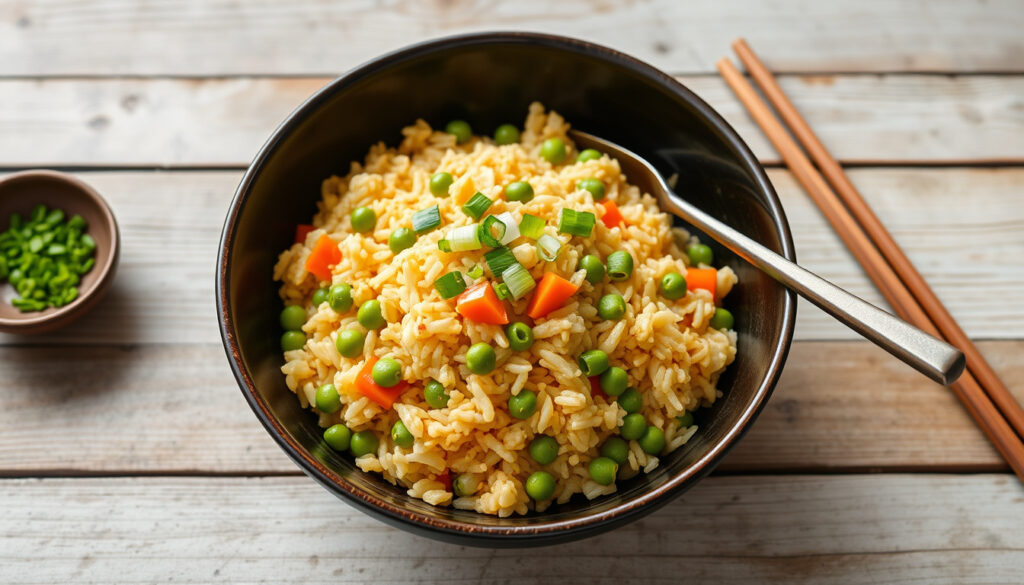
Egg Fried Rice NZ: Perfect Homemade Takeaway Recipe
There’s a particular satisfaction in cracking open a container of leftover rice and transforming it into something that tastes exactly like the stuff you’d grab from a Chinese shop down the road. Egg fried rice is one of those dishes that rewards patience over fancy technique—get a few basics right and you can pull it together in under 15 minutes with ingredients you already have in the cupboard.
Key Ingredient: Cooked Rice: 400g · Eggs Needed: 3 · Soy Sauce Amount: 2 Tbsp · Oyster Sauce: 1 Tbsp · NZ Source Example: New World Recipe
Quick snapshot
- Day-old cold rice prevents mushiness — hot rice ruins texture (Easy Peasy Foodie)
- New World recipe uses 3 eggs, prep 10 mins, cook 10 mins (New World)
- High heat stir-fry essential for fluffy, non-sticky results (Red House Spice)
- Optimal rice variety consensus — jasmine vs long-grain preferences vary by source (Andy Cooks)
- MSG usage in commercial takeaway vs home recipes — unclear exact quantities (Andy Cooks)
- Traditional Chinese method documented across multiple publications
- NZ supermarket adaptation adapted from UK/AU patterns
- More NZ-specific recipe testing with local rice bran oil brands
- Side-by-side comparison of microwave rice vs day-old home-cooked rice
Here’s how the key measurements break down across verified recipe sources.
| Attribute | Value |
|---|---|
| Primary Rice Amount | 400g cooked |
| Eggs | 3 beaten |
| Oil Type | Rice bran or vegetable |
| Sauce Essentials | Soy + oyster |
| NZ Recipe Source | New World |
| Prep Time | 10 minutes |
| Cook Time | 10 minutes |
| Servings | 2-3 |
How to make egg fried rice in NZ?
The NZ supermarket version draws from British and Australian adaptations, substituting local oils and including a few extras that give it a richer, more indulgent character than the minimalist Chinese original. New World (New Zealand’s supermarket chain) publishes a recipe that uses rice bran oil—widely available in NZ stores and ideal for high-heat cooking.
Ingredients from NZ supermarkets
Grab these from your local New World or Countdown:
- 400g cooked long-grain white rice, cooled overnight in the fridge
- 3 eggs, beaten
- 1 tablespoon rice bran oil
- 2 minced garlic cloves
- ½ cup frozen vegetables (peas, corn, or carrots)
- 1 tablespoon oyster sauce
- 2 tablespoons soy sauce
- 15g butter
- Salt and white pepper to taste
Step-by-step cooking method
According to New World (NZ supermarket recipe source), the method breaks down into three quick stages. Prep takes 10 minutes, cooking another 10 minutes, and the dish serves 2–3 people.
- Heat rice bran oil in a wok or large frying pan over high heat until shimmering
- Add minced garlic and frozen vegetables, stir-fry for 2 minutes
- Add cold rice, breaking up any clumps with a spatula — toss continuously for 3–4 minutes
- Push rice to one side, add beaten eggs to the cleared space, leave for 45 seconds until edges set, then scramble and fold into rice
- Add soy sauce, oyster sauce, and butter — toss everything together for another 2 minutes
- Season with salt and white pepper, serve immediately
Using cold rice isn’t optional — it’s structural. Hot rice goes soggy the moment it hits the pan, while cold grains stay separate and get lightly crispy at the edges. If you forgot to cool rice overnight, spread it on a tray and pop it in the freezer for 20 minutes before cooking.
Using local eggs and rice
New Zealand eggs are consistently rated among the world’s best — Otaika Valley Eggs and other local brands appear in most home-cooking circles. For rice, standard supermarket long-grain works well. Jasmine rice adds a subtle fragrance if you prefer, but long-grain gives better separation for the classic takeaway texture.
What gives egg fried rice its flavour?
Flavour in egg fried rice comes from layering three things: the Maillard reaction on the rice grains themselves, sauce punch from soy and oyster, and aromatic fat that carries everything. Each component plays a specific role, and cutting corners on any one of them shows in the final dish.
Soy sauce and oyster sauce roles
Soy sauce provides salt and umami depth — it seasons the rice as it hits the hot pan. Oyster sauce adds a sweeter, more complex umami that rounds out the sharpness of soy. Kitchen Sanctuary (recipe source) notes that dark soy sauce works alongside regular soy in some versions, giving a deeper colour and milder flavour.
Garlic and egg contributions
Garlic goes in early with the vegetables to bloom in the hot oil — this step builds the savoury foundation. The egg contributes richness and texture; scrambling it separately before mixing through (rather than just pouring it in raw) gives you distinct, tender egg pieces rather than a uniform scramble.
Wok cooking impact
High heat does the heavy lifting. Red House Spice (traditional Chinese method source) emphasizes that a scorching wok creates the slight char and smoky notes associated with proper takeaway fried rice. At home, a gas burner set to maximum heat gets closest, though a well-seasoned cast-iron or heavy stainless pan works too.
Rice bran oil has a higher smoke point than standard vegetable oil — that means it stays stable at the temperatures needed for proper browning without breaking down into acrid flavours. In NZ supermarkets, it’s the most accessible high-smoke-point option alongside grapeseed oil.
What are common mistakes when making egg fried rice?
Most fried rice failures trace back to three habits: using wrong rice temperature, overcrowding the pan, and underequipping your seasoning game. Fixing these three things fixes 90% of the complaints home cooks have about their results.
Using fresh rice
The single biggest mistake is cooking rice the same day you plan to fry it. Freshly steamed rice is still releasing moisture and the grains are soft and sticky. Easy Peasy Foodie (7-minute recipe source) puts it bluntly: the secret to really good egg fried rice is cold rice, and using hot rice “goes all wrong.”
Overcrowding the wok
When you crowd the pan, the rice steams rather than fries. The grains clump together and release moisture, creating that sad, wet texture. Work in batches if needed — a single layer of rice with space around each grain makes contact with the hot pan surface and gets those slightly crispy edges.
Skipping day-old rice
If you need fried rice on short notice, spread freshly cooked rice on a baking tray, refrigerate uncovered for 30 minutes, then freeze for 20 minutes. This accelerates moisture loss without fully freezing the grains. Some cooks even use microwave rice packs as a shortcut — Andy Cooks (ham and veg recipe source) notes this works when you’re in a genuine time crunch.
How to make egg fried rice like Chinese takeaway?
Takeaway-style fried rice isn’t actually complicated to replicate at home — it’s mostly about nailing the sequence and getting your heat high enough. RecipeTin Eats (customisable recipe source) notes that “get the sauce right and you can make a fried rice that really stacks up to your favourite Chinese restaurant in 10 minutes.”
High heat technique
Heat your wok or pan for at least 2 minutes before adding oil — you want that oil shimmering and on the verge of smoking. Add rice and don’t touch it for 90 seconds, then toss. This creates contact browning on the grain surfaces, which is where the flavour lives.
Order of adding ingredients
Nicky’s Kitchen Sanctuary (detailed method source) sequences ingredients this way: aromatics first (onion, garlic), then vegetables, then cold rice, then eggs (scrambled separately to slightly set before folding in), then sauces and fat. This order matters — earlier items get more heat exposure and develop deeper flavour.
Takeaway sauce ratios
Standard takeaway ratios run around 2 tablespoons soy sauce to 1 tablespoon oyster sauce per 400g rice, with a knob of butter or drizzle of sesame oil to finish. Some takeaway versions add a pinch of sugar or MSG — Andy Cooks notes MSG appears in some authentic versions, though home cooks can skip it without major loss.
Microwave rice packs are convenient but often have added oils or preservatives that affect how they behave in a hot wok. Tested brands work fine — expect slightly different texture than properly day-old home-cooked rice, and adjust your heat accordingly.
What is the secret to the best fried rice?
Ask any chef what makes fried rice great and they’ll point to the same fundamentals: rice condition, heat intensity, and seasoning balance. Made With Lau (family recipe source) uses 14 ounces uncooked jasmine rice yielding about 4–5 cups cooked, alongside frozen corn and peas for texture variety.
Day-old cold rice
This is the non-negotiable starting point. Day-old rice has lost surface moisture and the grains have firmed up — they’ll withstand tossing in a hot pan without breaking. Easy Peasy Foodie confirms total cook time including prep is 7 minutes once your rice is ready.
Chef secrets from Made With Lau
The Made With Lau approach emphasises restraint — minimal seasoning lets the rice and egg shine. Their method uses jasmine rice (uncooked quantity: 14 oz), frozen vegetables, and simple soy-based seasoning. The chef approach is to toss constantly and keep the rice moving to prevent any single grain from burning.
NZ adaptations
New Zealand versions tend toward richer flavouring than the traditional Chinese method — the addition of butter, oyster sauce, and sometimes ham makes for a heavier, more indulgent dish. If you prefer the lighter traditional style, skip the butter and use light soy sauce only.
“It only takes 7 minutes to make at home and, in my opinion, homemade egg fried rice is even tastier than takeaway egg fried rice!”
— Easy Peasy Foodie, Recipe Author
Steps: Full recipe for NZ-style egg fried rice
Here’s the complete method using New World supermarket ingredients:
- Prepare rice: Use 400g cooked long-grain white rice cooled overnight in the fridge. If using microwave rice, spread on a tray and cool 20 minutes before cooking.
- Heat wok: Place wok or large frying pan over maximum heat for 2 minutes. Add 1 tablespoon rice bran oil.
- Cook aromatics: Add 2 minced garlic cloves and ½ cup frozen vegetables. Stir-fry 2 minutes until heated through.
- Add rice: Add cold rice, breaking clumps. Toss and fry 3–4 minutes without stirring constantly — let rice sit between tosses.
- Add eggs: Push rice to one side, pour beaten eggs into cleared space. Leave 45 seconds until edges set, then scramble roughly and fold into rice.
- Sauce and finish: Add 2 tablespoons soy sauce and 1 tablespoon oyster sauce. Add 15g butter. Toss everything together for 2 minutes until butter melts and rice is coated.
- Serve: Season with white pepper, garnish with spring onions if desired. Serve immediately while rice is still hot.
If the rice starts sticking, your pan isn’t hot enough — stop, heat the pan properly, then continue. Sticking is a heat problem, not a stickiness problem. Also watch the frozen vegetables: add them before rice so they defrost and heat through, not after, where they’ll stay icy.
“Light, fluffy and tasty, Chinese egg fried rice is an easy stir fry that anyone can make.”
— Red House Spice, Recipe Author
Related reading: Fried Zucchini Flowers Near Me – Top Restaurants and Seasonal Tips
kitchensanctuary.com, lifemadesimplebakes.com, recipetineats.com, youtube.com
Home cooks aiming for takeaway-quality grains without stickiness can draw from the perfect non-sticky egg fried rice recipe shared by NZ Pressline using local staples.
Frequently asked questions
What rice is best for egg fried rice NZ?
Long-grain white rice works best for NZ-style egg fried rice. Jasmine rice is a good alternative if you prefer fragrance. Standard supermarket long-grain rice (available at New World, Countdown, and Pak’nSave) gives excellent separation and texture when properly cooled.
Can I make egg fried rice without oyster sauce?
Yes — oyster sauce adds depth but isn’t essential. Replace with an extra tablespoon of soy sauce or add a small amount of fish sauce for alternative umami. Some traditional recipes skip oyster sauce entirely and rely on light soy and sesame oil.
How long does egg fried rice keep in the fridge?
Properly stored egg fried rice keeps 3–4 days refrigerated in an airtight container. Reheat in a hot pan or wok with a splash of water to restore moisture. Freezing changes texture significantly — the rice becomes mushier upon thawing, so refrigeration is preferable.
Is rice bran oil good for egg fried rice?
Rice bran oil has a high smoke point (around 232°C) and neutral flavour, making it excellent for high-heat stir-frying. It’s widely available in NZ supermarkets and preferred by NZ recipes over standard vegetable oil.
What veggies work in egg fried rice?
Frozen peas, corn, and carrots are the most common additions. Fresh vegetables work too — dice small and stir-fry before the rice. Spring onion, bean sprouts, and capsicum add variety. Keep additions modest so they don’t overwhelm the rice.
How to make egg fried rice vegetarian?
The New World recipe is already vegetarian as published. Ensure your soy sauce is vegetarian-certified (some contain fish-derived ingredients). Skip the butter for vegan versions and use additional sesame oil or a vegan-friendly oil for finishing.
Differences between egg fried rice and other fried rice?
Egg fried rice centres on the egg as a primary protein and flavour agent — eggs are scrambled separately and folded through. Other fried rice varieties (chicken, pork, shrimp, vegetable) add those specific proteins alongside or instead of egg. The sauce base and technique remain similar across varieties.
What makes fried rice go mushy?
Mushy fried rice results from using hot or fresh rice, overcrowding the pan, or adding too much sauce at once. Cold rice, adequate heat, and proper spacing prevent mushiness. If your rice clump together, you likely have a heat or crowding issue.
For NZ home cooks, the takeaway-style egg fried rice formula is straightforward: cold rice, scorching hot pan, soy and oyster sauces, and a bit of butter for richness. Most of the recipe is technique — once you’ve made it twice, you’ll have the rhythm down and won’t need to look at the steps again.
More related posts
 Best Online to Learn Spanish: A Data-Driven Guide (2025)
 Nescafé Dolce Gusto Machine: Pod Compatibility & Value Guide
 Lewis Street Fish and Chips Christchurch: Menu, Reviews, Hours
 Hard Rated Alcoholic Lemon: 6% ABV, Low Sugar, Where to Buy
 Sunday Roast Palmerston North: Menu, Prices & Hours 2025
 Pet Doctors St Lukes & Exotics Centre: Reviews, Services, Contact
 PAK’nSAVE Rangiora: Hours, Online Shopping & Specials Guide
 Disney On Ice NZ 2025: Auckland Show, Tickets & Characters