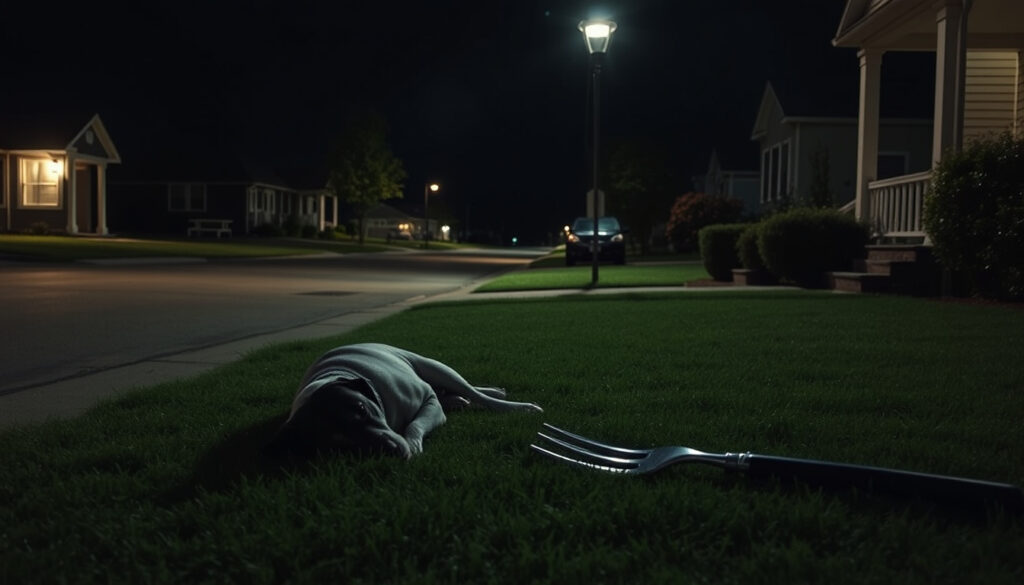
The Curious Incident of the Dog: Summary, Controversy, and Age
Mark Haddon’s The Curious Incident of the Dog in the Night-Time won the Whitbread Book Award and sparked devotion and debate since 2003. If you’re trying to figure out what the story is about, why it keeps getting challenged in schools, or whether it’s right for you or your teen reader, this guide covers the controversy, the central themes, and the facts around age appropriateness.
Published: 2003 ·
Awards: Whitbread Book Award ·
Pages (hardcover): 226 ·
Genre: Mystery, Bildungsroman ·
Narrator: Christopher Boone
Quick snapshot
- Published in 2003 and won the Whitbread Book Award (University of Wisconsin-Superior Library)
- Narrated by Christopher Boone, a 15-year-old with traits of Asperger’s syndrome (University of Wisconsin-Superior Library)
- Challenged and banned in multiple US school districts (BooksBanned.org)
- Whether Christopher’s condition is explicitly labeled as autism in the text (University of Wisconsin-Superior Library)
- Author Mark Haddon’s specific intention regarding the portrayal of autism (University of Wisconsin-Superior Library)
- Challenged repeatedly from 2004 onward, including a 2022 removal from a Tallahassee high school summer reading list (Paste Magazine)
- A 2023 library review notes ongoing challenges (University of Wisconsin-Superior Library)
- Debates over the novel’s place in school curricula are likely to continue as censorship discussions evolve (National Coalition Against Censorship)
- Students and advocacy groups continue to speak out against banning the book (National Coalition Against Censorship)
Five key facts shape the discussion around this novel — from its awards and narrator to the controversies that have followed it.
| Label | Value |
|---|---|
| Author | Mark Haddon |
| Published | 2003 |
| Genre | Mystery, Bildungsroman |
| Pages | 226 (hardcover) |
| Awards | Whitbread Book Award, Commonwealth Writers’ Prize |
| Narrator | Christopher Boone |
What is the story of the curious incident of the dog in the night?
Christopher Boone, a 15-year-old who describes himself as “a mathematician with some behavioural difficulties,” finds his neighbor’s dog, Wellington, dead in the garden. He decides to investigate the murder — a decision his father warns him against. The investigation uncovers family secrets and leads Christopher on a journey from Swindon to London. The entire story is told from his first-person perspective, complete with diagrams, prime numbers for chapter numbers, and mathematical reasoning. The narrator’s thought process is central: as the University of Wisconsin-Superior Library educational resource notes, Christopher’s Asperger’s syndrome influences every aspect of his narration.
Plot summary
- Christopher discovers the dead dog and decides to find the killer.
- His investigation reveals his father’s lies and leads him to London to find his mother, whom he believed dead.
- The story ends with Christopher solving a mathematical A-level exam and feeling optimistic about his future.
Key characters
- Christopher Boone: The 15-year-old narrator with Asperger’s syndrome.
- Ed Boone: Christopher’s father, who killed the dog.
- Judy Boone: Christopher’s mother, who left the family.
- Mrs. Shears: The neighbor whose dog was killed.
Christopher’s logical, unemotional narration forces readers to confront how a mind that operates differently processes grief, betrayal, and mystery. The book’s style is the message.
The implication: the story demands readers inhabit a perspective that challenges their own assumptions about how a brain can work.
Why is The Curious Incident of the Dog in the Night-Time controversial?
The controversy around the novel has multiple layers — language, representation, and censorship. It has been challenged in schools and libraries frequently since its publication. A 2022 report from Paste Magazine cultural publication noted the book was pulled from a summer reading list at a Tallahassee, Florida high school specifically because of swearing.
Language and mature themes
- The novel contains 28 uses of the f-word, 18 uses of the s-word, and one use of the c-word, according to a review from the University of Wisconsin-Superior Library academic source.
- The trigger warning database lists parental infidelity, the death of a pet dog, and physical assault and police violence as content concerns (Trigger Warning Database user-contributed platform).
Portrayal of autism
- Some critics argue the novel stereotypes autism by reducing Christopher to a set of symptoms.
- Others praise it for giving a voice to a neurodivergent character and making readers inhabit his perspective.
- The University of Wisconsin-Superior Library educational source notes the debate about whether Christopher’s condition is explicitly labeled in the text.
Challenges and censorship
- The book has been challenged for “offensive language,” “religious viewpoint,” and “unsuited for age group,” according to the BooksBanned.org banned books database.
- The National Coalition Against Censorship advocacy group reported a case where a school canceled the summer reading assignment because of complaints about profanity and religious references.
- The Miami Herald regional newspaper listed the novel among frequently challenged titles in 2016, repeating the reasons: offensive language, religious viewpoint, unsuited for age group, and other.
The same elements that make the book a powerful tool for teaching empathy — its raw language and unfiltered perspective — are the reasons it gets pulled from reading lists. Teen readers lose access to a story that might help them understand a different mind.
What is the main message of The Curious Incident of the Dog in the Night-Time?
The novel operates on multiple levels. On the surface, it’s a mystery. At its heart, it’s a story about truth, logic, and the courage to keep going when the world doesn’t make sense.
Theme of truth and logic
- Christopher’s guiding principle: “I do not like being confused. I do not like not knowing things.” This drives the entire plot.
- The investigation is a metaphor for a child’s quest for honesty in a world full of adult deception.
- Christopher’s father lies to protect him, but the truth ultimately sets Christopher free.
Understanding neurodiversity
- The novel asks readers to accept that a different way of thinking is not a wrong way.
- Christopher’s mathematical mind is his strength, not his weakness.
- The story shows the power of perseverance and self-discovery for someone who is differently wired.
The pattern: every major plot beat reinforces the idea that clarity and honesty, however painful, are the only paths to growth.
Is The Curious Incident of the Dog in the Night-Time a banned book?
Yes, the novel has been challenged and banned repeatedly in schools and libraries across the United States. It appears on the American Library Association’s list of Top 100 Banned/Challenged Books. According to Wikipedia community-edited reference, it holds an ALA rank of 51 on the list of most commonly challenged books.
Banned book status
- The book has been challenged in multiple US school districts for offensive language, religious viewpoint, and being unsuited for the age group (BooksBanned.org).
- Berkeley Public Library public library system notes the book has been challenged because it “could pollute young minds.”
- Loyola Marymount University educational institution lists the novel among frequently challenged books in its library guide.
Reasons for banning
- Profanity and foul language are the most frequently cited reasons.
- Religious viewpoint — some critics argue the book promotes atheism.
- Sexual content and references to infidelity.
- The National Coalition Against Censorship documented a case where students protested the cancellation of the book’s summer reading assignment.
The catch: the reasons cited for banning often mirror the very themes — truth, honesty, and unfiltered perspective — that give the novel its literary power.
Is Christopher autistic in The Curious Incident of the Dog in the Night-Time?
The short answer is yes — Christopher Boone displays all the characteristics of someone on the autism spectrum. The book’s description of his thought processes, sensory sensitivities, and social difficulties aligns closely with the diagnostic criteria for autism spectrum disorder.
Christopher’s condition
- Christopher is described in the text as having “Asperger’s syndrome,” a diagnosis that was still in use when the book was published in 2003.
- His behaviors include an inability to understand metaphors, a need for order and routine, and difficulty reading emotions.
- He is a mathematical prodigy who struggles with everyday social interactions.
Author’s intent
- Mark Haddon has said he did not explicitly label Christopher in the text but wrote from his perspective.
- Many readers and critics interpret Christopher as explicitly autistic.
- The University of Wisconsin-Superior Library notes the ongoing debate: “While Christopher is never explicitly labeled as an autistic individual in the text, it is clear he has Asperger’s syndrome.”
The trade-off: the author’s choice not to label Christopher explicitly allows the character to be a person first, but it also leaves room for debate about whether the representation is accurate or stereotypical.
The author’s refusal to label Christopher means readers project their own understanding of autism onto the character. For some, that makes the book inclusive. For others, it makes the representation dangerously vague.
The implication: readers must decide whether an unlabeled neurodivergent character broadens the conversation about autism or dilutes it.
Specifications table
Six key details — one pattern: each spec adds context to the novel’s format, audience, and cultural footprint.
| Specification | Detail |
|---|---|
| Author | Mark Haddon |
| Original publication | 2003 |
| Pages (hardcover) | 226 |
| Genre | Mystery, Bildungsroman |
| Awards | Whitbread Book Award, Commonwealth Writers’ Prize |
| Reading level | Grades 9–12 (ages 14+) |
| Narrator | Christopher Boone (first-person) |
| Adaptations | Stage play (2012), audiobook |
| Banned book status | Yes — appeared on ALA’s Top 100 list |
Pros and cons
Upsides
- Unique narrative voice and style — fresh and memorable
- Promotes empathy and understanding of neurodiversity
- Engaging mystery plot that rewards rereading
- Academic merit — widely studied in high schools and universities
- Award-winning and critically praised
Downsides
- Strong language and profanity not suitable for younger readers
- Contains sexual references and themes of infidelity
- Criticized for potentially stereotyping autism
- Controversial in school settings — subject to bans and challenges
- Some parents object to the religious viewpoint (perceived atheism)
Quotes
“I do not like being confused. I do not like not knowing things.”
— Christopher Boone, the novel’s narrator
The implication: Christopher’s statement is both his personal philosophy and the engine of the entire plot. His refusal to accept confusion drives the investigation that uncovers his family’s secrets. For readers, that line becomes the key to understanding a mind that operates on logic and clarity, not emotion.
Summary
The Curious Incident of the Dog in the Night-Time remains a landmark in young adult literature — not because it is comfortable, but because it refuses to be. It challenges readers to think differently about truth, family, and neurodiversity. The language is raw, the perspective is disorienting, and the story is ultimately hopeful. For educators and parents, the choice is clear: read it first, discuss it honestly, and let mature teens decide if they are ready for its intensity.
assets.thestorygraph.com, mtlaurel.lib.nj.us, en.wikipedia.org
Frequently asked questions
Who kills the dog in The Curious Incident of the Dog in the Night-Time?
Christopher’s father, Ed Boone, killed the dog. He had argued with Mrs. Shears and lost control of his temper.
Is The Curious Incident of the Dog in the Night-Time a true story?
No, it is a work of fiction. However, the author’s research into autism and the experiences provided by consultants shaped Christopher’s character.
What is the reading level of the book?
The novel is typically assigned to grades 9–12 (ages 14 and up) due to mature themes and language.
How many pages is the book?
The hardcover edition has 226 pages. page counts vary by format and edition.
Is there a movie adaptation of the book?
No, there is no feature film adaptation. The book was adapted into an award-winning stage play that premiered in 2012.
What is the play adaptation like?
The stage play uses innovative staging, projection, and movement to recreate Christopher’s internal world. It won the Olivier Award for Best New Play in 2013.
Why is the book often challenged in schools?
The book is challenged primarily for profanity, sexual references, and its treatment of religion. It has been removed from reading lists in several US school districts.
More related posts
 How to Change Apple Watch Band: Step-by-Step Guide from Apple
 Shona McFarlane Retirement Village: Verified Facts
 What Is a Zine? Definition, Purpose, Examples, and More
 Mary Had a Little Lamb: History, Lyrics, and Dark Rumors Debunked
 Check Your Kmart Gift Card Balance (Online, Phone, App)
 Blue Black Hair Dye: Color Guide and Best Products
 Worksafe Electrical Rule Review 2025: RCD Changes and Risks
 80 USD to NZD: Convert US Dollars to New Zealand Dollars Today