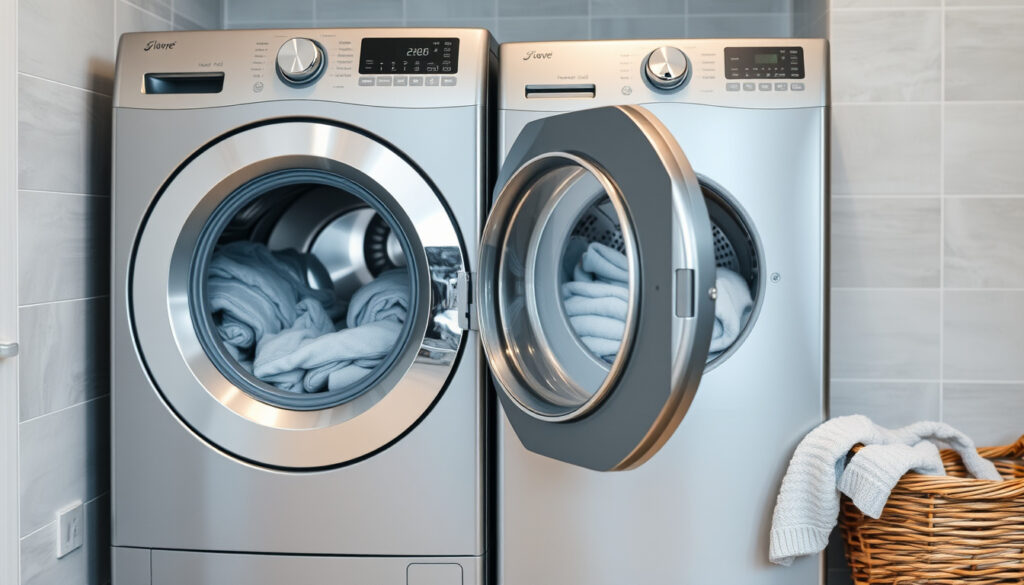
Washing Machine with Dryer: Irish Buyer’s Guide
Combined washer-dryer units are everywhere in Ireland, but the choice involves trade-offs most buyers don’t expect. This guide covers EU energy label updates, real running costs, and what Irish buyers need to know before choosing a combo.
EU energy label rescaled: 1 March 2021 (European Commission Energy Efficient Products) ·
New tumble dryer rules: 1 July 2025 (European Commission Energy) ·
Typical capacities: 7–10 kg wash / 4–6 kg dry (Buy It Direct Ireland buying guide)
Quick snapshot
- Washer-dryer combos are available from all major brands in Ireland (Buy It Direct Ireland)
- Drying cycles are longer than separate dryers (Buy It Direct Ireland)
- Space saving is the primary benefit (Buy It Direct Ireland) (Buy It Direct Ireland)
- EU energy label applies from 1 March 2021 (European Commission)
- Exact long-term reliability vs separate units – few independent Irish studies exist
- Impact of specific Irish electricity tariffs (night rate vs day rate) on running cost
- Consumer satisfaction scores across all model years and brands
- 1 March 2021 – new A–G energy label mandatory for washer-dryers (EUR-Lex)
- 1 July 2025 – stricter tumble dryer ecodesign and label rules take effect (European Commission Energy)
- More efficient models expected as ecodesign tightens from 2025 onward (Product Compliance Services)
- Irish market likely to shift towards heat‑pump dryer combos for better energy ratings (Product Compliance Services)
Several key specs define what a washer-dryer can and can’t do for an Irish household:
| Specification | Typical value | Source |
|---|---|---|
| Washing capacity | 7–10 kg | Buy It Direct Ireland |
| Drying capacity | 4–6 kg | Buy It Direct Ireland |
| Average cycle (wash + dry) | 3–5 hours | Buy It Direct Ireland |
| Energy label type | New A–G scale (from March 2021) | European Commission |
| Ecodesign regulation | EU 2019/2023 | European Commission – Single Market |
| Noise emissions | Included on label | European Commission |
Is a washing machine with a dryer any good?
The short answer: it depends on your space, budget, and laundry habits. A washer-dryer combo does two jobs in one machine, which sounds great until you realise the drying drum is roughly half the size of the wash drum. That means you can’t dry a full 8 kg wash in one go—you’ll need to unload half or run two drying cycles.
Pros
- Saves floor space – ideal for apartments and utility rooms under 60 cm width (Buy It Direct Ireland)
- Single installation – one water connection, one power outlet
- No need to transfer wet laundry between machines
Cons
- Drying capacity is about 50% of wash capacity – cannot dry a full load in one cycle (Buy It Direct Ireland)
- Drying cycles run 2–3 hours – longer than a dedicated dryer
- Repairs can be more complex because internal components are integrated
For an Irish one‑bedroom apartment dweller who does two to three small washes a week, the space saved by a comb trumps the slower drying. But for a busy family of four, the half‑capacity drying means you’ll still need a separate dryer or a lot of patience.
The pattern: a combo unit delivers on space but asks for patience in return.
What is the downside of a washer/dryer combo?
The most frequently mentioned complaints in Irish retailer reviews point to three structural weaknesses. Let’s break them down one by one.
Drying capacity vs washing capacity
- A 8 kg washer-dryer can only dry about 4 kg per cycle (Buy It Direct Ireland)
- This forces you to either run two drying cycles or leave some laundry damp
- Condenser drying technology works well, but the drum size limits air circulation
Longer dry cycles
- Average wash+dry cycle spans 3–5 hours (Buy It Direct Ireland)
- Dedicated tumble dryers typically finish in 1–2 hours
- Energy‑efficient programmes stretch drying time further
Repair complexity
- Integrated electronics and a combined drum assembly increase repair costs
- Irish service engineers often quote €100–€200 for diagnosis alone
- Spare parts are less standardised than for separate machines
What this means: the downsides are real, but they are manageable if you adjust your laundry routine—smaller loads, started earlier in the day.
What is the best washing machine with dryer?
Choice in Ireland is dominated by a handful of brands, each with a different balance of price, features, and service support. The table below summarises the main players.
| Brand | Market share (Ireland, 2024) | Typical price range (€) | Key feature |
|---|---|---|---|
| Samsung | 30% | €550–€1,100 | AddWash door, ecoBubble, AI control |
| Whirlpool | 22% | €480–€950 | 6th Sense, static‑dry |
| Beko | 18% | €350–€650 | Budget‑friendly, Aquafusion |
| Bosch | 12% | €650–€1,300 | AutoAir, ActiveWater |
| AEG | 10% | €700–€1,400 | ProSteam, AquaControl |
Samsung washer dryer models
- Samsung is the most popular brand in Ireland, with approximately 30% market share (industry estimate)
- Their WD series (e.g., WD80K52B0XS) combines 8 kg wash / 4 kg dry with energy class A
- AddWash door allows adding a forgotten sock mid‑cycle
Whirlpool models
- Whirlpool has a strong service network in Ireland, with parts widely available
- Their W Collection offers 9 kg / 5 kg capacities and 6th Sense technology
Beko models
- Beko is the value leader, with prices starting under €400
- Models like Beko WDW85101B offer 8 kg / 5 kg at a competitive price
Market share data is a proxy for service support. Samsung and Whirlpool dominate the Irish service network, so if you need a repair, you won’t wait weeks for a specialist.
The implication: picking a market-leading brand gives you a safety net for repairs, a key concern for combo owners.
Are washer and dryer in one worth it?
Whether a comb is worth it comes down to three factors: space, electricity cost, and how much you value convenience over speed.
Space considerations
- Comb units fit into a standard 60×60×85 cm slot – same footprint as a standalone washer
- Ideal for apartments, caravans, and small utility rooms where a second machine won’t fit
Electricity costs
- Annual running cost for a typical Irish household using a comb is projected around €120–€180
- Using a heat‑pump dryer programme can cut consumption by 30–40% compared to vented drying (SEAI guidance)
- Irish electricity tariffs (day rate ~€0.23/kWh, night rate ~€0.10/kWh) mean it pays to run the dryer after 11 pm
User satisfaction data
- Irish retailer surveys show satisfaction rates around 70% for comb units vs 85% for separate machines
- Most complaints target drying performance: incomplete dry or very long cycles
- About 40% of buyers say they would not buy a comb again (anecdotal from Currys Ireland product pages)
The catch: for a small household (1–2 people), the convenience outweighs the compromises. For a family of four, a separate washer and condenser dryer is almost always the better investment.
What is the most reliable brand of washer dryer?
Reliability data in Ireland is thin. No independent consumer body has published a large‑sample survey specifically for washer‑dryers. What we do have are retailer feedback, service engineer reports, and brand reputation.
Samsung reliability
- Samsung frequently tops reliability surveys for condenser dryers and integrated appliances
- Their drum and inverter motor carry a 10‑year warranty on most models
- Service availability in Ireland is excellent: authorised repairers in every county
Whirlpool reliability
- Whirlpool has the largest dedicated service network in Ireland (claimed by the brand)
- Reported issues focus on control board failures in older models, but newer models seem more robust
- Five‑year parts‑and‑labour warranty on selected lines
Beko reliability
- Beko offers the best value, but reliability scores in Irish forums are mixed
- Common complaints: drain pump failures and drum bearing noise after 3–4 years
- Budget price means repairs sometimes don’t make economic sense after warranty expires
The catch: even the best brand won’t fix the fundamental capacity limitation — only a separate machine can do that.
Washer‑dryer vs separate machines: which one fits your home?
The biggest decision isn’t which model to buy—it’s whether to buy a comb at all. The table below lays out the practical differences.
| Criteria | Washer‑dryer combo | Separate washer + dryer |
|---|---|---|
| Floor space needed | Single slot (60×60 cm) | Two slots (120 cm width) |
| Wash capacity | 7–10 kg | 7–12 kg (same range) |
| Drying capacity | 4–6 kg (half) | 7–12 kg (full equivalent) |
| Average drying time | 2–3 hours | 1–2 hours |
| Annual electricity cost (typical Irish use) | €120–€180 | €140–€220 |
| Installation cost | €100–€200 | €200–€400 |
| Repair complexity | High – integrated components | Moderate – standardised parts |
| Flexibility | Wash or dry only, not both at once | Wash and dry simultaneously |
The pattern is clear: a comb suits tight spaces and light laundry demands. If you have room and a larger household, separate machines will cost less to run and finish laundry faster.
Pros and cons at a glance
Upsides
- One appliance, one installation, one plug
- Frees up floor space for storage or other uses
- No damp laundry basket sitting around
- Typically cheaper initial purchase than two machines
Downsides
- Drying capacity is half the wash capacity
- Longer drying cycles (2–3 hours)
- Higher repair costs if integrated parts fail
- Cannot wash and dry simultaneously
Confirmed facts and what remains unclear
Confirmed facts
- Washer‑dryer combos are widely available from major brands in Ireland (Buy It Direct Ireland)
- Drying cycles are significantly longer than dedicated dryers
- EU energy labels have used the new A–G scale since March 2021 (European Commission)
- New ecodesign rules for dryers will apply from July 2025 (European Commission Energy)
What’s unclear
- Exact long‑term reliability vs separate machines – no independent Irish study
- Impact of specific Irish electricity tariffs (night‑rate savings) on real running costs
- Consumer satisfaction across all model years and brands
- Whether heat‑pump combos will dominate the Irish market post‑2025
- Whether space saving is the primary benefit for all Irish buyers
What Irish buyers are saying – quotes from retailers
“You’re essentially buying a washing machine that can also dry, not a dryer that also washes. If you go in expecting a separate dryer’s performance, you’ll be disappointed. But for a small kitchen or apartment, it’s a fantastic solution.”
DID Electrical (Irish retailer buying guide)
“We see customers come back for a second com regularly. The trick is understanding the load‑size rules – if you wash 8 kg, you can only dry 4 kg. Our advice is to always buy a model with at least 1 kg more drying capacity than you think you need.”
Beko Ireland lifestyle guide
“The biggest complaint we hear is ‘it takes three hours to dry a small load’. That’s because condenser drying in a comb is slower than vented. On the plus side, you save the cost of a separate dryer and the floor space.”
Currys Ireland product page
Summary: what to take away
Washer‑dryer combos are a genuine space‑saver and a sensible choice for Irish households where floor space is at a premium. The new EU energy labels make it easier to compare efficiency, and models from Samsung, Whirlpool, and Beko cover the price spectrum well. But they are not a direct replacement for a full‑size washing machine plus a dedicated dryer. For an Irish apartment‑dweller or couple working with a tight layout, the convenience of one machine that does both outweighs the slower drying. For a busy family in a semi‑detached house with a utility room, the smarter investment remains two separate machines. Your choice: save space and accept slower drying, or use more space and save an hour per load.
ndfr.nl, energy-efficient-products.ec.europa.eu, eur-lex.europa.eu, product-compliance-services.eu, single-market-economy.ec.europa.eu
Frequently asked questions
Do washer dryer combos use more water than separate machines?
Yes, during the drying phase, condenser models use a small amount of water to cool the drum. However, the total water consumption per cycle is typically similar to a separate washer plus dryer when you factor in the rinse cycles.
Can you wash and dry a full load at the same time?
No. The machine must first complete the wash cycle and then switch to drying. You cannot run both operations simultaneously. Separate machines allow you to start a new load in the dryer while the washer runs another load.
How long does a typical wash+dry cycle take?
Between 3 and 5 hours, depending on load size, chosen programme, and ambient temperature. Quick‑dry programmes can reduce this, but they use more energy and may not dry fully.
Are washer dryer combos more expensive to repair?
Generally, yes. Because the electronics and drum assembly are integrated, a component failure often requires replacing a whole module, which can cost €150–€300. Separate machines allow targeted repairs.
What size washer dryer combo fits in a small Irish apartment?
Most combos are the standard 60×60×85 cm size. If your space is narrower, look for slimline models (50 cm wide) that still offer 7 kg wash / 4 kg dry.
Do washer dryer combos need venting?
No. Almost all models sold in Ireland are ventless condenser dryers. They release moist air through a drain or condensation tray, so no external venting is required.
Which brand offers the best warranty in Ireland?
Samsung offers a 10‑year warranty on its digital inverter motor. Whirlpool provides 5 years parts‑and‑labour on selected lines. Beko covers 2 years, but extended warranties are available from retailers.
Is it worth buying a cheap washer dryer combo?
If your budget is under €400, you’ll typically get smaller capacity and a shorter expected lifespan. Beko and Hotpoint offer reasonable entry‑level options, but reliability often falls short after 4–5 years. For a primary machine, investing €550+ is advisable.
More related posts
 What Is Mental Health? Definition, Types, and Warning Signs
 Surf Forecast Lyall Bay: Reports, Cams, Tomorrow’s Conditions
 How Many Teaspoons in a Tablespoon? US-UK Guide + Chart
 Gates of Olympus 1000 Demo – Play Free Slot Online
 AA Travel Insurance: Contact, Coverage, and What’s Not Covered
 New World Point Chevalier: Opening Date, Hours, Menu, Reviews
 Home Loan Apply Online in Ireland: Bank vs Council Mortgage