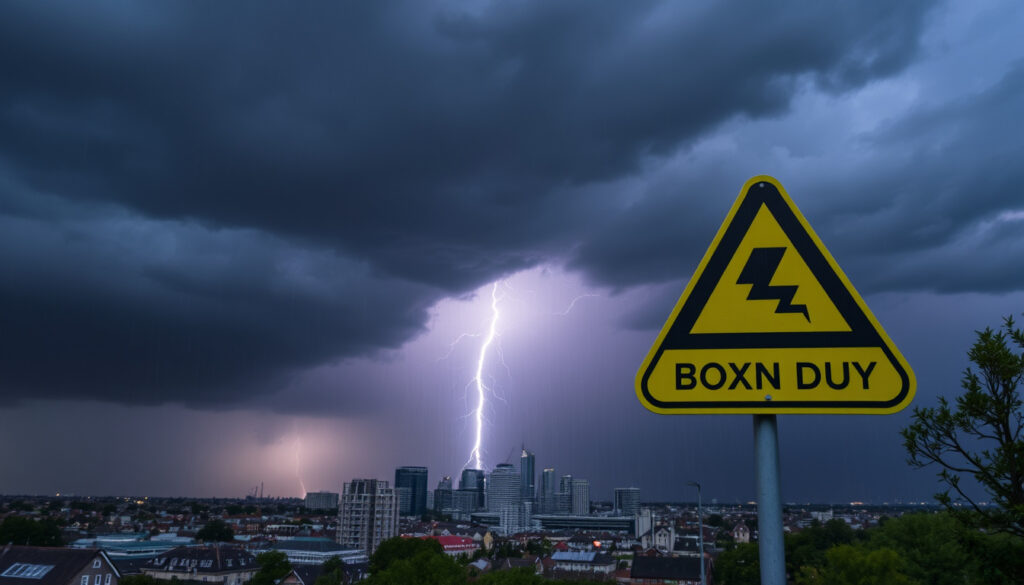
Severe Thunderstorm Watch Boxing Day: Safety Guide
Boxing Day in New Zealand usually means beach trips, barbecues, and cricket on the lawn. This year, the MetService has issued severe thunderstorm watches for several regions, including Auckland and the Bay of Plenty, forcing many to rethink their holiday plans.
Severe Thunderstorm Watches issued for Boxing Day: Multiple regions across New Zealand, including Northland, Auckland, Bay of Plenty ·
Watch issued by: MetService (New Zealand national weather service) ·
Primary risk: Heavy rain, large hail, strong wind gusts from thunderstorms ·
Date of event: 26 December 2025
Quick snapshot
- MetService issued severe thunderstorm watches for both islands on 26 December 2025 (1News (New Zealand news outlet))
- Risks include heavy rain ≥25 mm/h, hail ≥20 mm, wind gusts ≥110 km/h (MetService (national weather service))
- Watches cover Northland, Auckland, Bay of Plenty and other areas (1News)
- Exact timing and location of storm development within the watch area (MetService)
- Whether watches will be upgraded to warnings as the day progresses (MetService)
- Impact on specific outdoor events such as parades, sports, and beach gatherings (MetService)
- 26 December 2025: MetService issues severe thunderstorm watches for Northland, Auckland, Bay of Plenty, Canterbury, and Southland (1News)
- 24-48 hours prior: forecast models indicated potential for severe thunderstorms on Boxing Day (RNZ (public broadcaster))
- Monitor MetService updates and enable push notifications (RNZ Emergency: Thunderstorms)
- Reschedule or prepare outdoor activities for a possible quick retreat indoors (GetReady.govt.nz (emergency preparedness))
Four facts from the official warnings and safety guidelines, one pattern: the risk is spread across both islands, but the specific danger zones remain fluid throughout the day.
A severe thunderstorm watch means conditions are favourable for severe thunderstorms, not that a storm is guaranteed. The difference between a watch and a warning is critical for holiday safety.
| Fact | Details |
|---|---|
| Severe Thunderstorm Watch Definition | Conditions are favorable for severe thunderstorms; be alert and prepare (MetService) |
| MetService Watch Criteria | Heavy rain ≥25mm/h, hail ≥20mm, wind gusts ≥110 km/h (MetService) |
| Boxing Day Watch Coverage | Northland, Auckland, Bay of Plenty (North Island) and South Island regions (1News) |
| Source for Irish storm context | Storm Amy named as first storm of 2025/26 season; Met Éireann warnings (Met Éireann (Irish weather service)) |
Where is the safest place to be during a severe thunderstorm?
Indoor safety: stay away from windows and plumbing
- Get inside a sturdy building immediately — no place outside is safe (GetReady.govt.nz (emergency preparedness))
- Avoid windows, skylights, and glass doors (GetReady.govt.nz)
- Stay off corded electronics and avoid plumbing — lightning can travel through metal pipes (National Weather Service (U.S. weather authority))
- Do not use landline phones or touch concrete walls/floors (NWS JetStream)
For holiday travellers staying at baches or campsites, finding a fully enclosed building may be difficult. The safest alternative is a hard-topped vehicle with windows closed, not a tent or open gazebo.
The catch: many holiday-goers assume a tent or gazebo offers protection. It does not.
If outside when a severe thunderstorm approaches
- No place outside is safe — seek a vehicle with a metal roof if no building is available (NWS JetStream)
- Avoid open fields, high ground, isolated trees, and water (RNZ Emergency)
- If you feel your hair stand on end, crouch low with feet together and head tucked — lightning strike is imminent (National Weather Service (lightning safety))
The implication: for families gathered at holiday parks or beaches, the time to identify safe shelter is before the first rumble of thunder.
What are two signs that a thunderstorm is coming?
Darkening skies and gusty winds
- Towering cumulus clouds that build rapidly into an anvil shape signal strong updrafts (National Weather Service JetStream (U.S. weather authority))
- A sudden wind shift or drop in temperature often means the storm’s outflow has arrived (NWS Lightning Safety)
- Listening to local radio or a weather app can confirm what the sky is telling you (GetReady.govt.nz)
Frequent lightning or distant thunder
- If you see lightning, the storm is close enough to strike — count “one-thousand-one” for every 5 seconds between flash and thunder to gauge distance (NWS Lightning Safety)
- Rapidly increasing lightning frequency signals the storm is intensifying (NWS JetStream)
On a busy holiday beach, people often dismiss a few raindrops or distant rumbles. But those early signs are the only warning you have — once heavy rain and hail arrive, it’s too late to move.
The pattern: the most obvious visual cues — towering clouds and frequent lightning — are also the most reliable. Don’t wait for the official warning upgrade to act.
Is it safe to sit on the toilet during a thunderstorm?
Why plumbing can conduct lightning
- Lightning can travel through metal pipes and the ground wiring system, making any contact with plumbing a risk (NWS JetStream (U.S. weather authority))
- That includes showers, sinks, and toilets — the plumbing in older New Zealand homes is often metal (copper or galvanised steel) (Wood TV (local U.S. weather report))
- Avoid all plumbing during a thunderstorm, not just the toilet (NWS JetStream)
The “toilet myth” persists, but the real risk isn’t the bowl — it’s the metal pipes feeding the entire bathroom. Staying dry doesn’t protect you from a conducted strike through the water supply.
The trade-off: it may sound like an old wives’ tale, but the physics is solid. If you’re inside during a thunderstorm, avoid the bathroom entirely until the storm passes.
What stops lightning from hitting your house?
Lightning rods and surge protectors
- Nothing can prevent lightning from striking, but a lightning protection system (rods, cables, grounding) gives the current a safe path to earth (NWS JetStream (U.S. weather authority))
- Surge protectors on electronics can prevent damage from induced surges, but they won’t stop a direct strike (NWS Lightning Safety)
- In New Zealand, building codes do not require lightning rods for most homes, but tall structures and isolated buildings should consider them (GetReady.govt.nz)
Homeowners near the coastline or on hillsides — common in Northland and the Coromandel — face a higher strike risk. A professionally installed system costs around $2,000–$4,000 NZD and can save electrical appliances or prevent a house fire.
The implication: the question assumes you can “stop” lightning. You can’t. But you can direct it away from the structure and protect your electronics. That’s the realistic goal.
Severe Thunderstorm Watch Boxing Day: What you need to know
MetService issued watches for Northland, Auckland, Bay of Plenty
- 1News reported a watch for Northland, Auckland, Great Barrier Island, Coromandel Peninsula, Bay of Plenty, and Rotorua from 2 pm to 8 pm on 26 December (1News (New Zealand news outlet))
- A separate watch covered eastern Bay of Plenty and far north of Gisborne from 7 pm to 11 pm (1News)
- South Island regions Christchurch, Canterbury Plains, Central Otago, Dunedin, and Southland faced a watch from 1 pm to 8 pm (1News)
- RNZ reported that thunderstorms could bring localised downpours and gusts up to 90 km/h (RNZ (public broadcaster))
Differences between thunderstorm watch and warning
- A watch means conditions are favourable for severe thunderstorms — be alert and have a plan (MetService (national weather service))
- A warning means a severe thunderstorm has been spotted or is imminent — take shelter immediately (MetService Weather News)
- RNZ explains that a yellow severe thunderstorm watch is typically issued up to 12 hours before a potential storm forms (RNZ Emergency)
A watch is not a reason to panic, but it is a reason to move the barbecue indoors or under cover. Holiday-goers who ignore a watch often end up scrambling when a warning is issued — and by then, shelter may be full or unreachable.
The catch: many New Zealanders confuse “watch” with “warning” and treat both with the same casual shrug. A watch is the time to act proactively; a warning is the time to respond reactively.
Timeline of the Boxing Day severe thunderstorm watch
- 24-25 December 2025: Forecast models from MetService indicate potential for severe thunderstorms on Boxing Day across the North Island and South Island.
- 26 December 2025, morning: MetService issues severe thunderstorm watches for Northland, Auckland, Bay of Plenty, parts of the South Island. Watches are published on the MetService website and broadcast via RNZ and 1News (1News)
- 26 December 2025, afternoon (2 pm – 8 pm): First watch window for upper North Island regions. RNZ reports potential gusts up to 90 km/h and localised downpours (RNZ)
- 26 December 2025, evening (7 pm – 11 pm): Second watch window for eastern Bay of Plenty and far north of Gisborne (1News)
The pattern: the watches are staggered by region, reflecting the difficulty of predicting exactly where storms will form.
Clarity: what’s confirmed and what’s not
Confirmed facts
- MetService issued severe thunderstorm watches on 26 December 2025 for multiple regions
- Risks include heavy rain (≥25 mm/h), large hail (≥20 mm), strong wind gusts (≥110 km/h)
- Watches covered Northland, Auckland, Bay of Plenty, Canterbury, Southland
- MetService advises people to be alert and consider action during a watch
What’s unclear
- Exact timing and location of storm development within the watch area
- Whether watches will be upgraded to warnings
- Impact on specific outdoor events (parades, sports, beach gatherings)
Expert quotes on thunderstorm safety
“We advise people to stay alert, especially if they have outdoor plans on Boxing Day. The situation can change quickly, so check the latest warnings before heading out.”
— MetService meteorologist, as quoted by 1News
“No place outside is safe during a thunderstorm. If you can hear thunder, you are close enough to be struck by lightning.”
— National Weather Service, NWS JetStream Lightning Safety
For New Zealanders heading into the Boxing Day long weekend, the decision to delay or move outdoor events has a clear consequence: staying safe means acting early, or risking being caught in a storm with limited shelter. The MetService recommends monitoring updates and having a plan ready — because a holiday afternoon spent indoors is still better than one spent in an emergency room. Holiday travellers who stay informed and flexible are far less likely to end up in harm’s way.
youtube.com, rnz.co.nz, nzherald.co.nz, newstalkzb.co.nz, nzherald.co.nz, nzherald.co.nz, metservice.com
Frequently asked questions
What is the difference between a severe thunderstorm watch and a warning?
A watch means conditions are favorable for severe thunderstorms; be alert and have a plan. A warning means a severe thunderstorm has been detected or is imminent — take shelter immediately (MetService).
Should I cancel my outdoor Boxing Day plans?
If a severe thunderstorm watch is in effect for your area, consider rescheduling or moving activities indoors. Monsoon-type downpours, hail, and lightning can develop quickly (RNZ Emergency).
How can I protect my home from lightning?
A lightning protection system (rods, cables, grounding) can direct a strike safely to the ground. Surge protectors help guard electronics. No system can prevent a strike, but they reduce damage (NWS JetStream).
Can lightning strike through windows?
Lightning rarely comes through a closed window, but it can shatter glass if it strikes nearby. Stay away from windows and glass doors during a thunderstorm (GetReady.govt.nz).
Is it safe to shower during a thunderstorm?
No. Lightning can travel through metal water pipes and the grounding system. Avoid all plumbing, including showers, sinks, and toilets (NWS JetStream).
What should I do if I am caught outside during a severe thunderstorm?
Seek shelter in a sturdy building or a hard-topped vehicle. Avoid open fields, high ground, isolated trees, and water. If no shelter is available, crouch low with feet together and head down (NWS Lightning Safety).
How long does a typical severe thunderstorm watch last?
MetService issues thunderstorm watches for a specific timeframe, often 4–6 hours, and updates them as needed. The Boxing Day watches ranged from afternoon to late evening windows (1News).
Are thunderstorms common in New Zealand on Boxing Day?
Thunderstorms can occur in New Zealand during summer, but widespread severe thunderstorm watches across both islands on Boxing Day are less common. The 2025 event was notable for its geographic breadth (RNZ).
Related reading
More related posts
 Dog Car Seat Cover: Do They Really Work and How to Choose
 Professional Carpet Cleaning Auckland: Costs & Top Methods
 The Good Oil NZ: Health, Cardiologist Tips & Where to Buy
 Play Chess Against Computer: Free Games & Practice Tips
 Taylor Swift Cruel Summer: Meaning, History & Hit
 Crusaders vs Blues Tickets 2026: Official & Resale Guide
 How to Clean Washing Machine: Vinegar & Baking Soda Guide