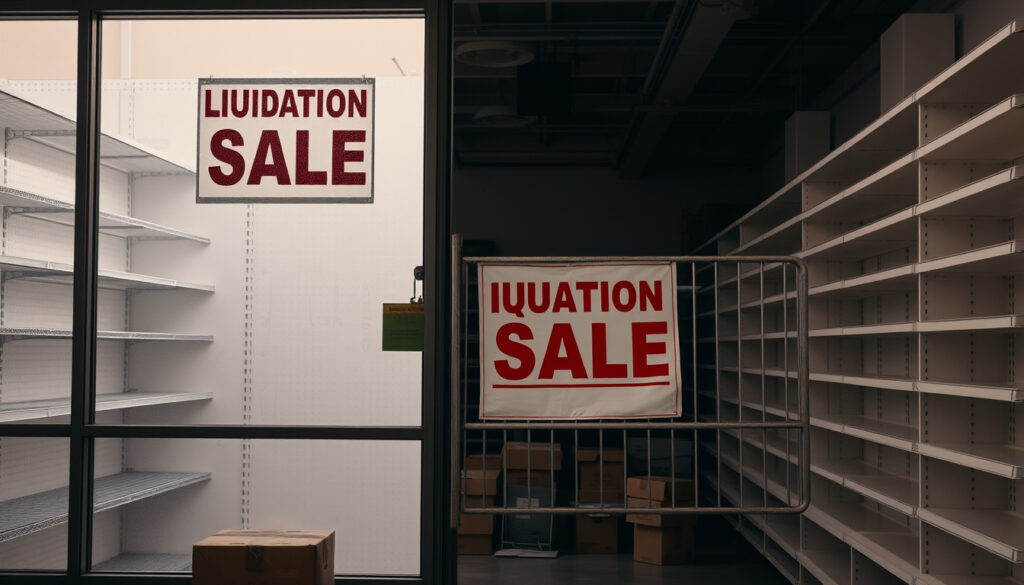
Stirling Sports Christchurch Liquidation: Stores Close, $760k
When a familiar sports retailer shuts its doors without warning, it hits the local community as much as the creditors. For shoppers at two Christchurch Stirling Sports stores, that moment came in late October 2025, when the operating company, DJ Investments 2019 Limited, was placed into liquidation, leaving debts of around $760,000. This article unpacks what happened, how the liquidation process works under New Zealand law, and what it means for those owed money.
Amount owed: $760,000 ·
Stores closed: 2 ·
Liquidation date: 28 October 2025 ·
Liquidator: Lynda Smart, Rodgers Reidy
Quick snapshot
- Two Christchurch Stirling Sports stores closed after the company entered liquidation.
- Total debts amount to roughly $760,000, according to news reports.
- Liquidator Lynda Smart of Rodgers Reidy has been appointed.
- The director cited a challenging retail environment as the cause.
- Exact breakdown of creditors and amounts owed to each.
- Whether the stores were on a lease or owned.
- Full list of assets and their sale value.
- Future of the franchise arrangement for the closed stores.
- : Company placed into liquidation. (about twelve months)
- Early November 2025: Stores closed, staff terminated, asset sale begins. (about twelve months)
- Liquidation expected to take about twelve months.
- Creditors should file a proof of debt with the liquidator.
- Monitor Gazette notices for updates.
- Attend any scheduled creditor meetings.
- Sale of shop fittings and remaining stock.
Seven key facts frame the collapse — one pattern: the company owed far more than it could cover, and the ranking of who gets paid first determines whether trade suppliers, employees, or the tax office recover anything.
| Field | Value |
|---|---|
| Company name | DJ Investments 2019 Limited |
| Trading as | Stirling Sports (two Christchurch stores) |
| Date of liquidation | |
| Amount owed | $760,000 |
| Liquidator | Lynda Smart, Rodgers Reidy (official firm) |
| Number of stores closed | 2 |
| Other affected parties | Employees terminated, trade suppliers unpaid |
Who is the owner of Stirling Sports?
Mark Anderson is the owner of Stirling Sports Ltd according to LinkedIn. The network operates as a franchise, meaning individual stores are independently owned and operated under the brand. The two closed Christchurch outlets were run by DJ Investments 2019 Limited, a separate franchisee company.
Mark Anderson and the ownership structure
- Stirling Sports Ltd owns the brand and manages the franchise network.
- Mark Anderson is listed as the Director of Stirling Sports Ltd on its LinkedIn profile.
- The liquidated stores were operated by DJ Investments 2019 Limited, not by the parent company.
Franchise vs corporate ownership
- Stirling Sports invites expressions of interest for franchise opportunities across New Zealand, as noted on its franchise page.
- Each franchisee is a separate legal entity, so a failure of one does not directly affect the others.
- Other Christchurch Stirling Sports stores (Riccarton, Hornby, Rangiora) remain open under different franchisees, per social media posts from Chris Lynch Media.
The franchise model lets the brand survive the loss of a franchisee, but it also means creditors of the failed entity have no recourse against Stirling Sports Ltd itself.
Is Stirling Sports a franchise?
Yes — Stirling Sports operates as a franchise network, a model that lets entrepreneurs run their own stores under a well-known banner. The brand’s franchise opportunities page states it is taking expressions of interest for various locations across New Zealand.
How the Stirling Sports franchise model works
- Franchisees pay an initial fee and ongoing royalties for brand use, marketing support, and supply chain access.
- Individual stores are independently owned and operated — the parent company does not run daily operations.
- The Christchurch stores were part of a franchise agreement with Stirling Sports Ltd, but the liquidated entity was DJ Investments 2019 Limited.
Franchise opportunities and requirements
- Stirling Sports does not publicly list minimum capital requirements, but typical retail franchises in New Zealand require NZ$100,000–$200,000.
- Interested parties can submit an expression of interest via the official website.
- The brand competes with Rebel Sport, Foot Locker, and JD Sports, meaning franchisees operate in a crowded market.
The trade-off: franchisees gain a known brand but bear all financial risk. When the market turns, that risk is theirs alone.
Who gets paid first in liquidation in NZ?
New Zealand’s liquidation law sets a strict priority order for paying creditors. Understanding it explains why some creditors will recover little or nothing from the Stirling Sports collapse.
Statutory priority of creditors under NZ law
- Secured creditors with fixed charges (e.g., a bank with a mortgage over assets) rank highest. They recover from the specific asset charged.
- Liquidators’ fees and expenses rank high — the process must be funded before any distributions.
- Preferential creditors under the Companies Act 1993 include employees for unpaid wages (capped) and holiday pay.
- Inland Revenue Department (IRD) claims for tax debts rank below employees but above unsecured creditors.
- Unsecured creditors (trade suppliers, landlords for unsecured rent, customers with gift cards) are paid last.
- Shareholders typically receive nothing, as equity is subordinate to all debts.
Secured creditors vs unsecured creditors
- Secured creditors hold a charge over specific assets (e.g., stock, equipment). They are paid first from the proceeds of those assets.
- Unsecured creditors have no charge and must share the remaining funds proportionally after higher-priority claims are satisfied.
- In the Stirling Sports case, the liquidator will first pay her own fees, then employee entitlements and IRD, before any unsecured trade supplier sees a dollar.
Employee entitlements and IRD claims
- Employees have preferential claims for unpaid wages for up to three months (capped at about $22,000 per employee) and for holiday pay.
- IRD has a preferential claim for PAYE and GST but not for income tax.
- Both are treated more favourably than general unsecured creditors, giving staff and the tax office a better chance of recovery.
The implication: for the unsecured trade suppliers of the Christchurch stores, the recovery rate may be pennies on the dollar.
What is the downside of liquidating a company?
Liquidation ends a company permanently, but the consequences ripple beyond the business itself. Directors, employees, and creditors all face significant downsides.
Directors of a liquidated company can be personally investigated for insolvent trading or breach of duty. If the liquidator finds assets were stripped or debts incurred without reasonable prospect of payment, directors may face personal liability.
Consequences for directors and shareholders
- Directors may face investigation by the liquidator and potential personal liability for trading while insolvent (Companies Act 1993, s 135).
- Personal guarantees signed by directors — common in retail leases and supplier agreements — become enforceable.
- Shareholders lose their investment entirely, as equity is wiped out.
- Directors may be prohibited from managing a company for up to five years if found guilty of misconduct.
Impact on employees and creditors
- Employees lose their jobs and may have to claim unpaid wages from the liquidator, with no guarantee of full recovery.
- Creditors — especially unsecured ones — recover little or nothing. Many small suppliers are forced to write off the debt.
- Landlords face vacant premises and lost rental income; the leasing market for the shopping centres may take years to fill the space.
Reputational damage and future financing
- A liquidation appears on the Directors’ personal credit records and can prevent them from obtaining finance or starting new businesses.
- The company ceases to exist and cannot trade again under any name.
- Future lenders will scrutinise directors’ history, making fundraising much harder.
Why this matters: liquidation is a nuclear option. It wipes the slate clean for the company but leaves a trail of financial and personal damage.
What is Stirling Sports about?
Stirling Sports is a New Zealand sportswear and sneaker retailer with a nationwide presence. It competes in the mid-to-premium athletic footwear and apparel market, carrying brands like Nike, adidas, ASICS, and New Balance.
Brand history and market position
- The brand was acquired by Stirling Sports Ltd and operates as a franchise network with approximately 60 stores nationwide plus online (per the brand’s Facebook page).
- It competes directly with Rebel Sport, Foot Locker, and JD Sports in the New Zealand market.
- Stirling Sports targets a broad customer base: casual shoppers, athletes, and sneaker enthusiasts.
Product range and target audience
- The range includes men’s, women’s, and children’s footwear, apparel, and accessories.
- Prices are in New Zealand dollars and include GST at 15% (terms and conditions).
- Shipping is free for orders over NZ$150, and returns are accepted for exchange, store credit, or refund (returns policy).
- End-of-season sale items are final sale — not eligible for refund unless faulty (sale terms).
What this means: despite the liquidation of two franchise stores, the brand itself remains active with a large store network and full online operations. The collapse is a franchisee failure, not a brand failure — but it still erodes consumer confidence in the franchise model.
Timeline of the Stirling Sports Christchurch liquidation
- : Hamleigh Holdings Limited (the operating company for the two stores, later identified as DJ Investments 2019 Limited) is placed into liquidation.
- Early November 2025: Stores close, liquidator Lynda Smart ceases trading, sells shop fittings, and terminates employees.
- Mid-November 2025: News outlets report the closure and the $760,000 debt, citing the director’s blame of the challenging retail environment.
- Liquidation expected to last approximately twelve months.
What is confirmed and what is still unclear
Confirmed facts
- Two Christchurch Stirling Sports stores have closed.
- The company owes approximately $760,000 (as per director and liquidator statements reported by Chris Lynch Media).
- The liquidator is Lynda Smart from Rodgers Reidy.
- The director blamed challenging retail conditions.
What’s unclear
- Exact breakdown of creditors and amounts owed to each.
- Whether the stores were on a lease or owned.
- Future of the franchise arrangement for the closed stores.
- Full list of assets and their sale value.
“The retail environment has been very challenging, and unfortunately this business could not sustain the pressure.”
— Director of DJ Investments 2019 Limited (name not publicly disclosed), as quoted in Chris Lynch Media
“We have ceased trading and are now selling the shop fittings and remaining stock. Creditors should file a proof of debt with my office.”
— Lynda Smart, liquidator, Rodgers Reidy, as cited in the same report
The catch: while the liquidator’s statement gives creditors a clear next step, the $760,000 debt is almost certainly larger than the assets will cover, meaning many will recover only a fraction of what they are owed.
For the shopping centres that lost these tenants, the hole may take years to fill. For the trade suppliers and employees who are owed money, the liquidation process offers little comfort — the law prioritises secured creditors and the tax office, leaving unsecured creditors at the back of the queue. The clear implication for any business considering a franchise arrangement with a high‑debt model: demand personal guarantees, or walk away.
Related reading: **Cafe Cuba Liquidation Palmerston North**
stirlingsports.co.nz, stirlingsports.co.nz, stirlingsports.co.nz, facebook.com, trustpilot.com
Frequently asked questions
How long does the liquidation process take in New Zealand?
Most liquidations take 12 to 18 months, depending on the complexity of the asset sales and creditor claims. In the Stirling Sports case, the liquidator estimated about twelve months.
What happens to gift cards and store credit when a store liquidates?
Gift cards and store credit are unsecured claims. Holders must file a proof of debt with the liquidator and are unlikely to recover the full amount.
Can creditors recover money from the liquidation of DJ Investments 2019?
Secured creditors and employees with preferential claims are most likely to recover something. Unsecured creditors — including trade suppliers — will recover only a pro‑rata share after higher priorities are paid.
Are there any other Stirling Sports stores at risk of liquidation?
Stirling Sports as a brand continues to operate with about 60 stores nationwide (per its social media). Other Christchurch stores (Riccarton, Hornby, Rangiora) remain open under separate franchisees.
How does liquidation affect employees’ outstanding wages and holiday pay?
Employees have preferential claims for unpaid wages (up to three months) and holiday pay. They rank above IRD and unsecured creditors, so they are more likely to recover something — though not always in full.
What is the difference between liquidation and receivership?
Liquidation closes a company permanently. Receivership is a process where a secured creditor (usually a bank) appoints a receiver to sell assets to repay that creditor; the company may continue trading after receivership ends.
Where can I find official updates on this liquidation?
Check the New Zealand Companies Office gazette notices and contact Rodgers Reidy (the liquidator: Lynda Smart, PO Box 39090, Harewood, Christchurch 8545, phone (03) 929 0895).
More related posts
 Things to Do in South Island: Top Attractions & Hidden Gems
 Ride On Lawn Mowers 2026: Best Brands & Reliability
 Te Maeva Nui 2025 – Dates, Program and Tickets Guide
 How to Remove Oil Stains from Clothes – Fix Set-In Stains
 State of Origin 2025 Game 2: Result, Time, Venue & Highlights
 Washing Machine with Dryer: Irish Buyer’s Guide
 Bridgerton Season 4 Part 2: Release & Season 5 News