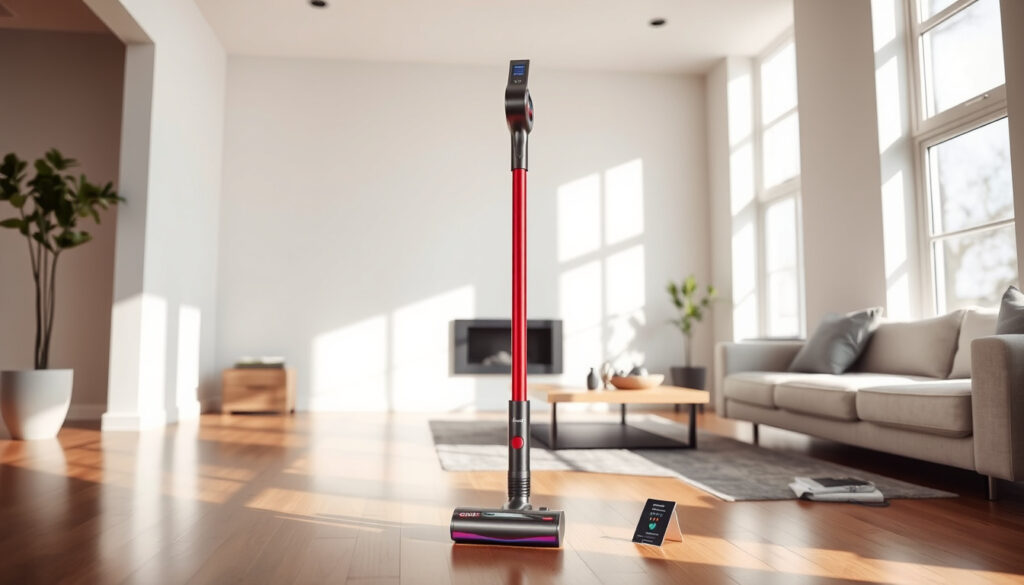
Dyson Stick Vacuum NZ 2026: Best Model, Price & Reviews
There’s a familiar moment for anyone who has run a Dyson stick vacuum around a New Zealand home: the suction is great, then the battery gives up before the living room is done. Consumer NZ’s reliability research found that three-quarters of Dyson stick faults involve the battery or charging (Consumer NZ (independent testing organisation)), which is why the “dyson stick vacuum nz” conversation keeps coming back to model choice. This guide compares official Dyson NZ pricing, local owner reports and the main alternatives, so you can buy for your floors rather than for the marketing.
Models referenced by NZ owners: V7, V8, V11 ·
V7 replacement battery part: 965874-01 ·
NZ forum verdict on carpet: Dyson V8 beats Miele C3 ·
Common V7 fault: battery slows after minutes of use
Quick snapshot
- Dyson New Zealand sells a dedicated cordless stick range on its official store (Dyson New Zealand (official NZ store)).
- The Dyson V8 Cyclone was listed at NZ$498, down from an RRP of NZ$699 (Dyson New Zealand (official product listing)).
- Consumer NZ found Dyson is the least reliable of the leading cordless vacuum brands in its research (Consumer NZ (durability report)).
- Whether Shark vacuums genuinely match Dyson in New Zealand homes — no local test data was found in this research.
- Which NZ retailer has the lowest price on any given day.
- The single “best” Dyson model for every home and floor type.
- Consumer NZ lists the Dyson V11 as discontinued and unlikely to be sold new in stores (Consumer NZ (product review database)).
- 2026 cordless models are shifting focus to longer battery life and digital displays. (Consumer NZ (product review database))
- Watch official NZ sale pricing — the V8 Cyclone at NZ$498 is the clearest price signal in this research (Dyson New Zealand (official product listing)).
- Budget for a replacement battery (part 965874-01) as a normal ownership cost. (Dyson New Zealand (official product listing))
Twelve facts, one pattern: Dyson sticks clean well, but the battery decides how long they stay useful.
| Fact | Detail | Reference |
|---|---|---|
| Models referenced by NZ owners | V7, V8, V11 | NZ owner forums |
| V7 replacement battery part | 965874-01 | Owner/technician reports |
| NZ forum verdict on carpet | Dyson V8 beats Miele C3 | Geekzone owner test |
| Common V7 fault | Battery slows after minutes of use | JustAnswer technician |
| Dyson V8 official NZ price | NZ$849 (out of stock) | Dyson NZ listing |
| Dyson V8 Cyclone official price | NZ$498 (RRP NZ$699) | Dyson NZ listing |
| V8 Cyclone specs | 150AW suction, 0.54 L bin, 60 minutes runtime | Dyson NZ listing |
| Stick vacuum failure rate | About a third fail before 6 years | Consumer NZ |
| Dyson fault concentration | 3 of 4 faults involve battery/charging | Consumer NZ |
| Price guidance | A good affordable stick costs at least $500 | Consumer NZ |
| Battery guidance | Built-in batteries can be hard to replace | Consumer NZ |
| Dyson V11 status | Discontinued, unlikely sold new | Consumer NZ |
What is the best Dyson stick vacuum in New Zealand?
The honest answer, reading New Zealand owner threads, is that “best” changes with floor type, home size and budget — yet the same three models keep coming up: the V7, the V8 and the V11. Here’s how NZ owners sort them.
- Dyson V11 Outsize: large cleaning head and large bin; praised by a Geekzone owner for pet-hair pickup.
- Dyson V8: strong carpet pickup; beat a Miele C3 canister in a Geekzone owner comparison.
- Dyson V7: the budget entry point, with a replaceable battery (part 965874-01).
Dyson’s official New Zealand store carries a dedicated stick range, so you’re comparing first-party models rather than grey imports (Dyson New Zealand (official NZ store)). The V8’s carpet performance is why owners keep recommending it years after launch.
Consumer NZ’s testing found almost no performance difference between stick vacuums and corded vacuums in carpet and pet-hair tests (Consumer NZ (buying guide)). Add a Geekzone owner’s finding that the V8 pulled more from carpet than a Miele C3, and the V8 class starts to look like the practical sweet spot for mixed NZ flooring.
For a hard-floor home, a mid-range V8-class stick at sale price is a better NZ buy than the biggest head or bin. For multi-pet homes, the V11 Outsize’s large bin makes the weekly clean noticeably easier.
What this means: the best Dyson stick is rarely the newest one — it’s the one whose battery and bin size fit your weekly routine.
Is a Dyson stick vacuum worth the money?
Start with the price reality. On the official Dyson NZ store, the Dyson V8 was listed at NZ$849 and marked out of stock at the time of research (Dyson New Zealand (official product listing)). The V8 Cyclone sat at NZ$498, down from an RRP of NZ$699 (Dyson New Zealand (official product listing)) — a $201 gap between two models that share the same cleaning reputation.
Owner forums consistently report strong suction and carpet pickup, which is the easy half of the value argument. The harder half comes from Consumer NZ’s durability research: Dyson is the least reliable of the leading cordless vacuum brands, and three-quarters of Dyson stick faults involve the battery or charging (Consumer NZ (durability report)).
- Suction: strong — and Consumer NZ found sticks nearly match corded vacuums on carpet.
- Reliability: the weak spot; battery and charging faults dominate.
- Running costs: a replacement V7 battery (part 965874-01) restores runtime rather than forcing a new machine.
- Entry price: $498 for the V8 Cyclone changes the maths versus $849 for the base V8.
A Dyson stick at $498 is a different value proposition from one at $849, because the battery is a consumable. If three-quarters of faults trace to battery or charging, the purchase price is only half the equation.
The implication: Dyson’s value in New Zealand is real, but it is conditional — on sale price and on planning for the battery.
What is the lifespan of a Dyson stick vacuum?
Consumer NZ’s durability research sets the expectation clearly: most people expect a stick vacuum to last more than six years, but around a third fail before then. Dyson sticks stood out for failing to go the distance despite strong cleaning performance (Consumer NZ (durability survey)).
The battery is the clock on the whole machine. Consumer NZ’s buying guide calls battery life the biggest downside of stick vacuums and warns that built-in battery designs can’t be replaced easily, which is why replacement is often more practical than repair (Consumer NZ (buying guide)).
A three-year-old Dyson with a fading battery is not necessarily a dead machine. On V7-class models, battery part 965874-01 is replaceable and restores normal runtime, so the machine’s true lifespan often outlives its first battery.
Owner and technician reports describe a distinct V7 pattern: power drops off hard after a few minutes of use. The same reports point to the battery rather than the motor as the culprit, which is good news if you catch it early.
The pattern: the shell lasts; the battery doesn’t. Treat the battery as a consumable and the lifespan question becomes a maintenance question.
What is the common problem with Dyson vacuums?
If there’s one fault New Zealand owners talk about, it’s the battery. A JustAnswer technician describes a rapid slowdown after minutes of use as a common V7 symptom, and Consumer NZ’s durability report found three-quarters of Dyson stick faults relate to the battery or charging (Consumer NZ (durability report)).
Consumer NZ’s buying guide goes further: battery life is the biggest downside of stick vacuums generally (Consumer NZ (buying guide)). Because the battery is user-serviceable on some models — the V7’s part 965874-01 — the fix is often cheaper than owners expect.
- V7 battery: slows after minutes of use, per a JustAnswer technician.
- Charging faults: the dominant category in Consumer NZ’s durability data.
- Backup machines: some NZ owners keep a corded vacuum for the jobs a stick battery can’t finish.
A Dyson that dies mid-clean looks like a $500+ failure, but on V7-class sticks it is usually a replaceable battery rather than a dead motor. Check part 965874-01 before you write off the machine.
What this means: the most common problem is also the most fixable one — battery faults dominate, and batteries are the most replaceable component on V7-class models.
Which stick vacuum is better than a Dyson?
The question surfaces in every NZ forum thread, and the answer depends on what you line up beside it: Shark is the most frequently named rival, Miele is the premium canister benchmark, and cheaper sticks are the budget counter-argument.
Are Shark vacuums as good as Dyson?
- Shark is the alternative NZ shoppers mention most often.
- No New Zealand test data covering both brands was found in this research, so the comparison rests on owner reports.
- The threads compare the two on price and suction, but the research reviewed here doesn’t declare a consistent winner.
That matters because Consumer NZ’s tests found stick vacuums nearly match corded vacuums on carpet and pet hair (Consumer NZ (buying guide)). The gap between Shark and Dyson is likely smaller than the price gap suggests.
What vacuum is as good as Dyson but cheaper?
- Consumer NZ warns that the cheapest stick vacuums should be treated cautiously (Consumer NZ (buying guide)).
- The same guide says a good affordable model should cost at least $500.
- Budget sticks usually trade suction or build quality, based on owner discussions.
Consumer NZ’s performance findings complicate the “cheaper is worse” assumption: in carpet and pet-hair tests, stick vacuums were close to corded ones. A Dyson V8 Cyclone at $498 therefore sits right at the reliability price floor Consumer NZ recommends.
What is Dyson’s biggest competitor?
- Shark: the most frequently compared alternative.
- Miele: the canister benchmark NZ owners bring up in comparisons.
- Budget stick brands: the price-driven alternative, though durability data is thinner.
In a Geekzone owner test, the Dyson V8 reportedly got more out of a carpet than a Miele C3 did. For deep-set stains and matted fibres, a household vacuum has limits — Professional Carpet Cleaning Auckland: Costs & Top Methods covers what a machine can’t lift.
The trade-off: the realistic “better than Dyson” candidates are rarely cleaner — they’re cheaper, easier to repair, or already in your cupboard.
What is the best cordless stick vacuum in 2026?
For 2026, cordless stick vacuums are leaning into two features: longer battery life and digital displays that show remaining runtime. Dyson remains a top contender in the cordless stick category, but the model line-up is shifting.
Consumer NZ’s product database lists the Dyson V11 as discontinued and unlikely to be sold new in stores (Consumer NZ (product review database)). That makes the V11 a candidate for clearance hunting, not a mainstream 2026 recommendation.
- Dyson: strong suction; the battery-reliability question still applies.
- Shark: frequent alternative, though NZ test data is limited.
- Budget sticks: better displays and runtime claims, but Consumer NZ’s $500 guidance still stands.
- V11: discontinued, so 2026 buyers should focus on current V8-class listings and sale stock.
Why this matters: the 2026 winner won’t be the model with the biggest number in its name — it will be the one whose battery you can actually replace in New Zealand.
Where is the cheapest place to buy a Dyson?
New Zealand sale events can move prices quickly, and the official Dyson NZ store already shows the pattern: the V8 was listed at NZ$849 and out of stock (Dyson New Zealand (official product listing)), while the V8 Cyclone sat at NZ$498 against a $699 RRP (Dyson New Zealand (official product listing)). Both prices come from the same official store, which means the “cheapest place” can change week to week.
Forums regularly discuss price, and the advice that keeps surfacing is to compare across retailers rather than defaulting to the first listing. Consumer NZ’s buying guide adds a caution: treat the cheapest stick vacuums carefully and expect a good affordable model to cost at least $500 (Consumer NZ (buying guide)).
- Watch official-store sale events — markdowns like the V8 Cyclone’s $201 discount are common.
- Check stock status before trusting a price; the $849 V8 was listed out of stock.
- Include the battery in your real cost: part 965874-01 is a separate purchase for V7-class owners.
The V8 Cyclone at $498 is the strongest price signal in this research: a $201 official-store discount, with 150AW suction and a 60-minute runtime attached (Dyson New Zealand (official product listing)).
The same NZ buying logic applies beyond vacuums — when you’re shopping for household essentials, comparing sizes and materials is what separates a good price from a trap, as our Single Bed Frame NZ: Sizes, Materials & Where to Buy guide shows.
The practical read: the cheapest Dyson is often the one on sale at the official store — but only if it’s in stock, and only if the replacement battery cost doesn’t push it past a good competitor.
How Dyson stick vacuums compare with the alternatives in NZ
Four buying routes, one pattern: Dyson leads on suction, loses on battery confidence, while the alternatives win on price, repairability or cord-free flexibility.
| Option | Price signal | Reliability / notes | Best for |
|---|---|---|---|
| Dyson V8 / V8 Cyclone | NZ$849 (out of stock) / NZ$498 (RRP $699) | Strong cleaning; weaker reliability in Consumer NZ’s durability data (Consumer NZ) | Carpet-focused NZ homes |
| Dyson V11 | Discontinued per Consumer NZ (Consumer NZ) | Larger head and bin; praised for pet hair by owners | Clearance hunting, not a new 2026 buy |
| Shark stick vacuums | Varies by model | Most frequently compared alternative; limited NZ test data | Shoppers weighing cheaper rivals |
| Miele canister (e.g., C3) | Premium | V8 got more from carpet in a Geekzone owner test | Homes that want a corded backup |
| Budget sticks under $500 | Low | Consumer NZ: treat the cheapest cautiously (Consumer NZ) | Small flats and hard floors |
The pattern: no single line wins every column — which is exactly why the right Dyson alternative depends on whether battery confidence, price or suction matters most to you.
Dyson V8 specs: what the official NZ listing says
Six spec points, one takeaway: the V8 Cyclone’s official numbers (Dyson New Zealand (official product listing)) explain why a years-old model still tops owner recommendation lists.
| Specification | Dyson V8 (base listing) | Dyson V8 Cyclone |
|---|---|---|
| Official NZ price | NZ$849 (out of stock) | NZ$498 (RRP NZ$699) |
| Suction | Not stated | 150AW |
| Bin volume | Not stated | 0.54 L |
| Runtime | Not stated | 60 minutes |
| Availability on Dyson NZ | Out of stock | Listed |
| NZ owner reputation | Strong carpet pickup (Geekzone test) | Value pick at the discounted price |
The takeaway: if you want the V8’s carpet reputation at the lowest possible entry price, the V8 Cyclone listing is the one to track.
Dyson stick vacuum: the upsides and downsides
Seven points, one split: owners love what Dyson picks up, and they hate what the battery does to the weekly rhythm.
Upsides
- Strong suction; V8 beat Miele C3 on carpet in a Geekzone owner test.
- V8 Cyclone at $498, down from $699, on the official NZ store (Dyson New Zealand).
- Stick performance close to corded in Consumer NZ carpet and pet-hair tests (Consumer NZ).
- Replaceable battery (V7 part 965874-01) restores runtime.
- V11 Outsize’s large head and bin for pet hair (owner report).
Downsides
- Three-quarters of Dyson stick faults involve battery or charging (Consumer NZ).
- Dyson ranked least reliable of the leading cordless brands (Consumer NZ).
- Around a third of stick vacuums fail before six years (Consumer NZ).
- Built-in batteries can be hard to replace on some models (Consumer NZ).
- Premium RRP pricing — $849 for the base V8 listing (Dyson New Zealand).
The balance: on sale, the upsides outweigh the downsides; at full RRP, the downside data starts to bite.
Confirmed facts vs what’s still unclear
Separating what’s confirmed from what’s still open is the quickest way to filter forum noise.
Confirmed facts
- Dyson NZ sells a dedicated stick range on its official store (Dyson New Zealand).
- V8 listed at $849 out of stock; V8 Cyclone at $498 (RRP $699) (Dyson New Zealand).
- V7 battery part 965874-01 is replaceable (owner/technician reports).
- Consumer NZ: 3 of 4 Dyson faults are battery/charging; Dyson is least reliable of the leading cordless brands (Consumer NZ).
- Consumer NZ: V11 discontinued (Consumer NZ).
What’s still unclear
- The single best Dyson model for every NZ home.
- Whether Shark truly matches Dyson in local conditions.
- Which NZ retailer is cheapest at any given moment.
- How long any individual V7/V8 battery holds before slowing.
- Whether the V8’s carpet edge over the Miele C3 holds across different carpets.
What this means: act on the confirmed facts — buy on sale, plan for the battery — and treat the open questions as reasons to test a machine in your own home before committing.
What New Zealand owners and technicians say
Three voices capture the local experience: two from owner forums, one from a repair expert.
The Dyson got visibly more out of the carpet than the Miele C3 when both ran over the same patch.
— Geekzone owner, Dyson V8 vs Miele C3 comparison
The big draw is the larger head and the larger bin — for pet hair, it’s the easiest Dyson to empty during a clean.
— Geekzone user reviewing the Dyson V11 Outsize
A common V7 pattern is power that drops off hard after a few minutes; replacing the battery with part 965874-01 is the fix that restores normal runtime.
— JustAnswer vacuum technician
The pattern across all three: the Dyson stick’s weakness is never the motor — it’s the power source, and that’s a fixable problem.
The verdict for New Zealand buyers
The Dyson stick vacuum story in New Zealand is a split personality: superb suction and carpet pickup — backed by Consumer NZ’s own performance parity testing — and a battery reputation that makes every purchase a maintenance decision. Buy the V8 Cyclone on sale at $498 and you’ve got a genuinely strong cleaner; buy any Dyson at full price and ignore the battery, and you’re signing up for the most common fault in the category. For a New Zealand buyer in 2026, the decision is clear: match the model to your floors, budget for part 965874-01 before you need it, and treat full-RRP Dyson pricing as a signal to wait for the next sale — or walk across to a cheaper stick and lose the suction edge that made you search in the first place.
dyson.co.nz, dyson.co.nz, dyson.co.nz, consumer.org.nz, dyson.com.sg, dyson.co.nz, consumer.org.nz, consumer.org.nz
Frequently asked questions
How much does a Dyson stick vacuum cost in New Zealand?
On the official Dyson NZ store, the V8 was listed at NZ$849 and out of stock at the time of research, while the V8 Cyclone was listed at NZ$498, down from an RRP of NZ$699 (Dyson New Zealand (official listing)). Consumer NZ’s guide suggests a good affordable stick costs at least $500 (Consumer NZ (buying guide)).
What is the cheapest Dyson stick vacuum model?
In the research reviewed here, the V8 Cyclone at NZ$498 is the lowest official NZ price, marked down from $699. Older V7 models are the budget entry point in owner discussions — with a replaceable battery, part 965874-01 — but availability varies.
Are Dyson stick vacuums good for pet hair?
Yes. Consumer NZ’s carpet and pet-hair tests found stick vacuums perform close to corded vacuums (Consumer NZ (buying guide)), and owners singled out the V11 Outsize’s large head and large bin as the easiest Dyson to keep on top of pet hair.
How does the Dyson V8 compare to the Dyson V11?
The V8 is the carpet-pickup favourite in NZ owner threads, while the V11’s larger head and bin make it better suited to multi-pet homes. Consumer NZ lists the V11 as discontinued (Consumer NZ (product review database)), so new-stock availability usually settles the decision in 2026.
Do Dyson stick vacuums come with a warranty in New Zealand?
Warranty terms are set by the retailer at the point of sale, so check the policy before buying. Given battery and charging faults dominate Consumer NZ’s reliability data (Consumer NZ (durability report)), it’s worth asking specifically what the warranty covers on the battery.
Is the Dyson V11 Outsize worth the higher price?
Owners who reviewed the V11 Outsize praised the large head, large bin and pet-hair pickup. But the V11 is discontinued in Consumer NZ’s database (Consumer NZ (product review database)), so unless you find new old stock, the V8 Cyclone at $498 is the easier value call in 2026.
More related posts
 What Does WYD Mean? Meaning, Flirty Contexts & More
 Things to Do in South Island: Top Attractions & Hidden Gems
 Did Kirsteen Britten Remarry – What Public Records Show
 I Thank God Lyrics: Original Version & Misattributions
 Moose Sighting on Kepler Track: 2025 Fiordland Report
 Wellington to Nelson Flights: Duration, Airlines, and Travel Options
 Baby Jogger City Select: Review, Specs & Double Options
 Queensland Country Bank Stadium: Cowboys Home, Capacity & History